Common Hedgerow & Woodland Berries Can Be As Valuable Crops As Traditional Garden Fruit And Veg. Learn More About them Here.
Table of Contents
But what Common Hedgerow & Woodland Berries can we grow in the UK? Well, some are very common and some of my list are a little more obscure and you might not have seen them to even heard of them. In my own garden I have four of the berry bearing plants in my list. Rowan, Fuchsia, Juneberry, Alpine Strawberries and Himalayan Honeysuckle all grow in my flower beds. And we have several from this list in our Community Food Forest. Of course the list below isn’t complete. Far from it. There are a few other edible berries that could have been included. But I’ll list those another day.
I have used three location categories in my list, but in many cases the plants grow in more than one location.
UK Edible Woodland and Hedgerow Berries
Woodland & Hedges
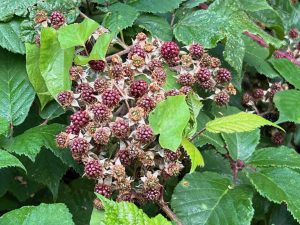
Blackberry (Bramble, Rubus fruticosus agg.)
Season: August–October (peak usually late August/early September)
Identification: Thorny, arching stems forming dense thickets. Clusters of dark purple-black, segmented berries (drupelets).
Uses: Extremely versatile. Eat fresh, excellent in crumbles, pies, jams, jellies, fruit leathers, vinegars, and country wines. Rich in vitamins C and K, and antioxidants.
Habitat: Abundant in hedgerows, woodland edges, clearings, scrubland, and neglected ground.
Notes:Rubus fruticosus is an aggregate species (agg.) representing many closely related, often hybridising, microspecies found in the UK. All are considered edible.
Elderberry (Sambucus nigra)
Season: August–September
Identification: Small to medium-sized tree or large shrub with fissured bark. Flat-topped clusters (cymes) of small, fragrant white flowers in early summer, followed by pendulous clusters of small, glossy black berries.
Uses: Must be cooked before consumption. Excellent for syrups, cordials, wines, jellies, and tarts. Often paired with apple.
Safety: Raw berries and other parts of the plant contain cyanogenic glycosides and an alkaloid, sambunigrin, which can cause nausea, vomiting, and diarrhoea. Cooking destroys these toxins.
Habitat: Very common in hedgerows, woodlands, and scrub.
Hawthorn Berry (“Haws”, Crataegus monogyna and Crataegus laevigata)
Season: September–November (best after a frost, which softens them)
Identification: Thorny small trees or large shrubs. C. monogyna has deeply lobed leaves and a single stone in its red berries. C. laevigata (Midland Hawthorn) has less deeply lobed leaves and typically two stones. Both have small, red, berry-like fruits (pomes).
Uses: Though mealy and astringent raw, cooking transforms them. Used to make ketchup, jellies, fruit leathers, and even a form of “hawthorn cheese.” Rich in pectin.
Habitat: Extremely common in hedgerows, woodlands, and scrub throughout the UK.
Sloe (Blackthorn, Prunus spinosa)
Season: September–November (traditionally picked after the first hard frost, which helps break down the astringency, though freezing at home works just as well)
Identification: Very thorny, dense shrub. Small, round to oblong, blue-black berries with a whitish, waxy bloom. The flesh is green and highly astringent.
Uses: Primarily used for infusing in gin or vodka (sloe gin), making preserves, jellies, and wines. Less commonly eaten raw due to their intense tartness.
Habitat: Abundant in hedgerows, woodlands, and scrub. Often forms dense, impenetrable thickets.
Wild Raspberry (Rubus idaeus)
Season: June–September (earlier than blackberries)
Identification: Arching stems, often with fine prickles (less thorny than brambles). The berries are red, soft, and have a hollow core when picked. Leaves are typically trifoliate.
Uses: Delicious eaten fresh, in desserts, jams, jellies, and sauces. Can be frozen.
Habitat: Woodlands, clearings, heathland, and disturbed ground. Often found in slightly shadier, damper conditions than blackberries.
Rosehip (Dog Rose, Rosa canina and other wild Rosa species)
Season: August–November
Identification: Bright red to orange-red, often elongated, fleshy fruit (hips) that develop after the flowers fade. Found on thorny, scrambling shrubs. Rosa canina is the most common wild rose.
Uses: Excellent for high-vitamin C syrups, teas, jellies, and wines. The fleshy outer part is edible, but the seeds inside are surrounded by irritating hairs that must be removed thoroughly before use. A sieve or muslin cloth is essential for processing.
Habitat: Hedgerows, woodland edges, scrubland, and wasteland.
Heathland & Coastal Berries
Bilberry/Whortleberry (Vaccinium myrtillus)
Season: July–September
Identification: Low-growing deciduous shrub, typically 10-60cm tall. Single, round, blue-black berries with a waxy bloom and a distinct “crown” at the top. They stain fingers and lips a deep purple.
Uses: Delicious eaten fresh, in pies, tarts, jams, and sauces. Flavour is more intense and less sweet than cultivated blueberries.
Habitat: Acidic heathland, moors, upland areas, and conifer woodlands, particularly in northern and western UK.
Notes: Often confused with cultivated blueberries, but bilberries are smaller, have a different growth habit (single berries vs. clusters), and are wild.
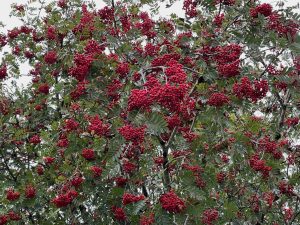
Rowan Berry (Mountain Ash, Sorbus aucuparia)
Season: August–November (best after the first frost)
Identification: Medium-sized deciduous tree. Pinnate leaves (like a feather). Clusters of bright orange-red berries (pomes) that persist into winter.
Uses: Must be cooked. Traditionally made into tart jellies and sauces, especially excellent with game meats, lamb, or strong cheeses. Can also be used in wines.
Safety: Raw berries contain parasorbic acid, which can cause digestive upset. Cooking converts this to sorbic acid, which is harmless.
Habitat: Common in woodlands, hillsides, and often planted as an ornamental tree in gardens and parks.
Sea Buckthorn (Hippophae rhamnoides)
Season: September–November (berries persist well into winter)
Identification: Thorny, deciduous shrub, often forming dense thickets. Silvery-grey, narrow leaves. Dense clusters of bright orange, oblong berries, tightly packed along the stems.
Uses: Extremely tart and rich in vitamin C. Best cooked into syrups, jams, jellies, cordials, and sauces. Often blended with sweeter fruits. Can be used in juices or smoothies, but often requires sweetening. Raw berries can be very sour and cause digestive irritation for some.
Habitat: Primarily found on coastal dunes and cliffs, particularly on the east and south coasts of the UK. Also planted for erosion control.
Notes: Extracting the berries can be tricky due to the thorns. Freezing the branches and then shaking off the berries is a common method.
Unusual & Garden Berries (Often Naturalised or Cultivated)
Juneberry (Serviceberry, Saskatoon Berry, Amelanchier lamarckii or other Amelanchier spp.)
Season: June–July (hence “Juneberry”)
Identification: Small ornamental tree or large shrub, known for its attractive white spring blossoms and reddish-orange autumn foliage. Berries ripen from red to purplish-blue and are roughly pea-sized, resembling blueberries but with a larger calyx.
Uses: Sweet and juicy, with an almond-like hint. Excellent eaten fresh, in pies, crumbles, jams, or muffins, similar to blueberries.
Habitat: Widely planted in gardens, parks, and amenity areas. Frequently naturalised in woodlands, heathland, and scrub, especially on acid soils. A. lamarckii is the most commonly naturalised species in the UK.
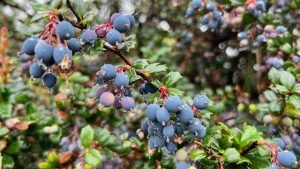
Barberry (Berberis vulgaris and other edible Berberis species)
Season: Autumn
Identification: Thorny deciduous shrub. Berberis vulgaris has arching stems and clusters of bright red, oblong berries. Leaves are often spiny-toothed.
Uses: Very tart flavour. Used in traditional Persian cuisine for rice dishes (zereshk polo). Also excellent for jellies, jams, and sauces, often blended with sweeter fruits.
Note: While Berberis vulgaris is edible, many ornamental Berberis species also produce edible berries, though some might be less palatable or more astringent. Avoid any Berberis with dark blue/black berries, as these are generally less palatable and some sources suggest potential toxicity, though information is varied. Stick to red-berried varieties.
Bullace (Prunus domestica subsp. insititia)
Season: September–October
Identification: A wild or semi-wild plum, often found in hedgerows and old orchards. Larger than sloes, variable in colour (yellow, green, purple, or black) and shape, but generally rounder and less intensely astringent than sloes.
Uses: Less astringent than sloes and can be eaten fresh when fully ripe (especially the yellow varieties). Excellent for jams, crumbles, pies, and wines.
Habitat: Hedgerows, woodland edges, and old orchards, particularly in southern England.
Cornelian Cherry (Cornus mas)
Season: August–September
Identification: Large deciduous shrub or small tree. Known for its early spring yellow flowers. Produces oblong, bright red, glossy berries that are somewhat plum-like in appearance.
Uses: Very tart when raw, but softens and sweetens as they ripen and drop from the tree. Excellent in syrups, jams, jellies, sauces, pies, and liqueurs. High in vitamin C.
Habitat: Native to continental Europe and Asia, but widely planted in UK gardens and parks, and occasionally naturalised in woodlands.
Fuchsia (Fuchsia spp., particularly Fuchsia magellanica and its hybrids)
Season: Late summer to autumn
Identification: Many fuchsia species and cultivars are grown in the UK. Fuchsia magellanica is a common hardy species, often found naturalised. Berries are dark purple to black, round or oblong, and develop after the characteristic pendulous flowers.
Uses: All fuchsia berries are considered edible. When fully ripe, they can have a mild, sweet, slightly tart flavour, sometimes described as akin to kiwi or grape. Best eaten fresh, or used in jams or fruit salads.
Habitat: Widely planted in gardens. Fuchsia magellanica is particularly well-naturalised in mild, damp areas, especially in the west of the UK and Ireland, often found in hedgerows and woodland edges.
Himalayan Honeysuckle (Leycesteria formosa)
Season: Late summer to autumn
Identification: Upright, deciduous shrub with hollow, bamboo-like stems. Distinctive drooping clusters of purplish-red bracts and small white flowers, followed by purplish-black, glossy berries.
Uses: When fully ripe, the berries are sweet with a unique, sometimes described as “caramel” or “toffee” flavour. Can be eaten fresh, or used in fruit salads and desserts.
Habitat: Native to the Himalayas, but widely planted as an ornamental and has readily naturalised in many parts of the UK, often found in woodland, hedgerows, and disturbed ground.
Alpine Strawberry (Fragaria vesca)
Season: May–September (can fruit for a long period)
Identification: Small, low-growing perennial herb. Leaves are trifoliate (three leaflets). Produces small, intensely red, highly aromatic berries that are softer and more delicate than cultivated strawberries. The seeds are on the surface.
Uses: Best eaten fresh to appreciate their intense, sweet flavour. Excellent as a garnish, in fruit salads, or with cream.
Habitat: Common in woodlands, hedgerows, banks, and clearings, especially on calcareous soils.
Safety & Foraging Notes
Toxic Lookalikes:
Deadly Nightshade (Atropa belladonna): A highly toxic plant. Has single, glossy black berries (similar in size to a cherry) in the leaf axils, often surrounded by a persistent green calyx, and purplish-brown, bell-shaped flowers. Found in disturbed woodland, scrub, and waste ground, often near old ruins.
Yew (Taxus baccata): All parts of the yew tree are extremely toxic, except for the fleshy red aril (the berry-like cup) that surrounds the seed. However, the seed itself is highly poisonous. It is extremely dangerous to consume yew berries as it is very difficult to separate the aril from the seed, and even crushing the seed can release toxins. Avoid entirely.
Lords-and-Ladies (Arum maculatum): Produces upright clusters of bright orange-red berries in autumn, after the distinctive spathe and spadix have withered. These berries are highly irritant and toxic, causing severe burning and swelling of the mouth and throat. Common in damp woodlands and hedgerows.
Woody Nightshade/Bittersweet (Solanum dulcamara): A scrambling plant with clusters of green, then yellow, then bright red berries, often all stages present simultaneously. The berries are toxic, causing nausea, vomiting, and dizziness. Common in damp hedgerows, scrub, and woodland edges.
Sustainability: Always pick sparingly, ensuring enough berries are left for wildlife and for the plant to propagate. Never strip a bush entirely.
Identification: Always use a trusted, up-to-date field guide for identification. If in doubt, do not eat it. Consider taking a foraging course from an experienced guide.
Preparation: As noted, several berries (Rowan, Elderberry, Hawthorn, Sea Buckthorn) must be cooked before consumption to destroy toxins or improve palatability. Rosehips require careful preparation to remove irritating hairs.
Location: Avoid foraging in areas with heavy traffic, agricultural runoff, or recent pesticide application.
“4 Cs” Reminder:
Correct ID: Be 100% sure of your identification.
Consent: Obtain landowner permission if foraging on private land.
Care: Avoid polluted areas; pick mindfully to ensure sustainability.
Caution: If trying a new berry, try a small amount first to check for any personal adverse reactions.
This comprehensive list should provide a good foundation for exploring the UK’s diverse “hedgerow larder” responsibly and safely. Enjoy your foraging adventures!