Here’s A Guide to Growing Sugar in Your UK Garden. It Is a Niche Crop That Few Gardeners Will Bother With. But Still Worth Knowing About.
Table of Contents
Years ago, when I managed the Cambridgeshire Agricultural College farm on the outskirts of Cambridge, I had a sugar beet licence so that we could demonstrate how to grow sugar on East Anglian farms. But why do we grow sugar and not just import it? The answer is about self sufficiency, a slave trade history and much more. Let’s dig a bit deeper.
How To Grow Sugar: A Sweet History
For centuries we didn’t have sugar beet, and the British sweet tooth was satisfied by sources far more local than the later Caribbean sugar trade. In those days we depended on honey.
Now, while we can’t grow vast sugarcane plantations in our climate, the desire for homegrown sweetness has been revived. We can’t compete with farm grown sugar beet but I see a hint of a shift towards sweet self-sufficiency and a fascination with forgotten skills. UK gardeners are rediscovering the plants that can provide sugar, syrup, and molasses right from their own plots. Though I have to say it is a niche crop and a lot of hassle to grow a bag of sugar.
This isn’t about replicating the white granulated sugar we buy in bags; it’s about engaging with the process, understanding the history of sweetness, and producing unique, flavourful sweeteners with a story. From the historical beet to the novel stevia, let’s explore how you can cultivate your own supply of garden sugar.
A Brief History of Sweetness in Britain
Before the mass importation of sugarcane, sweetness in Britain was a scarce and seasonal luxury. The primary source was honey, managed by beekeepers in skeps (woven baskets). Some skeps were kept in bee boules, stone structures that protected the skeps from the rain and wind. We had one at Hartpury College when I worked there. It was then moved to a new location and is featured on TripAdvisor
Fruit, notably dried fruits like raisins and currants imported from Europe, also provided sweetness in cooking and baking. Apple syrup and pear syrup, made by boiling down the juice of these fruits into a thick, sweet concentrate (known as pekmezin Turkey), were also historical staples.
The Advent of Sugar Cane
The game-changer arrived in the 18th century. Sugarcane, processed by enslaved labour on plantations, became increasingly available to the wealthy, eventually trickling down to all classes. Its use boomed, fundamentally changing the British diet and palate.
A pivotal moment for homegrown sugar came in the 19th century with the Napoleonic Wars. The British naval blockade cut off French access to sugarcane, prompting Napoleon to invest heavily in extracting sugar from the white beetroot (aka sugar beet), a process pioneered by German chemists. This proved that sugar production was possible on European soil. While the UK continued to rely on cane imports from its colonies, the foundation for sugar beet agriculture was laid. Northern France still grows huger volumes of sugar beet.
The British started growing it much later and it is now grown as a major crop in East Anglia. There are a number of “beet factories” where the sugar is processed and they are open for a few months of the “beet campaign” each winter.
The Modern Contender: Growing Sugar Beet
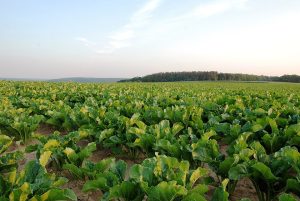
Sugar beet (Beta vulgaris) is the most direct way to grow a source of refined sucrose in the UK. It’s a hardy biennial root vegetable, closely related to the beetroot we eat, but specifically bred to store high concentrations of sugar in its root. As a farm crop it is grown as an annual and huge volumes are grown each year. This is good for self sufficiency but not so good for the environment. The reason being that beet growers have, for many years, used neonicotinoids to control aphids which bring a virus with them. “Neonics” are very toxic to bees and have led to bee decline in East Anglia. They are now banned but “derogations” have been applied for over several years which has led to their continued licensing in “emergencies”. Personally I think the emergency is the decline in bees not the sugar beet growing problems! I say that as an ex-beet grower!
How to Grow Sugar Beet In UK Gardens
Source the seed: this is perhaps the hardest part. I can only find one seed company selling a high sugar content white beet in the UK and the sugar levels is not as high as that available to farmers. But it will produce some!
Sowing: Sow seeds directly into well-drained, stone-free soil in mid to late April. Plant them 2cm deep and 10cm apart, with rows 30-40cm apart. They need a sunny spot.
Care: Keep well-watered, especially during dry spells, to encourage strong root development. Thin the seedlings to their final spacing to avoid competition.
Harvesting: Lift the roots in late October or November, after the first frosts, which can help increase their sugar content. The roots can be quite large, so use a fork to carefully lift them.
Processing Your Sugar Beet into Sugar
This is a labour-intensive process and yields will be small, but it’s a fascinating project.
Wash and Prepare: Thoroughly scrub the beets to remove all soil. Chop them into small chunks or thin strips.
Extract the Juice: Simmer the pieces in just enough water to cover them until they are completely soft (1-2 hours). Alternatively, use a juicer for a more efficient extraction.
Strain and Reduce: Strain the liquid through muslin or a fine sieve into a wide pan. Discard the pulp (it can be composted).
Boil Down: Bring the liquid to a boil and then simmer gently for several hours. As the water evaporates, the liquid will reduce to a thick, dark syrup similar to molasses. Constant supervision is needed to prevent burning.
Crystallise (Optional): To get granulated sugar, you must continue boiling until crystals form, which is very difficult on a home scale. Most gardeners will be left with a delicious sugar beet syrup that can be used as a sweetener in baking and cooking.
Yield Expectation: Manage your expectations. It takes roughly 10kg of sugar beet roots to produce approximately 1kg of syrup, which will have a much stronger, earthier flavour than commercial sugar.
Other Sugar Sources
The Ornamental Sweetener: Sugar Maples & Birch Trees
While the majestic Sugar Maple (Acer saccharum) of North America is not native to the UK, it can be grown here, particularly in the south. However, it takes around 40 years to reach a tappable size and our spring weather patterns are less reliable for a good sap flow.
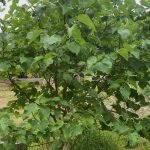
A more realistic and native alternative is the Silver Birch (Betula pendula). Birch sap has been tapped for centuries in Northern Europe. It contains fructose, glucose, and a small amount of sucrose and can be reduced to a mild, delicious syrup.
How to Tap Birch Sap:
Timing: The window is short, typically in early March, just as the buds begin to swell.
Method: Drill a 4cm deep, upward-slanting hole into the trunk of a mature, healthy tree (at least 25cm in diameter). Insert a spile (a small tap) or a piece of food-safe tubing. Hang a container from it to collect the clear, slightly sweet sap.
Ethics and Care: Only tap one hole per large tree and never take more than a few litres. Once you have collected what you need, seal the hole with a piece of untreated wood to protect the tree from disease.
Reducing to Syrup: Birch sap is only about 1% sugar, compared to maple’s 2-3%. This means you need around 100 litres of sap to make 1 litre of syrup, making it a true labour of love. It produces a delicate, caramel-flavoured syrup.
The Zero-Calorie Option: Growing Stevia
For a natural, non-caloric sweetener, Stevia (Stevia rebaudiana) is a fantastic garden addition. This tender perennial herb from South America contains sweet-tasting compounds called steviol glycosides, which are hundreds of times sweeter than sugar.
How to Grow:
Sowing: As it is not frost-hardy, start seeds indoors in early spring or buy young plants. It thrives in pots or in a sunny, sheltered spot in well-drained soil.
Care: Treat it like a Mediterranean herb – plenty of sun and not too much water.
Harvesting and Use: Harvest leaves just before the plant flowers for the highest sweetness. The fresh leaves can be used to sweeten teas and drinks. For a powder, dry the leaves completely and then grind them in a blender or pestle and mortar. A tiny pinch of green stevia powder is incredibly sweet.
Embracing the Homegrown Sweet Life
Growing sugar in the UK is less about economic efficiency and more about connection. Connection to history, to the land, and to the food we eat. It’s an interesting challenge that offers a touch of sweetness if we persist! .
Research Sources
Mintz, S. W. (1986). Sweetness and Power: The Place of Sugar in Modern History. Penguin Books.
This seminal work details the history of sugar consumption and its profound impact on European economics, diet, and social history, including the UK.
Asadi, M. (2007). Beet-Sugar Handbook. John Wiley & Sons.
A comprehensive technical guide to sugar beet processing, providing the scientific background on sucrose extraction, relevant to understanding the home process.
Kallio, H., Teerinen, T., Ahtonen, S., Suihko, M., & Linko, R. R. (1989). Composition and properties of birch syrup (Betula pubescens). Journal of Agricultural and Food Chemistry, 37(1), 51-54.
An academic study analysing the chemical composition and sugar content of birch syrup, providing verified data on yields and properties.
Royal Horticultural Society (RHS). Beta vulgaris (Sugar Beet Group).
The RHS provides verified horticultural advice on growing conditions and care of sugar beet.
A UK-specific conservation charity providing practical and ethical guidance on foraging and tapping tree sap, including best practices for sustainability.