What Are Plant Guilds? A Plant Guild Is A Grouping Of Mutually Beneficial Plants, Often In A Permaculture Context, Designed To Mimic Natural Ecosystems To Support The Growth Of A Central Plant Or Yield.
Table of Contents
At least that is one definition. In reality the term, “guild” is a bit vague and could refer to groupings of plants, microbes or even grazing animals. And many of those that utilise the concept would fail to recognise the term. For example farmers often graze bovines (usually cows or beef cattle, alongside or immediately succeeded by sheep. They are all folivores (eaters of foliage .. in this case grass .. and hence are an animal guild.
However, in this article I want to focus on plant guilds as one of the ecological niches within which guilds occur.
Plant Guilds
Plant guilds are a core concept in permaculture, a system of agricultural design that seeks to create sustainable and self-sufficient ecosystems. Essentially, a plant guild is a harmonious grouping of different plant species (and sometimes even animals) that are chosen to mutually benefit each other, creating a mini-ecosystem where they support each other’s growth, health, and productivity.
Notice how I have quickly deviated from the singular plant guild and included animals in the mix. This isn’t just me of course. As long ago as the advent of the Norfolk Four Course rotation sheep were included in the system that effectively took guilds into a temporal phase where not all the plants and animals were present at once. the guild was extended over a four year period. Is this a true guild? I’m not sure. But when definitions are vague anyway it is interesting to look at the concept in a broader context and I see no reason not to! The process of natural succession could also be argued to be an extended guild sequence and would have included grazing animals.
However, back to gardening and plant guilds in that context. Think of guilds as companion planting taken to the next level, often involving perennial plants and aiming to mimic the natural relationships found in healthy forests or wild ecosystems. Instead of planting crops in monocultures (large areas of a single crop), plant guilds leverage biodiversity to create a more resilient and productive system.
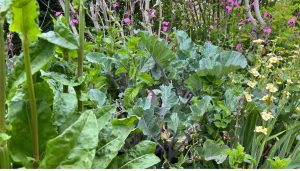
Our food forest is a series of guilds that interlace together into a greater whole.
How Plant Guilds Work (And The “Roles” Plants Play)
Plant guilds are designed by selecting plants that perform specific functions that benefit the entire group, often centered around a “main” plant (like a fruit tree). Common roles plants play in a guild include:
Central Element: Usually a productive plant like a fruit tree, nut tree, or large shrub that forms the core of the guild.
Nitrogen Fixers: Plants (often legumes like clover, beans, or peas) that have a symbiotic relationship with bacteria in their roots. These bacteria convert atmospheric nitrogen into a form usable by plants, essentially providing natural fertilizer for the whole guild.
Dynamic Accumulators: Plants with deep taproots (like comfrey or dandelion) that can draw up nutrients and minerals from deeper in the soil that are unavailable to shallower-rooted plants. When these plants die back or are “chopped and dropped” (cut and left on the soil surface), these accumulated nutrients become available to other plants in the guild.
Pest Deterrents/Repellents: Plants that emit strong scents or chemicals (like marigolds, garlic, or chives) that (possibly) confuse or deter common pests, reducing the need for chemical pesticides.
Pollinator Attractors: Flowering plants (like borage, calendula, or sunflowers) that attract beneficial insects like bees and butterflies, which are crucial for pollinating fruiting plants and increasing yields. They can also attract predatory insects that prey on garden pests.
Groundcovers/Living Mulch: Low-growing plants (like strawberries, thyme, or clover) that cover the soil, suppressing weeds, reducing water evaporation, keeping the soil cool, and preventing erosion.
Support Plants/Trellises: Taller, sturdy plants (like maize in the “three sisters” guild) that can provide physical support for climbing plants.
Biomass Producers: Plants that grow quickly and produce a lot of organic matter, which can be chopped and dropped to add nutrients and improve soil structure.
Benefits of Plant Guilds
Improved Soil Health: Nitrogen fixers, dynamic accumulators, and biomass producers contribute to soil fertility and structure. The diverse root systems also help aerate the soil.
Pest and Disease Management: By attracting beneficial insects and deterring pests naturally, guilds reduce the reliance on chemical interventions. Increased biodiversity makes the system more resilient to outbreaks.
Water Conservation: Groundcover plants act as a living mulch, reducing evaporation and keeping the soil moist for longer.
Increased Productivity and Yields: The synergistic relationships between plants lead to healthier, more vigorous growth and often higher yields.
Reduced Maintenance: Once established, guilds can be remarkably self-sufficient, requiring less weeding, watering, and fertilising.
Enhanced Biodiversity: Guilds create diverse habitats for a variety of insects, microbes, and wildlife, contributing to a healthier overall ecosystem.
Maximising Space: By layering different plants with different needs and growth habits, guilds make efficient use of vertical and horizontal space, especially in smaller gardens.
Resilience: A diverse plant community is generally more resilient to environmental stresses and challenges.
Examples of Plant Guilds
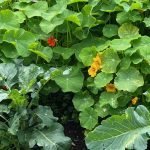
The “Three Sisters” (Classic Native American Guild): Corn (provides a stalk for beans to climb), beans (fix nitrogen for the “corn” and squash), and squash (provides groundcover, suppresses weeds, and conserves moisture).
Fruit Tree Guild: A fruit tree (such as an apple, pear or plum) as the central element, surrounded by plants … examples below.
Nitrogen fixers: Clover, field or broad beans, peas.
BioIntensive Gardens: I am a strong advocate of bio-intensive gardening. A practice where blocks of plants are packed tightly into a bed/area without the regiments rows we see in some gardens. Bio-intensive gardens are far more natural and are, in effect, guilds.
Food Forests: This, to me, is the best example of plant guilds I practice. It is a form of bio-intensive planting on a bigger scale than a garden. Though of course a single tree can have its own guild. Such is the flexibility of the system.
Plant guilds are a fundamental aspect of permaculture and gardening, offering a sustainable and effective way to garden by working with nature rather than against it.