Is The Recently Endorsed Sidmouth Civic Food Forest A First For UK? Spanning a Whole Valley & Civic Administration In East Devon It Could Be a Global First.
Table of Contents
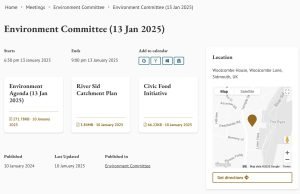
The Sidmouth Civic Food Forest was recently endorsed by Sidmouth Town Council, whose administrative area covers the whole of the Sid Valley & River Sid catchment area in East Devon. There are an increasing number of single site food forests springing up across the country, but none appear to be multisite and endorsed by the Environment Committee of a local council. But what is a food forest and how does this one differ from the single site food forests that already exist?
What Is A Food Forest?
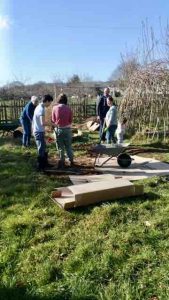
Simply put a food forest is a diverse planting of edible and otherwise useful plants that attempts to mimic natural woodland ecosystems. It is a form of permaculture. Many people claim food forests are a new innovation, I disagree. Mankind has been harvesting food form the woods, forests and jungles of our planet for as long as humans have existed. During that time they have actively planted, intentionally or accidentally, many plants and increased biodiversity as they did so. In Sidmouth we have been running a food forest for two years and there are details in your follow this link to the Sidmouth Community Food Forest.
As old as both private and community food forests are, we do however believe that civic food forests (CFF) are new. Let me explain what they are and how we came to start to build ours.
What Is a Civic Food Forest?
Simply put it is a food forest on multiple sites, on both private and public land. To be civic the project must also recognised, endorsed and promoted by the relevant council. Where sites are private access is limited or barred, but on public sites the food forest is open to the public and they are encouraged to plant and harvest crops for personal use.
How Did Sidmouth Civic Food Forest Start?
The CFF has existed in one sense for some time. We have had a community food forest there for two years and various people also have mini food forests in their gardens or land. Civic recognition came later and there is a story behind it that goes back over 20 years.
In Sidmouth we have the country’s only civic arboretum … 600+ notable trees located over the whole valley on public and private land … and we believed this concept could be replicated to create a Sid Valley Civic Food Forest.
Why Create a Civic Food Forest?
Food forests offer local communities a great deal. Not only do they have the potential to improve participants’ physical and mental health, they help participants combat loneliness, improve environmental resilience and produce food with almost zero food miles! We know this from our experience gained when running the Sid Valley Community Food Forest.
But we want to extend the idea. We believe that a community food forest is just the start and people can create their own food forest at home where they can grow food for personal use or to share with neighbours or food banks. This is really an extension of what many people already do with home grown produce. For example they put surplus apples in a box at the front of their house.
Are There Civic Food Forests Elsewhere?
There are an increasing number of community food forests across Europe. But having researched the idea of a civic food forest online and with colleagues based in places as far apart as the Balkans and Bavaria to the Arctic Circle, I can see no evidence of there being a civic food forest anywhere in Europe, perhaps anywhere in the world. So Sidmouth is very likely to be a global first. I’m sure someone will correct me if I’m wrong.
How Big Is a Civic Food Forest?
There is no defined size. Currently our CFF comprises the community food forest which is just under half an acre plus various garden based food forests in the gardens of local residents. Since we launched the idea we have had commitments from other residents who want to create their own small part of a civic food forest.
Space Isn’t A Limiting Factor
The idea behind a civic food forest is for public and private landowners and gardeners to plant a few square metres (or more) to a food forest, ideally with perennials and edimental plants. It is something that can be incorporated into an existing flower or veg bed, at home or on an allotment or in public areas.
What Plants Can Be Grown In A Civic Food Forest?
Anything edible is a good starting point. But clearly it has to be happy living in close proximity to other plants because a food forest is based on polyculture and not monoculture.
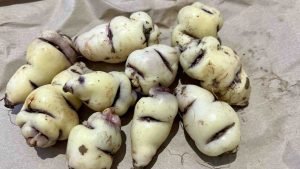
For example an apple, plum or pear tree could be underplanted with a few bush fruit such as blackcurrants or gooseberries. Alongside it a clump of raspberries could be planted and scrambling through the tree there could be a hop, Caucasian spinach or mashua. Additional plants could include both ground cover and herbaceous species with mint, strawberries, perennial kale etc.
The food produced could be for personal use or for the community. It depends on the location and site ownership. Clearly where the food forest is on private land the public will not be able to wander in and help themselves! This produce is for personal use or to share with others via a surplus box by the front gate or similar.
Food forests normally comprise seven layers of plants as described in the linked article. But a mini food forest clearly doesn’t have space for everything, so could start with just 3-4 layers to begin with. It can always be expanded later.
Can I Get Help & Advice On Starting My Food Forest?
Yes.
The food forest team will provide training and advice including printed and online materials such as plant lists and a “How to build your first food forest” guide.
We are also examining the feasibility of providing a starter pack of plants that first timers could use to build their first food forest. We already have reserves of a few species and will probably look for modest grant aid to buy in stock plants that local people can. plant, propagate and share.
Are You Interested In Creating Your Own Part of a Civic Food Forest?
If so please complete the short confidential survey we have created, see below. Then we can send you more information on creating your own food forest and might be able to supply a starter pack of plants.
Sidmouth Civic Food Forest Expression of Interest
At this stage we are seeking expressions of interest from individuals, local groups and landowners and include a link below to a very short survey to ascertain the level of support this expanded initiative might expect.
Please complete the survey, it will help us in our planning, whether you give the idea a thumbs up or down!
All responses are confidential. One question checks if you live, or have land, in the Sid Valley. But I’m interested in hearing from people outside this valley to ascertain if this idea could go beyond this area.