Gardens Need Good Drainage Because Most Veg Prefer Well Drained Soil & Struggle With Waterlogging. How To Drain Gardens & Allotments. Read More In This Article.
Table of Contents
The UK’s unpredictable climate, with its frequent rainfall and periods of intense downpours, can pose significant challenges for gardeners and Allotment tenants. Therefore effective drainage in gardens is essential. Poor drainage can lead to a host of problems, from waterlogged soil and root rot to stunted growth and reduced plant health. But by understanding the principles of drainage and implementing effective solutions, we can drain wet land and create thriving gardens, (almost) regardless of the weather.
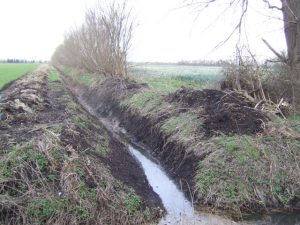
The image here is of a drain in the Fens, the black peat is visible. Of special note is that there is no gradient here, and with water preferring to run downhill that is a n issue. Flow does however exist due to hydrostatic pressure.
Basic Drainage Principles
I’ve written a separate article on the Basic Physics of Soil Drainage and you can read it by following the link. But, in essence, provided you understand that water doesn’t run up hill, that pebbles drain faster than clay then you are a good way towards understanding all you need to know for now!
Obvious Drainage Issues
Once we grasp the basic soil physics it should be obvious to us that soils cant be drained unless there is somewhere for the water to go to. If all the water flows downhill into a dip in the land and the soil is clay, it is going to hold that water for a long time. It might even form a permanent pond.
In contrast, rain falling on the top of a chalky hill is going to dry out very quickly in comparison.
I know the above is obvious, but so often we see people in low lying sites ask how they can drain their plot, when there is nowhere for the water to flow to.
And often I see people on deep clay being told to dig a soak away. That will only work if there is somewhere for the water to drain to. Otherwise all you get is a pond!
The Importance of Good Drainage – More Effective Drainage In Gardens!
Good drainage is essential for a healthy garden. It ensures that excess water can quickly drain away from plant roots, preventing waterlogging and the associated problems of fungal diseases and nutrient deficiencies. Well-drained soil also warms up more quickly in spring, allowing earlier planting and harvesting.
Assessing Your Soil’s Drainage
Before implementing any drainage solutions, it’s crucial to assess your soil’s drainage capacity. A simple test can provide valuable insights:
Dig a Hole: Dig a hole about a spade spit (30cm deep) and fill it with water. If the water drains away within an hour, your soil has good drainage. If it takes longer, your soil may be heavy clay and require improvement.
Observe Plant Health: Healthy plants with vibrant foliage and vigorous growth are a good indicator of well-drained soil. Conversely, yellowing leaves, stunted growth, and wilting, even in damp conditions, may signal poor drainage.
Improving Drainage in Your Garden
Several effective strategies can be employed to improve drainage in your garden:
Drainage Channels and Ditches: Creating shallow channels or ditches around your garden can divert excess water away from planting areas. But there must be somewhere for the water to flow to. Water prefers to flow down hill (or sideways under hydrostatic pressure) — see the photo above.
French Drains: A more advanced drainage solution, French drains involve installing a perforated pipe surrounded by gravel or crushed stone. This system effectively collects and redirects water away from problem areas. It also leads to excessively dry soils in periods of drought. So think carefully before installing drains. They can be blocked in need be, but need doing well in advance of problems.
Mulching: Applying a layer of organic mulch, such as wood chips or compost, can help to improve soil structure and reduce water loss through evaporation. Mulch also helps to suppress weeds, which can compete with plants for water and nutrients.
Soil Amendments: Incorporating organic matter, such as well-rotted manure or compost, into your soil can improve its drainage and fertility. These amendments can help to lighten heavy clay soil and increase water retention in sandy soil.
Adding Sand to Clay Soils sounds sensible, but can cause a lot of problems due to the quantities needed when call soils are deep and because the clay can become more concrete like when it dries. Physics doesn’t always make sense!
Choosing the Right Plants
When selecting plants for your garden, consider their water requirements and tolerance to wet soil conditions. Some plants, such as celery and wasabi thrive in moist or even waterlogged soil. However, others, indeed most veg, prefer well-drained soil.
Seasonal Drainage Challenges and Solutions
The UK’s climate presents unique drainage challenges throughout the year. Here are some tips for managing drainage effectively in different seasons:
Winter: Heavy rainfall can lead to waterlogged soil and root rot. To mitigate this, clear gutters and downpipes to prevent overflow, avoid walking on/compacting wet soil, and consider winter mulching to protect plants from frost and excess moisture.
Spring: As the ground thaws after snow, it can become waterlogged, especially in low-lying areas. Monitor soil moisture levels and adjust watering accordingly :-) .
Summer: High temperatures and periods of drought can stress plants, particularly those in poorly drained soil. Mulching can help to conserve moisture and suppress weeds. Water deeply and less frequently to encourage deeper root growth and reduce the risk of waterlogging. Consider using water butts to collect rainwater for irrigation.
Autumn: As the days shorten and rainfall increases, prepare your garden for winter by clearing fallen leaves and debris from borders and drains. Plant winter-hardy plants that can tolerate wet conditions, and raise containers off the ground to improve drainage.
By understanding the principles of drainage and implementing practical solutions, we can create a thriving garden that can withstand the vagaries of the UK climate (aka lots of rain). Remember, good drainage is tat the heart of a healthy and productive garden.
More On Garden Drainage
In this article I give an overview of basic soil drainage with respect to gardens. Drainage is however a much bigger topic and if you want to understand more follow this link to the https://en.wikipedia.org/wiki/Drainage page.