Jethro Tull, An English Agriculturalist & 18th Century Inventor (Not The Musician), Revolutionised Farming Practices With His Innovative Techniques.
Table of Contents
Born in Basildon, Berkshire, Jethro Tull had a passion for agriculture that led him to experiment with new methods on his Wiltshire estate. His groundbreaking inventions, such as the seed drill and horse-hoeing, significantly improved crop yields and efficiency, earning him the title “Father of Modern Agriculture.”
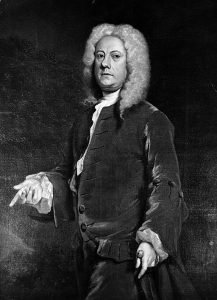
Jethro Tull (1674-1740) played a pivotal role in revolutionising farming practices in the 18th century. Tull was educated at Oxford University, where he studied law. However, his true passion lay in agriculture, and he spent much of his life experimenting with new farming methods on his estate in Wiltshire.
Tull’s Innovations In Crop Cultivation
Tull’s observations of natural processes and his keen interest in technology led him to develop innovative approaches to crop cultivation. He believed that traditional methods of sowing seeds by hand were inefficient and wasteful, and he sought to improve upon them through the use of machinery.
Tull’s Seed Drill
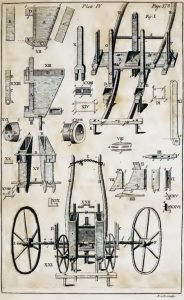
One of Tull’s most significant contributions was the invention of the seed drill. This machine planted seeds in rows at a precise depth, allowing for more efficient use of land and reduced weed growth. Tull’s seed drill was a major advancement in agricultural technology and helped to improve crop yields.
Tull also emphasised the importance of horse-hoeing, a technique of cultivating the soil between rows of crops to control weeds and improve soil structure. He believed that frequent hoeing would stimulate plant growth and increase yields.
Tull’s ideas were met with scepticism and resistance from traditional farmers, but his experimental approach and meticulous observations ultimately convinced many of the benefits of his techniques. His writings, particularly “Horse-Hoeing Husbandry” (1731), provided detailed explanations of his methods and the rationale behind them.
Tull’s innovations had a profound impact on agriculture. His seed drill and horse-hoeing techniques helped to improve crop yields, reduce labour costs, and increase the efficiency of farming. His work also laid the foundation for modern agricultural practices, such as the use of machinery and the development of improved crop varieties.
Key Principles of Tull’s Horse-Hoeing Husbandry
Seed drilling: Planting seeds in rows at a precise depth to improve germination and reduce weed competition.
Horse-hoeing: Cultivating the soil between rows of crops to control weeds and improve soil structure. I understand and practised this principle when growing lettuce on a field scale. My lettuce were planted in straight lines by machine. I then used another machine, called a Bean Tractor (named after two brothers named Bean, not the plant) to hoe between the plants. This significantly reduced weeds as I was precision hoeing with tolerances of a few millimetres between plants.
I don’t think the impact of removing competition weeds can be ignored. Prior to this crops grew amongst the weeds and yields were small. By removing competing weeds yields significantly increased, several fold. Costs to achieve this were minimal and it could mean the difference between famine and plenty. We would not forget that famines were still common until this time!
The hoeing also improved soil structure a great deal, though the explanation is not as many would expect. I was on a soil that capped hen we had heavy rain. This reduced air in the soil. Hoeing removed the capo and allowed air back in the soil which caused a flush of growth. We would say that a good hoeing was worth a bag of nitrogen in terms of plant growth. Though they were totally unrelated of course!
Soil preparation: Preparing the soil carefully before planting to create a favourable environment for crop growth. This applies whether we are dig or no dig. Good healthy soil conditions are essential.
Efficient use of land: Maximising the use of land by planting crops in rows and minimising waste.
Tull’s ideas were revolutionary for his time, as they challenged traditional agricultural practices. His emphasis on experimentation, observation, and the application of scientific principles to agriculture helped to pave the way for the development of modern agricultural methods. His methods were scientific and led the way to science being practised in agriculture and horticulture. It started with his observations but always led to testing and evidence gathering.
Impact of Tull’s Innovations
Increased crop yields: Tull’s methods led to higher crop yields and greater agricultural productivity.
Reduced labour costs: The use of machinery, such as the seed drill, reduced the amount of manual labour required for farming.
Improved soil health: Horse-hoeing helped to control weeds and improve soil structure, leading to healthier and more productive crops.
Advancement of agricultural science: Tull’s work helped to establish agriculture as a more scientific field, encouraging further research and development.
Jethro Tull’s legacy as a pioneer of agricultural innovation endures. His contributions to the development of modern farming methods have had a lasting impact on agriculture worldwide.
As a pioneer of agricultural innovation Jethro Tull emphasised the significance of soil health in his work. I still shout about soil health myself every day! He believed that proper soil preparation and maintenance were crucial for maximising crop yields and promoting sustainable agriculture.
Tull advocated for the separation and division of soils, arguing that this practice could improve soil structure and fertility. He believed that by breaking up compacted soil and allowing for better aeration and drainage, farmers could create optimal conditions for plant growth. He was right! though not always for the right reasons.
Tull’s Views on Soil Separation
Tull’s specific methods for soil separation included:
Deep ploughing: Using a plough to break up compacted soil and create deeper root zones for plants. He was right in his day, but the same can be achieved today with min til and no dig.
Horse-hoeing: Cultivating the soil between rows of crops to control weeds and improve soil structure. Today we have the opportunity to improve aeration and minimise weeds with no dig.
Manuring: Applying manure to the soil to add organic matter and nutrients. Rather than incorporate organic matter in the traditional ways today we advocate mulching, no dig, green manures etc.
Tull believed that these practices would lead to healthier soils, increased crop yields, and reduced weed pressure. In this he was a true innovator.
Modern Perspectives on Soil Separation
While Tull’s ideas on soil separation were groundbreaking for his time, modern agricultural practices have evolved significantly. While some of his principles remain relevant, contemporary approaches to soil management incorporate the following ideas.
Soil testing: Regular soil testing helps farmers assess nutrient levels, pH, and other factors that affect soil health.
No-till farming: This practice involves minimising soil disturbance to preserve soil structure and reduce erosion.
Cover crops: Planting cover crops between main crops can help improve soil health, reduce erosion, and enhance nutrient cycling.
Organic farming: Organic farming practices prioritise the use of natural inputs and avoid the use of synthetic fertilisers and pesticides.
Tag: Jethro Tull
Image Attribution:thoughtco.com, Public domain, via Wikimedia Commons, Jethro Tull, Public domain, via Wikimedia Commons
.jpg)