Vegetable Gardening Is About Polyculture, Farming Is About Monoculture. Polyculture Is Complex But Produces Great Crops & Soil Health. Discover The Benefits Of Polyculture In Your Garden.
Table of Contents
You have most likely heard about monoculture. It’s the way farms tend to grow one crop over a huge area. With large fields and big machinery there is a logic to it if we are to enjoy cheaper food than the alternative offers. So what is polyculture?
Polyculture is the opposite approach. And that is what this article is about.
What is Polyculture?
Polyculture consists of two words. Poly meaning many and culture meaning to grow. So polyculture is about Growing Many Together.
The dictionary definition is a bit longer and says that “Polyculture is the practice of cultivating multiple crops together in the same space at the same time. It’s the opposite of monoculture, where only one crop is grown in a field.”
Is Polyculture Natural?
Absolutely. It’s how most of the world exists outside of farming.
Think of a forest or jungle: they are vibrant ecosystems where countless plant species coexist, each playing a role in supporting the whole. Polyculture aims to mimic this natural diversity in a garden or allotment setting.
It’s a bit like in our food forest where we grow many plants together in a relatively small area. Each supports its neighbour in one way or other and as one plant is harvested we can sow or plant another in its place. This gives us a “natural rotation” of crops in a small area.
Polyculture Alternatives
There are two ways we can use polyculture in the veg garden. We can do what I described above, as one plant is harvested another replaces it. This method sees a huge diversity of plants in relatively small areas. In most cases adjoining plants will be a different species or type.
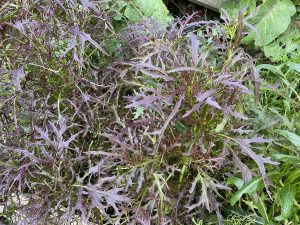
This works well where plants have similar characteristics and life spans. For example, a bed of assorted lettuce or oriental mustards. We might see Red Frills next to mibuna, next to mizuna next to Ruby Streaks and Golden Frills. They all look different, the leaves are different sizes and colours.
But essentially they are all the same species. So is this truly polyculture? Or is it monoculture?
And does it matter?
Yes and no!
The area of oriental mustards grown for a single family, in most gardens or allotments, is likely to be relatively small. And if we have another crop in the next area and so one then we have a form of polyculture across the whole plot to garden. It certainly isn’t the same as a field of wheat rot potatoes.
The second way to use polyculture is to mix things up a bit more. If we had added a few lettuce to our oriental mustards we would have had a size disparity. The lettuce would potentially have been overshadowed by the taller growing mustards. My mustards often reach several feet high before I finish harvesting leaves from them.
But if we choose plants of similar heights, for example, lettuce, beetroot, carrots, spring onions etc the degree of overshadowing would decrease. And in this situation it is far easier to replace plants as they reach their natural end. In this way, by using plant modules or plants grown in pots we can pop in a larger plant as a replacement and the weight of crop produced per unit area really increases.
The Key Benefits Of Polyculture
Crop Yield Increases: Firstly, as mentioned above, crop yields can significantly increase with polyculture.
In addition we see ….
Increased biodiversity: A variety of plants supports a wider range of beneficial insects and other organisms.
Improved soil health: Different root systems and nutrient requirements contribute to healthier soil structure. Soil biology blooms with a more diverse mix of beneficial fungi and bacteria.
Reduced pest and disease pressure: Diversity makes it harder for pests and diseases to establish themselves. Plus, they don’t spread as easily. Polyculture is the natural healthy option for plants and soil.
Is Polyculture Easy?
Monoculture is relatively easy. One crop a year over a huge area.
Most gardeners practice polyculture in that they grow multiple crops over their plot in one year. The only difference in gardens and allotments if the form of polyculture as described above.
However, polyculture is a complex system that requires careful planning and observation. No one said gardening was easy. But, the rewards in terms of healthy crops, ecosystem health and food diversity can be significant.
Other Polyculture Options in Your Garden
While monoculture might be efficient for large-scale commercial farming, polyculture often offers greater benefits for home gardeners. Here are a few more examples of polyculture in action.
Companion Planting: In addition to the mix of plants I mention above, growing together just as edible crops, some people practice companion planting. The idea is to grow compatible plants together to enhance growth and deter pests. The methods I’ve already mentioned help deter pests and diseases, but companion planting advocates believe tit cane taken further by growing a wider range of plants. It’s an intriguing idea, and it works in a very limited way. But if you grow a non edible to deter pests then you lose overall yield. I’ve written more on companion planting elsewhere.
Intercropping: Planting different crops between rows of a main crop to maximize space and resource utilisation. This is what my father used to do when he planted Brussels between his spuds before he dug them. It worked then and still does now. It packs more crops into a given area each year. The second crop is growing before the first is harvested. Win win.
Polyculture Instead of Crop Rotation?
Despite many people disagreeing with this of us that don’t believe crop rotation is necessary in gardens I find it very satisfactory. Polyculture seems to nudge us towards growing crops in different parts of the garden each year without us thinking about formal rotations that insist this follows that.
And because we have a mix of plants in an area the chances of pests and diseases building ups greatly reduced.
My last thought here on rotations is that you cant really rotate in a small garden. The reason being that if you move a crop a few feet away from last year’s location the pest and diseases can soon spread to the new area. Whether it flies out crawls there, gets splashed by rain or is carried on our boots or tools is isn’t far away. This is very different to agricultural rotations where crops are in different fields divided by hedges, streams or farm tracks.
What Is Polyculture Farming?
Rare. It’s rarely practiced.
The reasons being those for choosing monoculture. Modern farming is more efficient where the fields are big and machinery large. With polyculture it’s more difficult to harvest one crop before its companions are ready. The logistics don’t work on a fired scale.
Thats not to say it’s never practiced. I saw as polyculture field of brassicas in Normandy when I was there recently. If you look carefully rows of different varieties can be seen where their different colours are just visible.
Having farmed myself I can say tha harvest is going to be hellish! Especially as there are different varieties in adjacent rows. A block of each makes better logistical sense and it’s likely that the extra work here will make this unprofitable.
Make Up Your Own Minds
In my articles I merely relate my experience and/or the science. You then decide for yourself.
But by understanding the principles of monoculture and polyculture, you can make informed decisions about your garden design and management practices. Remember, there’s no one-size-fits-all approach. The best method depends on your specific goals, the available space, and the plants you want to grow.