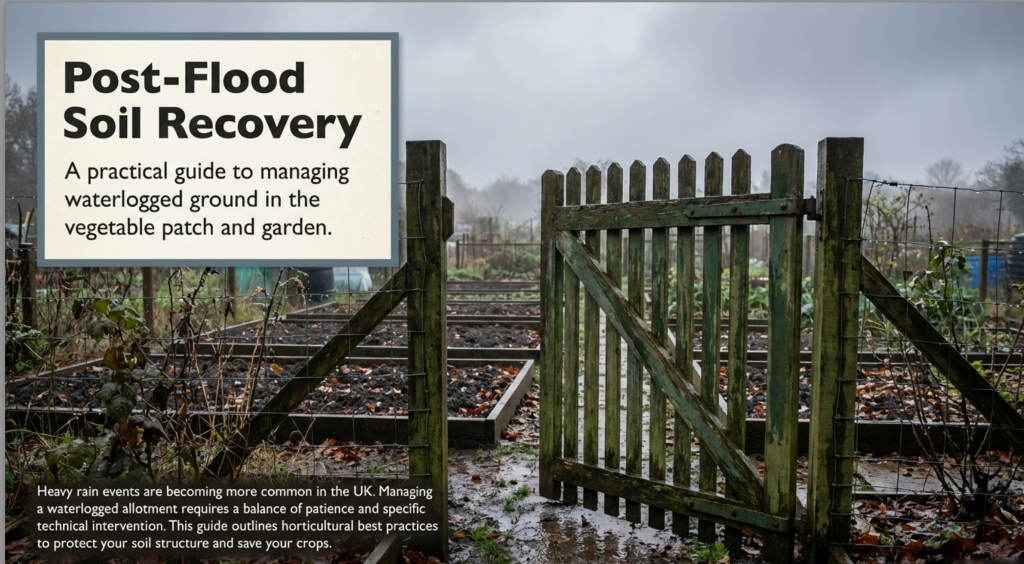
With Heavy Rain Events Becoming More Common, And The Recent Storms And Severe Flooding On Our Minds, This Article Looks At What Action We Can Take When Soil Becomes Saturated Or Even Deep In Water.
Table of Contents
Managing a waterlogged allotment or garden requires a balance of patience and specific technical intervention. Taking the wrong steps—such as walking on saturated soil—can cause long-term structural damage that may take seasons to rectify. Gardeners need to know how to care for soil after heavy rain more than ever.
Here is a guide based on horticultural best practices for the UK climate.
Immediate Safety and Assessment
It should go without saying but beware deep floodwater and even entering areas with shallow water as sharp debris could lurk beneath the surface.
Before touching the soil, address potential hazards, particularly if the water originated from a flood (overflowing rivers or drains) rather than just heavy rainfall.
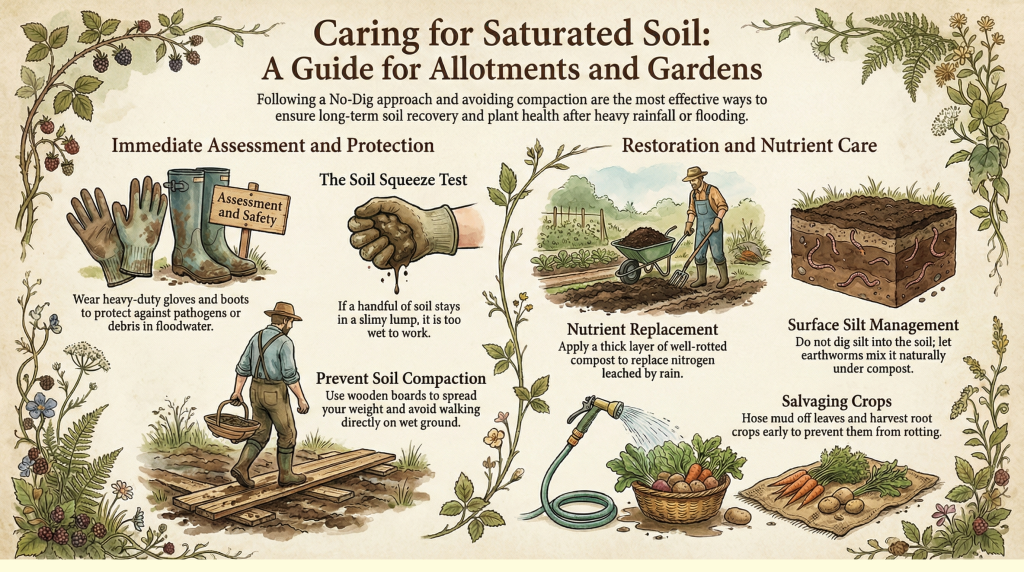
Contamination: Floodwater often carries pathogens, fuel, or sewage. Wear heavy-duty gloves and boots. If the area was flooded by a watercourse, or other potentially contaminated sources, any leafy crops (lettuce, spinach) currently in the ground should be discarded.
Structural Integrity: Check that sheds, greenhouses, and retaining walls haven’t been undermined or tilted by shifting soil.
Do the Soil “Squeeze Test”: Pick up a handful of soil. If water runs out or it stays in a solid, slimy lump, it is too wet to work. Wait until it crumbles slightly under pressure.
Immediate Response: Protection over Intervention
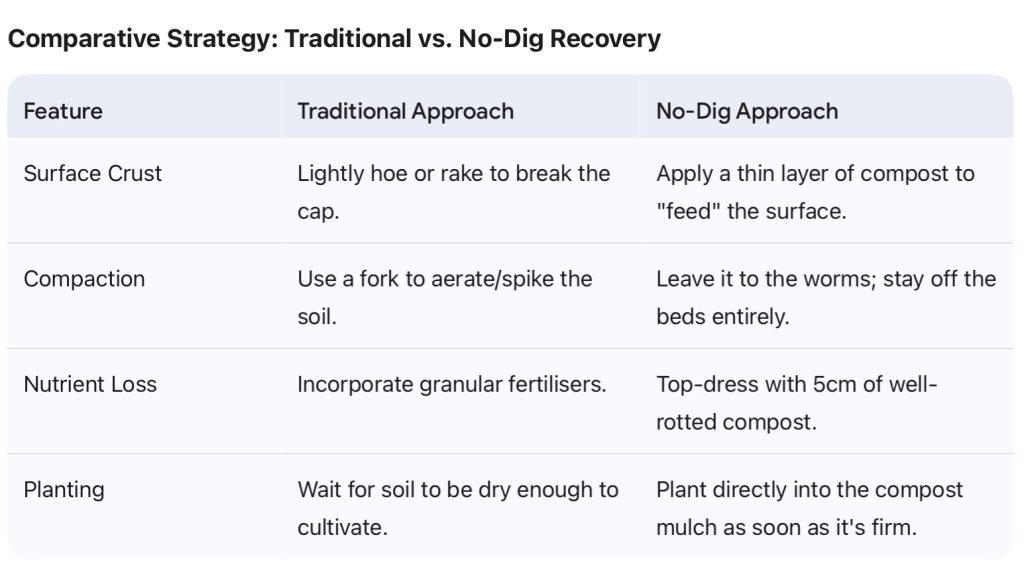
In both traditional and No-Dig systems, the primary rule is to avoid compaction. However, No-Dig gardens often fare better because the soil hasn’t been loosened by digging, making it less prone to turning into a “slurry.” It also drains better.
Use Permanent Pathways: If you have established No-Dig beds, stay strictly on the paths. If the paths are waterlogged, use boards to bridge them.
The Mycelium Factor: Heavy rain can temporarily “drown” the soil’s aerobic bacteria. By not digging, you preserve the existing mycorrhizal fungi which help the soil recover its porosity much faster than turned earth.
Managing the Surface (The No-Dig Way)
Traditional “How To Care For Soil After Heavy Rain” advice suggests aerating with a fork, but if you are No-Dig, the soil’s natural inhabitants (earthworms) will do this better if left alone.
Silt Management: If floodwater has left a layer of silt, do not dig it in. In a No-Dig system, wait for the silt to dry slightly, then simply apply a fresh layer of 2–5cm of well-rotted compost directly on top. The worms will eventually mix the silt and compost, preventing a “crust” from forming.
Drainage via Biology: Instead of mechanical drainage, rely on organic matter. If your beds are saturated, adding a layer of dry, “short” compost (very well-decayed) can help absorb some surface moisture and provide a drier medium for new sowings.
Nutrient Recovery and Soil Health
Heavy rain leaches mobile nutrients, particularly Nitrogen, out of the soil.
Mulching for Fertility: In No-Dig, you don’t “dig in” fertiliser. Instead, apply a thick layer of high-quality compost once the standing water has gone. This acts as a slow-release sponge, replacing lost nutrients while protecting the surface from “capping” (the hard crust caused by rain impact).
Avoid “Green” Manures in Saturated Soil: Do not add fresh, uncomposted organic matter to waterlogged No-Dig beds. In anaerobic (oxygen-poor) conditions, fresh manure can putrefy rather than decompose, harming the crop roots.
Soil Management
The greatest risk to wet soil is compaction. When air pockets are filled with water, the soil structure becomes fragile.
Keep Off the Soil: Use “planting boards” or old planks to distribute your weight if you must move across the site. Walking directly on wet soil collapses the pore spaces, leading to anaerobic conditions that suffocate roots.
On my market garden we used planting planks in the greenhouses so as to not leave an uneven surface. We’d plant a row, then turn the planks over to move across the border until finished. It’s amazing how fast you can work this way.
Improve Drainage: Do not dig the soil while it is wet, as this creates “clods” that dry like bricks. Once the surface water has subsided, you can use a garden fork to create deep holes (aeration) without turning the earth. Or a broad fork to loosen the soil.
Wait to Mulch: Avoid adding heavy layers of mulch or manure until the soil has drained. Doing so now can trap moisture and keep the ground cold and anaerobic for longer.
Plant Care and Salvaging Crops
Excessive water excludes oxygen from the root zone, which can lead to root rot (Phytophthora).
Remove Debris: Silt and mud left on leaves block photosynthesis. Gently hose down ornamental plants with clean tap water.
Check for “Rocking”: Heavy rain can loosen the “anchor” of trees and shrubs. Check for gaps at the base of stems and gently firm them back in once the soil is workable.
Harvesting Root Crops: For potatoes, carrots, or parsnips, harvest them as soon as the soil allows. Leaving them in saturated ground leads to rotting.
Pruning: Remove any branches or foliage that have been physically damaged by the weight of the water or wind to prevent fungal infections.
Clarification & Doubts
It is important to note that if your No-Dig beds are framed (e.g., wooden sides), they may act as “bathtubs” if the underlying soil is heavy clay. In such cases, you may need to temporarily remove a side board to allow trapped water to escape.
If you require further advice on How To Care For Soil After Heavy Rain please make a comment below.