For Decades I Supplied UK Supermarkets With Peppers. Read My Pepper Growing Secrets Here. Discover How To Get High Yields Of Tasty Peppers In your Garden Or Allotment.
Table of Contents
With relatively short and often cool growing seasons growing peppers in the UK requires a common sense approach. Growing in a greenhouse or polytunnel helps provide the consistent warmth and protection from wind necessary for a successful harvest from this warm climate plant.
I’m not going to reflect too much on my commercial method of growing, except where it illustrates best practice for gardeners. Suffice to say I grew a few thousand plants a year in polytunnels. Despite all the stories that they need a long season I didn’t sow until mid-late March and planted on May 7th, after a lettuce crop. Our yields were good for a relatively short season, and we harvested an average of seven pound of fruit per plant before the first frost.
Before delving too deep, let’s first examine what a pepper is!
What Are Capsicum Peppers
Capsicum is a genus of flowering plants in the nightshade family (Solanaceae), native to the Americas. While they are botanically classified as fruits (specifically berries), they are culinarily treated as vegetables or spices. The genus encompasses a wide range of varieties, primarily categorised by their level of capsaicin, the chemical compound responsible for heat
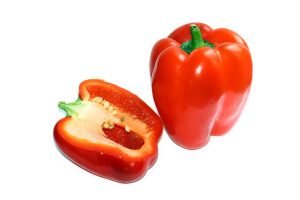
Sweet Peppers (Bell Peppers), Capsicum annuum, : Varieties with little to no capsaicin, possessing a mild, sweet flavour.
Chilli Peppers, various species including C. chinense, frutescens, baccatum and pubescens: Pungent varieties ranging from mild (e.g., Jalapeño) to extremely hot (e.g., Scotch Bonnet or Carolina Reaper).
History of Peppers in the United Kingdom
The introduction is perhaps easier than you might imagine. Capsicum were first introduced to the UK following European exploration of the Americas in the late 15th century. Think Columbus!
16th Century Arrival: Seeds were first brought to Europe by Christopher Columbus and his physician, Diego Álvarez Chanca, in 1493. They reached England shortly after, initially grown as ornamental curiosities in botanical gardens due to the UK’s cooler climate.
Culinary Adoption: For centuries, they remained a niche ingredient. The term “pepper” was applied because of their pungent bite, similar to the unrelated black pepper (Piper nigrum) which was then a high-value global commodity.
20th Century Expansion: Consumption surged post-WWII, driven by increased migration from the Caribbean and South Asia, and the subsequent popularisation of international cuisines. The advent of package tours to places such as Spain meanly other cultures started to eat them on holiday and see them out on their return. Commercial glasshouse production in the UK (notably in the Lea Valley) began to expand significantly in the late 20th century to meet this rising demand. I grew my first crops in the late 70s and
Annual Consumption Patterns (2024–2026)
The UK market for capsicums is mature and stable, with a heavy reliance on imports to sustain year-round availability. We consume around a quarter million tons a year. Only 6-7 % are grown here. Around 85% are grown in Spain and the Netherlands.
Key Consumption Trends:
Import Dependency: The UK remains a major net importer. The Netherlands and Spain provide approximately 85% of total imports, with Morocco and Turkey growing in market share.
Seasonality: Peak domestic harvest occurs between June and October. Outside these months, the market relies almost entirely on Mediterranean and North African imports.
Consumer Preference: There is a sustained retail demand for “traffic light” (red, yellow, green) pre-packed mixed peppers. Additionally, interest in specialty “super-hot” chillies has grown, supported by a burgeoning UK craft hot-sauce industry.
Health Driving Demand: High vitamin C and A content, along with the metabolism-boosting properties of capsaicin, continue to support consumption amongst health-conscious demographics.
Pepper Variety Selection
For the UK climate, selecting varieties that are proven performers in cooler temperate zones is essential.
Sweet Peppers: Look for RHS Award of Garden Merit (AGM) varieties such as ‘Redskin’(dwarf, ideal for pots), ‘Corno di Toro Rosso’ (tapered and sweet), and ‘Mohawk’. My preference was, and still is, for Bell Boy as it yielded a good quantity of high quality and tasty fruit.
Chilli Peppers: Reliable options include ‘Apache’, ‘Basket of Fire’, and ‘Hungarian Hot Wax’. Note that “super-hot” varieties (e.g., Habaneros or Reapers) require a longer and hotter season and may require supplementary heating in a greenhouse.
Sowing and Early Care
Timing: Sow seeds indoors or in a heated propagator from late January to March as stated earlier I sowed in mid – late March.
Germination: Peppers require a consistent temperature of 18–21°C to germinate in a timely manner. Lower temps will either delay germination or prevent it! Using a propagator or a warm windowsill is recommended.
Potting On: Once the first “true leaves” appear, transplant seedlings into individual 7.5cm–10cm pots. Keep them in a bright, frost-free location. Preferably keep them warm and very well lit with natural light. I alway kept mine at 20C or slightly warmer 24/7. Cooler temperatures slow down growth and subsequent yield.
Moving to the Greenhouse or Polytunnel
Do not move plants to their final undercover position until the risk of frost has passed and night-time temperatures consistently stay above 10–12°C.
Heated Space: Can be planted out in late April … but remember heating is expensive.
Unheated Space: Aim for mid-to-late May … depending on location
Spacing: Plant at least 45cm–50cm apart to ensure adequate airflow, which prevents fungal diseases like grey mould (Botrytis). I grew mine 18inches apart in the row with 4 rows in a 14ft wide tunnel.
My spacing might soon excessive but peppers, when well grown, are big plants. Mine cropped 7lb of fruit per plant which means the plant has to be big and capable of this quality of production. The biggest problem I experienced was branches snapping die to excessive crop weight so we used a modified Spanish trellis system of support.
Greenhouse or Polytunnel: Structure Comparison
Feature
Greenhouse
Polytunnel
Thermal Mass
Glass retains heat slightly longer into the evening.
Cools down rapidly after sunset.
Humidity
Easier to control via vents.
Can become very humid; requires careful ventilation. But I found higher humidity levels gave higher yields
Space
Often more restricted.
Excellent for larger volumes of plants.
Ongoing Cultivation
1. Temperature and Ventilation
Peppers thrive between 21°C and 26°C. If temperatures exceed 30°C, plants may suffer from “blossom drop” (where flowers fall off without setting fruit).
Action: Open vents and doors on hot days. In polytunnels, consider “damping down” (wetting the floor) to increase humidity and cool the air slightly.
2. Watering and Feeding
Watering: Keep the soil consistently moist but never waterlogged. Fluctuations in soil moisture can lead to Blossom End Rot, a calcium deficiency caused by uneven water uptake.
Feeding: Once the first flowers appear, feed every 7–14 days with a high-potash liquid fertiliser (such as tomato food) to encourage fruit development. NB I fed EVERY day with a a high potash liquid feed. I don’t suggest gardeners do this until experienced.
3. Support
Even compact varieties can become top-heavy once laden with fruit. Many sources suggest using bamboo canes and soft twine to support the main stem early in the season. but for me the stem is very robust, it is the branches that snap under crop load, so need support.
Harvesting
Green vs. Coloured: Most peppers can be harvested green for a sharper flavour. Leaving them on the plant to turn red, yellow, or orange will result in a sweeter taste but will slow down the production of new fruit. AND decrease yield. I harvested all my crop as green peppers.
Technique: gardeners are advised to use sharp secateurs or scissors to cut the fruit from the plant; pulling them by hand can easily snap the brittle branches. However, experienced growers will learn how to harvest by hand without causing damage.
Pests and Diseases of Peppers
Monitor regularly for aphids and red spider mites, which thrive in the warm, dry conditions of a greenhouse. Regular misting with water can help deter spider mites. One reason I used polytunnels is because the higher humidity prevented red spider.
Blossom End Rot can occur if watering is inadequate. It causes a localised calcium mobility issue in the plant. It is NOT normally caused by insufficient calcium when grown in soils or compost.
How To Grow Peppers is one of many in the How To Grow series on this website. Follow the link for more