Mankind Makes Mistakes! Farming & Food Production Mistakes Are Very Visible & Involve Everyone As We All Eat Food. Here I Examine Food And Farming Mistakes We Are All Involved In At Some Level.
Table of Contents
Over time, several once-standard agricultural practices in fruit and vegetable production have been disproven or are now frowned upon due to their environmental and health consequences. It is easy to point the finger at the perpetrators but they were advised by governments and their representatives of the day and seemed sensible at the time. The failure is one of history and is one we must all bear some responsibility for … however distant that might be.
Key examples of costly food production mistakes include the widespread use of methyl bromide for soil fumigation and the reliance on peat as a growing medium.
Methyl Bromide Soil Sterilisation 💀
Methyl bromide (Bromethane) was a highly effective soil fumigant widely used in fruit and vegetable production to control a broad spectrum of pests, including fungi, insects, nematodes, and weeds. It was applied to the soil before planting to sterilise it, ensuring a “clean slate” for crops.
Why it was accepted: It was an extremely efficient and fast-acting pesticide that led to high crop yields and quality.
Why it’s now frowned upon/disproved: The gas was discovered to be a potent ozone-depleting substance (ODS). When released into the atmosphere, it significantly contributes to the destruction of the Earth’s protective ozone layer, which filters out harmful ultraviolet (UV) radiation. The use of methyl bromide for most agricultural purposes has been phased out globally under the Montreal Protocol on Substances that Deplete the Ozone Layer.
But it wasn’t only used as a soil sterilant in greenhouses. It was widely used to sterilise shipping containers and ships. Huge cargo ships had their holds sterilised with this noxious gas. Ships that brought us cargoes of fruit, veg and other essentials. I doubt any of us consumed food from a ship that wasn’t sterilised with Methyl Bromide.
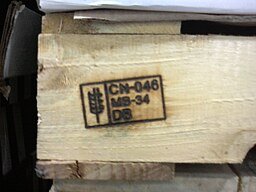
Pallets were also sterilised with MB. You’ll sometimes see the MB stencil on older pallets indicating that they were sterilised.
The Use of Peat
For decades, peat has been a popular component in potting mixes and soil amendments for horticulture. Its properties, such as high water retention and excellent aeration, made it a go-to choice for growers.
Why it was accepted: Peat moss is lightweight, readily available, and has a consistent structure that provides an ideal environment for plant roots.
Why it’s now frowned upon/disproved: Peat is extracted from peatlands, which are unique wetland ecosystems that develop over thousands of years. The process of harvesting peat from these bogs releases vast amounts of stored carbon dioxide into the atmosphere, making it a major contributor to climate change. Peatlands are also crucial habitats for many rare species and play a vital role in flood control and water filtration. As the environmental damage became clear, the horticultural industry has been moving towards sustainable, peat-free alternatives like coir (from coconuts), wood fibre, and compost.
As I write this there is a private members bill, on banning peat use, slated to be heard in the next weeks.
Other Frowned-Upon Practices 🤢
Broad-Spectrum Pesticides: The indiscriminate use of broad-spectrum pesticides, which kill both pests and beneficial insects (like bees and other pollinators), was once common. Modern practices emphasise Integrated Pest Management (IPM), which uses a combination of biological, cultural, and chemical controls to manage pests with minimal environmental impact. This commercial practice can be used in gardens and allotments as well.
Excessive Fertiliser and Nutrient Runoff: The heavy application of synthetic fertilisers to maximise yield often leads to nutrient runoff into waterways. This runoff caused eutrophication, leading to algal blooms that deplete oxygen and kill aquatic life. Today, there’s a greater focus on soil health, targeted nutrient delivery, and precision agriculture to reduce waste and environmental damage.
Monocropping: The practice of growing a single crop on the same land year after year was a norm for its simplicity. However, it depletes specific soil nutrients, increases susceptibility to pests and diseases, and reduces biodiversity. Modern agriculture encourages practices such as (agricultural) crop rotation and polyculture to improve soil health, break pest cycles, and promote a healthier ecosystem. Gardening promotes a polyculture approach where strict crop rotations are no longer necessary.
The “Dig for Victory” movement is a great reminder of how small, consistent efforts can strengthen food resilience even today. Exploring sustainable habits alongside modern health guidance, such as the insights shared here is worthwhile.





The “Dig for Victory” movement is a great reminder of how small, consistent efforts can strengthen food resilience even today. Exploring sustainable habits alongside modern health guidance, such as the insights shared here is worthwhile.