A Guide to Starting and Nurturing a Food Forest For Food and Wildlife
Table of Contents
We’re planning a series of short sessions on understanding and creating your own food forests for small gardens and public spaces. And there is a place reserved for you if you respond quickly!
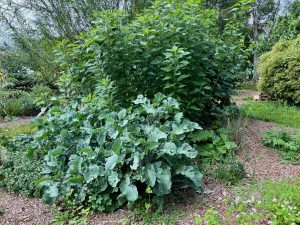
Food forests are a sustainable and self-sufficient gardening system that provides food for you and a habitat for local wildlife.
There’s a video at the end of this post that shows our food forest thriving in early summer.
The sessions will be held in four two-hour sessions this autumn at Sidford Social Hall, EX10 9QX, where you can learn about food forest principles, the seven forest layers, soil health, plant guilds, how to get started and longer-term management from the ground up.
The sessions are free, with a one-off booking fee of just £5 to cover all four sessions.
To help us find the best time for everyone, please let us know if you’re interested and which of the following options you prefer:
Day and Time Options:
Weekend afternoon
Weekday evening
Weekday afternoon
Weekend morning
Comment below if you’d like to join us and tell us your preferred day/time!
For a little more inspiration, check out what we plan to cover below.
A Guide to Starting and Nurturing a Food Forest
Session 1: Introduction to Food Forests: Principles and Design
Session 2: Building the Foundation: Soil, Water and Site Preparation
Session 3: Plant Selection and Guilds for a Resilient Food Forest
Session 4: Establishment and Early Care: Getting Your Food Forest Growing
Series Aim: To equip participants with the knowledge and practical skills to design, establish, and maintain a thriving food forest, whether a mini food forest or on a larger acreage.
Target Audience: Absolute beginners, those curious about food forests or permaculture, small garden owners and those managing community and public areas.
Session 1: Introduction to Food Forests: Principles and Design
Topics:
What is a Food Forest? (Definition, benefits, comparison to traditional gardening)
Key Permaculture Principles Applied to Food Forests (Observe & Interact, Catch & Store Energy, Obtain a Yield, etc.)
Layers of a Food Forest (Canopy, Understory, Shrub, Herbaceous, Groundcover, Root, Fungi/Mycelial) – detailed explanation and examples.
Plant nutrients:
N (Nitrogen): Vegetative growth and lush green foliage.
P (Phosphorus): Root development, flowering, fruiting, and energy transfer.
K (Potassium): Overall plant health, disease resistance, water regulation, and fruit/flower quality.
Site Assessment Basics: Understanding Your Land (Sunlight, aspect, wind, existing vegetation, soil basics – very brief overview).
Basic Food Forest Design Considerations: layout, access, water flow.
Inspiration and Examples of Successful Food Forests (local and international).
Practical Element/Activity: Determining personal food forest goals, sketching simple design ideas for a small space.
Session 2: Building the Foundation: Soil, Water and Site Preparation
Topics:
In-Depth Soil Health for Food Forests:
Understanding soil structure (clay, sand, loam).
The Soil Food Web and its importance.
Compost and Composting for Food Forests (types, how to make).
Mulching: materials, benefits, techniques.
Green Manures and Cover Cropping in a food forest context.
Understanding Plant Functions: Nitrogen fixers, dynamic accumulators, pest deterrents, groundcovers.
Creating Plant Guilds:
What is a guild? Benefits and examples (apple guild, nitrogen-fixing guild).
Designing your own guilds for different layers.
Companion planting within a food forest context.
Sources for Plants: Nurseries, seed saving, cuttings, plant swaps.
Practical Element/Activity: Designing 2-3 specific plant guilds, creating a plant wish list for their own food forest.
Session 4: Establishment and Early Care: Getting Your Food Forest Growing
Topics:
Planting Techniques for Trees, Shrubs, and Perennials:
Proper hole digging and planting depth.
Watering in and initial care.
Protection from pests and wildlife (fencing, tree guards).
Initial Maintenance:
Watering schedules for establishment.
Weed management in the early stages.
Pest and Disease Management (holistic approaches, identifying common issues).
Pruning Basics for Young Trees and Shrubs (formative pruning, promoting fruit production).
Observing and Adapting: Learning from your food forest.
Practical Element/Activity: Hands-on planting demonstration (if a suitable site is available), simple pruning techniques.
Practical Sessions:
Practical Element/Activity: Demonstrations of pruning, harvesting techniques, tour of a mature food forest may be included where appropriate (subject to weather, demand etc!)
We run monthly practical sessions for volunteers to which you are welcome.
Potential future courses may include
Nurturing and Harvesting: Long-Term Food Forest Management
Specific Plant Focus: e.g., “Nuts in Your Food Forest,” “Berries for Every Season.”
Fungi in the Food Forest: Mycoremediation, edible mushrooms.
Animals in the Food Forest: Integrating chickens, ducks, or other small livestock (with careful consideration).
Food Forest Products: Making jams, preserves, tinctures, value-added products.
Designing for Small Spaces: Adapting food forest principles to urban gardens and balconies.
This series is designed to provide a comprehensive yet manageable progression, allowing participants to build their knowledge and confidence step-by-step. Each session to be 2-4 hours, with a mix of theory, discussion and practical application.
Supporting Texts & Resources
Permaculture is a design philosophy for creating sustainable human settlements and agricultural systems, drawing inspiration from natural ecosystems. While it’s guided by three core ethics (Earth Care, People Care, and Fair Share), it’s most commonly understood through David Holmgren’s 12 design principles. These principles are interconnected and act as thinking tools to help guide design decisions towards sustainability.
12 Permaculture Principles
Observe and Interact: Take the time to thoughtfully observe nature and its patterns before intervening. This means understanding local climate, sunlight, water flow, and existing ecosystems.
Catch and Store Energy: Design systems to capture and store resources when they are abundant, for use when they are scarce. Examples include rainwater harvesting, building thermal mass, and preserving food.
Obtain a Yield: Ensure that your efforts produce useful results. This isn’t just about food; it can include beauty, community, energy, or knowledge.
Apply Self-Regulation and Accept Feedback: Design systems that are self-regulating, and learn to accept and respond to both positive and negative feedback from the system. This involves continuous observation and adjustment.
Use and Value Renewable Resources and Services: Make the best use of nature’s abundance to reduce reliance on non-renewable resources. This includes solar energy, wind, water, and biological resources like compost.
Produce No Waste: View “waste” as a resource for another part of the system. This is about creating closed-loop systems where outputs from one element become inputs for another.
Design from Patterns to Details: Start with the big picture and natural patterns, then fill in the details. Understand how things connect and flow before focusing on individual components.
Integrate Rather Than Segregate: Place elements in a design so that they support each other, creating beneficial relationships and synergies. Think about how components can work together.
Use Small and Slow Solutions: Start small, test, and iterate. Small, incremental changes are often more manageable, resilient, and less resource-intensive than large, sudden ones.
Use and Value Diversity: Embrace and encourage diversity in all its forms – species, functions, skills, and perspectives. Diversity builds resilience and stability.
Use Edges and Value the Marginal: Recognize that the edges where different systems meet are often the most productive and diverse areas. Maximize these “edge effects.”
Creatively Use and Respond to Change: Expect change and design systems that can adapt and evolve. Be flexible and innovative in the face of shifting conditions.
These principles can be applied to almost any aspect of life, from designing a garden or farm to managing a business, a household, or even personal relationships. They encourage a holistic, thoughtful, and ethical approach to interacting with the world.
Tag: A Guide to Starting and Nurturing a Food Forest