One Of My Favorite Gardeners Is Actually An Architect That Designs Aerial Arboriculture! Meet Stefano Boeri & His Vertical Forests.
Table of Contents
Stefano Boeri’s Vertical Forest are legendary. They clothe tall buildings with trees, bushes and flowers that ascend buildings and appear to reach heaven! Vertical forests have always fascinated me. The first one I visited was the Caixa Forum Vertical Garden in Madrid. It is right opposite the Prado.
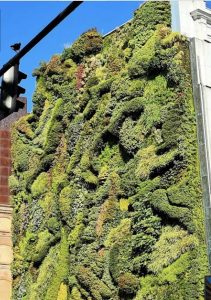
Caixa forum, Madrid, a single walled vertical planting
The Caixa Forum garden is a 460 square meter vertical garden and was the first vertical garden in Spain. I way vertical garden rather than vertical forest as it doesn’t contain trees. This one was designed by Patrick Blanc, a French botanist and landscaper. The garden features over 15,000 plants from more than 250 species that grow in a hydroponic system. The garden helps to insulate the building, reduce temperatures, and purifies the air. BUT this garden, impressive as it is, and as much as it made me fall in love with the concept of vertical forests, is small fry compared with the work of Stefano Boeri.
Boeri isn’t satisfied with trees or plants on a single wall of a building. He clothes whole buildings in trees. And when he has done this he then moves on to building whole cities where every building is dressed from floor to roof in trees and other plants.
Stefano Boeri has build vertical forests in Eindhoven, Milan, Nanjing and beyond.
The Advantages Vertical Forests Confer
Vertical forests offer a multitude of advantages, particularly in densely populated urban areas. These living structures are essentially high-rise buildings covered in a dense layer of vegetation, transforming concrete jungles into lush, green havens.
Environmental Quality
One of the most significant advantages of vertical forests is their positive impact on air quality. The abundant plant life absorbs pollutants and carbon dioxide and releases oxygen, contributing to cleaner air for urban dwellers. This is particularly crucial in cities grappling with air pollution, where respiratory illnesses are prevalent.
Vertical forests also help mitigate the urban heat island effect, a phenomenon where cities experience significantly higher temperatures than surrounding rural areas due to the concentration of heat-absorbing surfaces such as concrete and tarmac. The vegetation on these buildings provides shade and releases moisture through transpiration, cooling the surrounding environment by evaporative cooling.
Quality of Life
Beyond environmental benefits, vertical forests enhance the quality of life for city residents. Studies have shown that exposure to greenery can reduce stress levels, improve mental well-being, and boost cognitive function. Living in close proximity to nature, even in a high-rise setting, can provide a sense of tranquility and connection to the natural world.
Additionally, vertical forests support biodiversity by creating habitats for various species of birds, insects, and other wildlife. This contributes to a healthier ecosystem within the urban environment, promoting a more balanced and sustainable way of living.
While vertical forests offer numerous advantages, it’s also important to acknowledge the challenges associated with their implementation. These include the cost of construction and maintenance, the weight of the vegetation, and the potential for damage to the building structure. However, as technology advances and our understanding of these systems grows, it’s likely that we’ll see more innovative and sustainable solutions to these challenges.
In conclusion, vertical forests, as envisioned by Stefano Boeri, represent a promising approach to sustainable urban development. By integrating nature into the built environment, these structures offer a range of benefits, from improved air quality and climate regulation to enhanced quality of life and biodiversity support. As we strive to create more livable and environmentally friendly cities, vertical forests have the potential to play a significant role in shaping the future of urban landscapes. Their only shortcoming so far, as far as I can see, is that there aren’t yet any vertical food forests. But they would generate a whole new range of challenges that perhaps we aren’t yet ready for.
Watch the video below to get a flavour of how verticals forests can be built in our cities.