In This Video Stephen Barstow Explains His Favourite Food Forest Plants, How They Grow & How To Prepare &/Or Eat Them.
Table of Contents
I have a passion for perennial edibles and like Stephen Barstow those listed below are some my Favourite Food Forest Plants. I don’t grow as many as Stephen, He has hundreds of them and once made a salad of over 500 types .. there’s more about this in the video. The other thing you need to know is that Malvik is way up in Norway, where winters are long. the video however is in English.
Interestingly Stephen explains how he didn’t at first realise that what he had planted was a food forest or even that it followed permaculture principles. He saw it as a collection of perennial edible plants. Today we might call it by many names, eg. edible forest garden, edible forest. woodland garden, edible woodland .. the name doesn’t really matter. What does is the ethos behind it. It is one we share in our community food forest in Sidmouth
To simplify matters, and help those that haven’t time for longer videos, I have listed many of the plants Stephen mentions and show them below.
Feel free to read them, skim on to the video … or do both.
The following notes are based on my interpretation of what Stephen says in the video. All errors are my own.
Edible Trees & Shrubs
Apple (Malus domestica): ‘Aroma’ is noted for being productive, tasty, and for drying well. Dried apples can be stored for winter.
Autumn Olive (Elaeagnus umbellata): This shrub is extremely productive, with berries that ripen late in the season, even after the first frosts. They have a pleasant, slightly sour taste and can be made into fruit leather (dried or dehydrated fruit).
Barberry (Berberis): A plant with lovely yellow flowers in spring. The berries have a lemony taste and can be dried and powdered as a sour spice, an alternative to lemons. The young shoots are also edible.
Bladdernut (Staphylea pinnata): The young shoots and flowers are a tasty spring vegetable. The nuts are edible but are tedious to prepare.
Cherry, Cornelian (Cornus mas): The yellow flowers appear early in spring. The berries are edible, but some varieties ripen too late for colder climates. Unripe berries can be processed like olives to make “Polish olives.”
Cherry, Sour (Prunus cerasus): These cherries are excellent for drying and are appreciated for their tangy flavour.
Chestnut, Sweet (Castanea sativa): This tree is surprisingly hardy but requires a partner to produce nuts.
Dogwood, Kousa (Cornus kousa): The fruits are edible but are not highly regarded for their flavour.
Elderberry (Sambucus nigra): Black Beauty and a variety with dissected leaves (lacinata?) were mentioned as part of a diverse collection.
Hawthorne, Douglas’s (Crataegus douglasii): The berries are edible and were a historically important food plant for Native Americans.
Hazelnut (Corylus avellana): Both wild and cultivated varieties with large nuts are mentioned.
Hickory (Carya): This is among the nut trees being trialled for cultivation.
Mulberry, Paper (Broussonetia papyrifera): This tree is surprisingly hardy, originating from a cold climate in northern China. The small, edible fruits are described as delicious.
Mulberry, White (Morus alba): A tree that can take many years to produce its first fruits.
Pine Nut, Siberian (Pinus sibirica): The nuts from this pine are edible.
Saskatoon Berry (Amelanchier alnifolia): Widely planted and productive, with tasty berries. It is also an attractive ornamental plant with beautiful autumn leaf colour.
Sea Buckthorn (Hippophae rhamnoides): A native, nitrogen-fixing plant with very high vitamin C content in its berries.
Sumac, Staghorn (Rhus typhina): The reddish fruit clusters can be steeped in water to create a refreshing, lemonade-like drink.
Walnut (Juglans): Manchurian walnut (J. mandshurica) is a very hardy species that can produce nuts in colder climates. Other species being trialled include black walnuts and heartnuts.
Willow (Salix): While not edible, this tree is highlighted as critically important for biodiversity, providing food for wild bees and a huge range of insects, which in turn support birds and other wildlife. We grow a lot of willow in our food forest in Sidmouth
Edible Berries & Vines
Akebia (Akebia quinata): A vigorous perennial climber that can be grown against a wall. The flowers are pretty and the fruit is tasty.
Blackberry (Rubus): A totally hardy and productive variety called Sonia is mentioned.
Bilberry (Vaccinium myrtillus): A wild berry common in many regions.
Blue Sausage Fruit (Decaisnea fargesii): The fruit is edible but has an unusual, some say “disgusting,” taste. It is used in salads to create a striking visual effect.
Currant, Black (Ribes nigrum): Stephen mentions a green-fruited mutation that never turns black but ripens to a green colour.
Currant, Golden (Ribes aureum): Several varieties exist with both black and orange berries.
Currant, Red (Ribes rubrum): A wide variety of forms are mentioned, including white, black, and a pink-fruited variety called Pink Champagne.
Goji Berry (Lycium chinense): A slow-growing shrub that struggles to thrive in some climates.
Gooseberry (Ribes uva-crispa): A common cultivated berry.
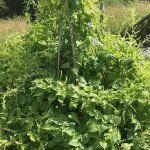
Kiwi, Hardy (Actinidia arguta): A climber that can be grown over arches. To produce fruit, it needs both male and female plants.
Plum (Prunus domestica): The Swiss Plumber variety is mentioned as an old type of prune plum. There are of course hundreds of other varieties.
Raspberry, Black (Rubus occidentalis): A North American fruit that ripens later than traditional raspberries, extending the harvest season.
Raspberry, Thimbleberry (Rubus odoratus): Often grown as an ornamental plant. It produces good berries but requires two different varieties for pollination.
Raspberry, Strawberry (Rubus illecebrosus): The fruit of this plant looks visually appealing but has no taste. It is best used for decoration in salads.
Worcesterberry (Ribes divaricaum): A species of currant that ripens late in the season and can be harvested up until the first severe frosts.
Edible Perennials & Herbaceous Plants
Fern, Ostrich (Matteuccia struthiopteris): A shade-loving perennial vegetable whose young fronds, known as fiddleheads, are a popular food. It is best to grow this plant rather than forage it to prevent over-harvesting.
Ginger, Japanese (Zingiber mioga): A plant grown in some forest gardens.
Ginkgo (Ginkgo biloba): While the tree grows slowly in some climates, the nuts are a popular food in some cultures. The fruit, however, has a smell like vomit.
Ground Elder (Aegopodium podagraria): A common weed that is highly productive. The leaves can be used in salads, stir-fries, and other cooked dishes. A variegated form called ‘Brocock’s Blood’ is also mentioned.
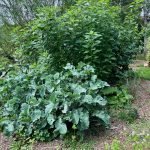
Hosta (Hosta): The young shoots of larger hosta varieties can be harvested in spring, ideally before they unfurl. The flowers and older leaves are also edible. There are no known poisonous varieties.
Onion, Twisted Leaf (Allium oblique): A perennial vegetable where all parts of the plant, including shoots, bulbs, and flowers, are edible and can be harvested at different times of the year.
Onion, Victory (Allium victorialis): A shade-loving perennial vegetable.
Quince, Japanese (Chaenomeles japonica): This plant is totally hardy and produces fruit with a good, lemony taste, making it a better choice than common quince in some climates.
Ramson (Allium ursinum): A shade-loving perennial vegetable that is best cultivated rather than foraged to protect wild stands.
Sea-Kale (Crambe maritima): A perennial vegetable, mentioned as a more exciting alternative to some of the perennial vegetables found in older books.
Waterleaf, Virginia (Hydrophyllum): The young leaves of this plant are edible. It has lovely flowers and spreads to form good ground cover.
I’m sure many other species were mentioned .. but I wasn’t fast enough to note them all.
Update. One plant I failed to note was Rudbeckia laminate. Which was rather remiss of me as we grow it in our food forest. Another I missed was Udo. More on both of these another day.