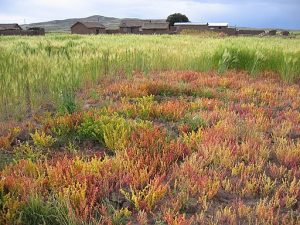
Cañahua (Chenopodium pallidicaule): The Andean Super Grain
Cañahua (Chenopodium Pallidicaule), Also Spelled Cañihua, Is An Ancient Grain Native To The High-Altitude Regions Of The Andes, Closely Related To Quinoa (Chenopodium Quinoa) And Kañiwa (Chenopodium Pallidicaule Var. Milleanum). It Has Been Cultivated For Thousands Of Years By Indigenous Communities In Peru, Bolivia & Ecuador & Is Prized For Its Resilience And Nutritional Benefits.
Table of Contents
Botanical & Agricultural Characteristics
Family: Amaranthaceae (formerly Chenopodiaceae)
Growth Habit: Small, bushy annual plant (30–70 cm tall) with tiny seeds (1–1.5 mm).
Climate Adaptation: Thrives in cold, arid conditions (3,500–4,500 meters above sea level) with poor soils.
Drought & Frost Resistance: More tolerant than quinoa, making it a key crop for climate resilience.
Nutritional Profile
Cañahua is an alleged “nutritional powerhouse“, comparable to quinoa but with some unique advantages:
Macronutrients (per 100g dry grain)
Protein: 15–18% (complete protein, rich in lysine and methionine)
Carbohydrates: ~60% (low glycemic index)
Fats: 8–10% (high in healthy unsaturated fats, including linoleic acid)
Fibre: ~10% (supports digestion)
Micronutrients
Iron: Higher than quinoa (up to 15 mg/100g) – combats anemia.
Calcium, Magnesium, Zinc: Important for bone health.
Antioxidants: Contains polyphenols and flavonoids.
Gluten-Free: Safe for celiac disease sufferers.
(Sources: National Research Council, 1989; Repo-Carrasco et al., 2003)
Culinary Uses
Toasted Flour (Cañihuaco): Used in beverages (cañahua flour mixed with water or milk), porridge, and baking.
Whole Grains: Cooked like quinoa, added to soups, stews, or salads.
Snacks: Popped like miniature popcorn or made into energy bars.
Benefits Over Quinoa
Feature
Cañahua
Quinoa
Protein
Slightly higher (~18%)
~14%
Iron
2–3x more
Moderate
Bitterness
No saponins (no rinsing needed)
Requires rinsing
Yield
More drought-resistant
Less hardy
(Data from FAO, 2011; Mujica et al., 2001)
Challenges & Future Potential
Limited Commercialization: Mostly grown by small-scale farmers; lacks global supply chains like quinoa.
Research Gaps: Few studies on optimal cultivation outside the Andes.
Opportunity: As a climate-smart crop, it could aid food security in dry, high-altitude regions.
Current Initiatives
Peru & Bolivia: Promoting cañahua in nutrition programmes for children.
NASA Interest: Studied for space farming due to its hardiness.
Fair-Trade Brands: Some Peruvian brands export cañahua flour.
The Future Potential Of Cañahua
Might Cañahua be have a role in European or UK gardening in future? Perhaps, many other crops have come from South America, eg tobacco, potatoes, tomatoes, quinoa etc.