Onion’s Versatility, Nutritional Value & Ease Of Growing Have Made It An International Kitchen Staple For Centuries. Read More In This Article.
Table of Contents
Onions are grown globally & used in most international cuisines. In the world of onions versatility, nutritional value & ease of growing have made it a staple in kitchens for centuries.
In this article I delve into the rich history, cultivation practices, culinary uses, and cultural significance of onions, with a particular focus on their importance in British gardening.
A Global Culinary Staple
Onions are truly global citizens, thriving in diverse climates and cuisines worldwide. Their history stretches back to ancient civilisations, with evidence of their use dating back to the Bronze Age. though they were somewhat different to today’s onions. Despite their ubiquity, onions often go unnoticed, taken for granted as a simple ingredient in our daily meals.
We often fail to see how many dishes contain onions. For example, my recent Indian takeaway had onions in nearly every dish. Take onions out of the Indian kitchen and theres a huge gap in what can be cooked. The same applies to many other cuisines.
The History of Onions
Ancient Origins: Onions are believed to have originated in central Asia, spreading across the globe through trade and migration. They were prized by ancient civilizations for their culinary and medicinal properties.
Medieval Europe: Onions were a staple food for medieval peasants, providing essential nutrients and flavour. They were also used for medicinal purposes, believed to cure a variety of ailments. Onions appear in several recipes in The Forme Of Cury which was written around 1390.
The Onion Trade: In the 19th century, onions became a significant agricultural commodity, with Britain importing large quantities from various countries. The rise of the “Onion Johnnies,” French onion farmers who traveled to Britain to sell their produce, starting as early as 1828, further solidified the onion’s place in British cuisine and they continued into the 1960s. Indeed a rare few continued until 2012. French onion sellers came from the area around Roscoff, also famous for other veg including caulis. Roscoff onions have a subtle pink hue, are mild and can be eaten raw.
Cultivating Onions: A Gardener’s Delight
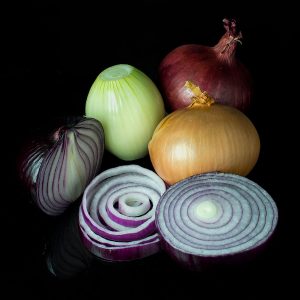
There many onion varieties to choose from. And they can be autumn or spring sown depending on variety. Colours range from yellow and white to red. And flavours vary, some being spicy and tangy, others mild and sweet. Maturing from early summer to mid autumn.
Growing onions is a relatively simple. Here are some key aspects of onion cultivation:
Soil Preparation: Onions prefer well-drained soil that is reasonably rich in organic matter. Preparing the soil in advance by adding compost or well rotted manure can improve fertility and drainage.
Planting: Onions can be started from seed or sets. Seeds are typically sown indoors and transplanted outdoors once they have developed several true leaves. Onion sets are pre-grown bulbs that can be planted directly into the garden. Farmers will direct drill the onion seed in situ. The problem with this in the garden is weed control. Famers use herbicides!
Spacing: Plant onions at the recommended spacing for the variety you are growing. This will ensure adequate growing space and prevent overcrowding.
Watering and Nutrition: Onions adequate moisture. So require regular watering, especially during dry periods. This is a must for some gardeners. However, for years I’ve grown good onions without irrigation. Feeding with an organic fertiliser can also help to promote healthy growth and yield. But, if you are no dig they will not need feeding other than the usual compost addition each year.
Pest and Disease Control: Onions are susceptible to a few pests and diseases, such as onion fly and downy mildew. Monitor your plants regularly and take appropriate action if problems arise. More on that in another post.
Onion Varieties
There are numerous onion varieties available, each with its own unique characteristics. Some of the most popular varieties in the UK include:
Ailsa Craig: A large, white onion known for its mild flavour and good storage quality.
Bedfordshire Champion: A classic British variety with a strong flavor and good keeping quality.
Red Baron: A red-skinned onion with a slightly sweet flavour.
White Lisbon: A mild-flavoured spring onion. Not all onions are grown for bulb!
Yellow Globe: A versatile onion with a stronger flavour.
Japanese Onions: These are overwintered onions, sown in August-September and of various types.
Onion Types For UK Growing
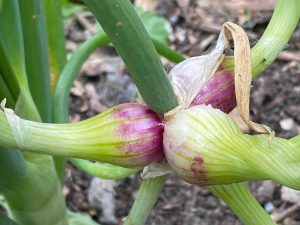
So far I have focused on bulb onions and spring onions as these are well known to most UK gardeners when grown as annual or biennial plants. But alliums, the onion family, is extensive and includes perennials. It includes the better known types such as chives and shallots plus many more diverse types such as Egyptian Walking Onions, Welsh onions and others.
Culinary Uses of Onions
Onions are incredibly versatile and can be used in a wide range of dishes. Here are a few popular ways to enjoy onions:
Raw: Onions can be eaten raw in salads, sandwiches, or salsa.
Cooked: Onions can be sautéed, roasted, grilled, or added to soups, stews, and curries.
Pickled: Pickled onions add a tangy flavour to salads, sandwiches, and charcuterie boards.
Caramelised: Caramelised onions have a sweet and savoury flavour and are often used as a topping for burgers, pizzas, and in sandwiches. I love raw onion and cheese sandwiches!
Onions are probably the veg I use most in my kitchen. They appear in so many dishes, and give a base to many gravies, masalas, pies, paella and risottos plus I use them extensively in their own right as a stand alone veg.
Nutritional Benefits
Onions are not only delicious but also highly nutritious. They are reputably a good source of vitamins and minerals, including vitamin C, potassium, and manganese. I’m told onions also contain flavonoids, which have antioxidant properties.
Cultural Significance
Onions have played a significant role in various cultures throughout history. In ancient Egypt, onions were believed to have healing properties and were often placed on mummies as offerings to the gods. In medieval Europe, onions were a staple food and were used for medicinal purposes.
Conclusion
The onion is more than just a culinary staple; it is a symbol of culinary ingenuity and adaptability. Its versatility, nutritional value, and cultural significance have made it an enduring part of our culinary heritage.