A Country Sized Allotment Garden: Africa’s Green Wall
The World’s Biggest Allotment or Food Forest Is Being Built In The Sahel Region Of Africa. The Sahara Desert Is Turning Into Africa’s Green Wall. What Does This Mean For UK Gardeners?
Table of Contents
Every week I work in and on our UK based food forest and correspond with other food forest and permaculture owners and advocates. So the way the Sahel region of Africa is being permanently greened is something that fascinates and thrills me. After generations of land mismanagement we are seeing a huge change with 300,000 hectares of land turning green. And every hectare saved impacts a furher tow hectares as rain water is retained and shading reduces soil and air temperatures.
And it’s not just in the Sahel that change is happening. One of the other projects I’m in contact with is the Namibia Food Forest. The scale is much smalller, just one farm outside of Otjiwarongo in northern Namibia. But the fact that it is happening is wonderful. Despite all the negative environmental news there are good things happening. And their impact will be global. They affect us in the UK even thiugh we ar on another continent.
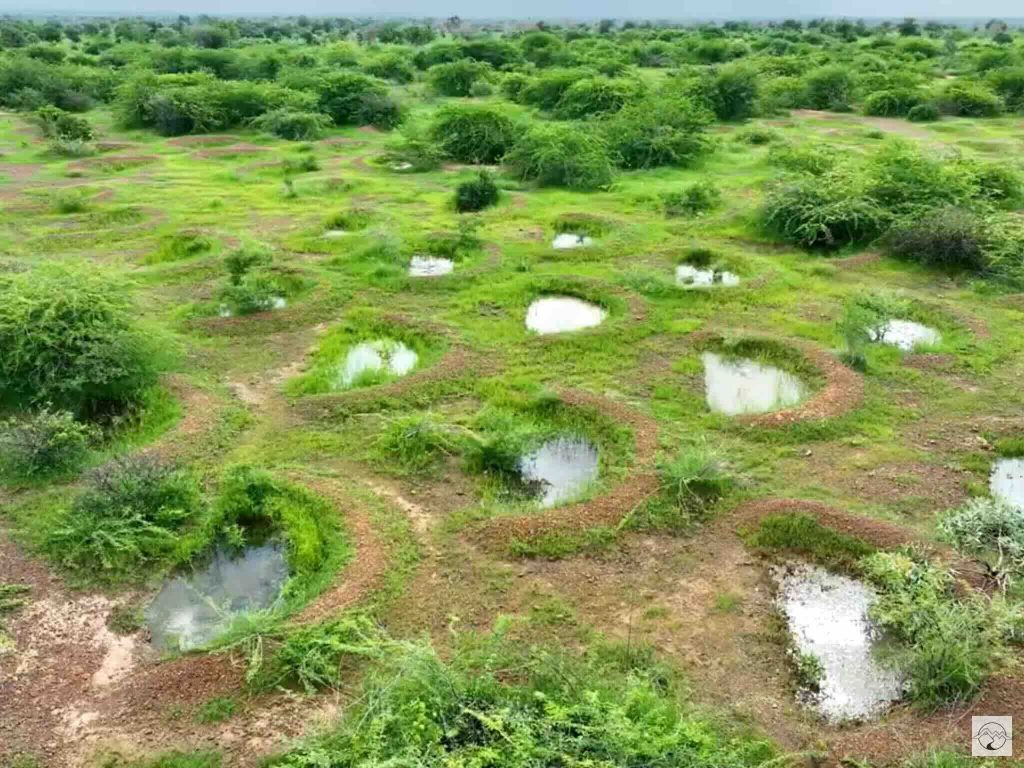
Ponds in the Desert: The Results of Africa’s Green Wall Project.
What is Africa’s Green Wall?
It’s a massive land restoration project in the Sahel that is transforming barren land into productive food forests and allotments. It is helping over half a million people achieve food security. It is repeatable in other parts of the world and could help to reduce global warming. Countries such as Chad and Niger could soon be some of the first countries in the world with a negative carbon footprint. We can learn from that.
How Is Africa’s Green Wall Being Built?
Easy. They are harnessing nature. Like Namibia the deserts are NOT there because there is no rain at all. It’s because the rain only comes for a short time each year, often causes severe floods, then drains away leaving the land dry for half a year or more. Some areas only get rain every 2-4 years. A few might go a decade with little rainfall. For example, some years ago I was in the Namib desert where, in places, it only rains about once a decade. Perversely, the worse areas are along the Skeleton Coast, right next to the Atlantic. All that water but no rain. Just lots of mist. Further inland it can be bad but not as bad as that.
The secret is to trap the rain water that falls, before it runs into the annual rivers. Rivers in these parts of Africa are dry most of the time. They may only run a few days a year or even for a few hours each year. In Damaraland, the desert elephants only see the rivers run for a few hours each year. The vegetation they live on for the next year is all fed by the river water that soaks in to the desert sands in those few hours. If you ever get the chance to see desert elephant take it. They are magnificent creatures! One day I want to go back and visit them again.
But I digress.
The rain water can be prevented from flowing away into the temporary rivers by digging half moon ponds. You can see the hundreds of thousands dug in the Sahel in the video below. The idea is to trap the water and let it soak down into the sand so plants can access it later. The reason it doesn’t normally soak in is because the soil / sand has panned. and very dry soils repel water. I know that sounds weird but it happens in the UK as well and we also see water running off the land rather than soaking in . So we also get flash floods in the UK and should learn from Africa.
The half moon ponds are literally that, half moon shaped pits with the spoil from them forming a bund around the crescent. The bunds can be planted with trees or shrubs. Grasses are almost always sown around and between the ponds. And one trick is to ensure the existing native grasses aren’t removed as they contribute to by stabilising the soils and will soon spring back into life if and when it rains.
Remember, plants around here have evolved to survive flood and drought. Many areas of the Namibia and Kalahari deserts have heat shimmering from the sands most of the year but when the rains come they become full of flowers. These bulbs and herbaceous ephemerals will grow and flower in just a few days and are a magnificent sight. They soon set seed and die back into the sand until the next time it rains. Lots of flowering plants we now grow in UK gardens are from South Africa and share some of the characteristics the desert plants show!
The other thing to do is to increase the soil organic matter. And if you do that you also increase the soil carbon. With more organic matter and carbon plants can grow more easily. To trap organic matter they dig Zai Pits. Zai pits trap organic matter, can be used to deposit organic matter in and they attract termites which burrow down and increase soil permeability and porosity.
Africa’s Green Wall: Rapid Results.
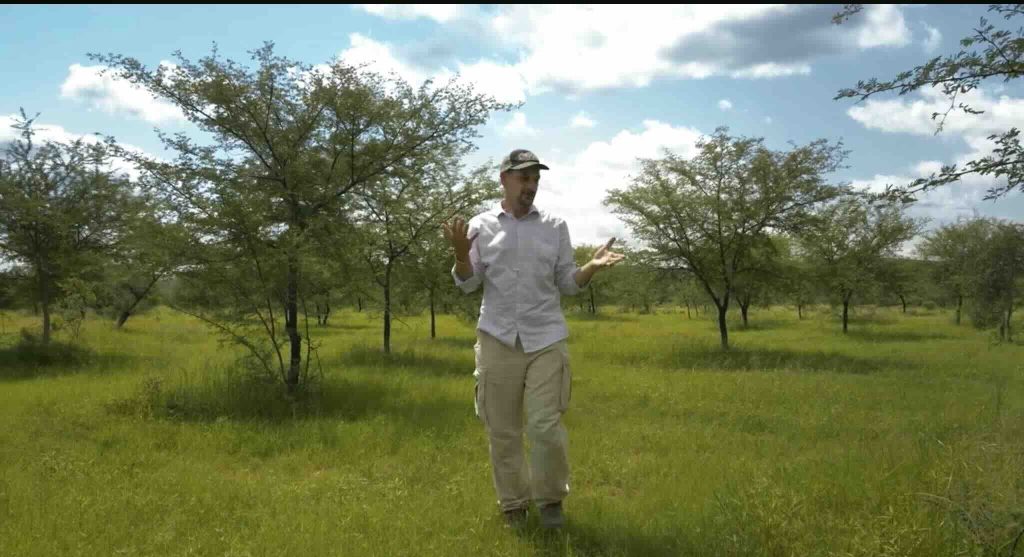
It seems a tenuous way to start a forest but within a few days of the first rains any seed sown will start to grow. Grasses, cowpeas and all the other trees and bushes planted will spring into life. Within 7-8 years the grasses grow high each rain time and the trees are several metres high and creating shade. As the area develops it becomes more biodiverse. Birds and insects migrate in and they bring seeds, fungi, bacteria and other life with them. The land recovers and goes from strength to strength.
How Big Is Africa’s Green Wall?
I’ve mentioned Chad and Niger but the reality is that Africa’s great green wall project now starts in the west at the Atlantic ocean and crosses the whole continent until it reaches the seas in the east. It is miles wide with multiple projects being run by local villages. These link together and unknown to many Europeans a green wall is being planted and grown.
What Impact does The African Green Wall Have?
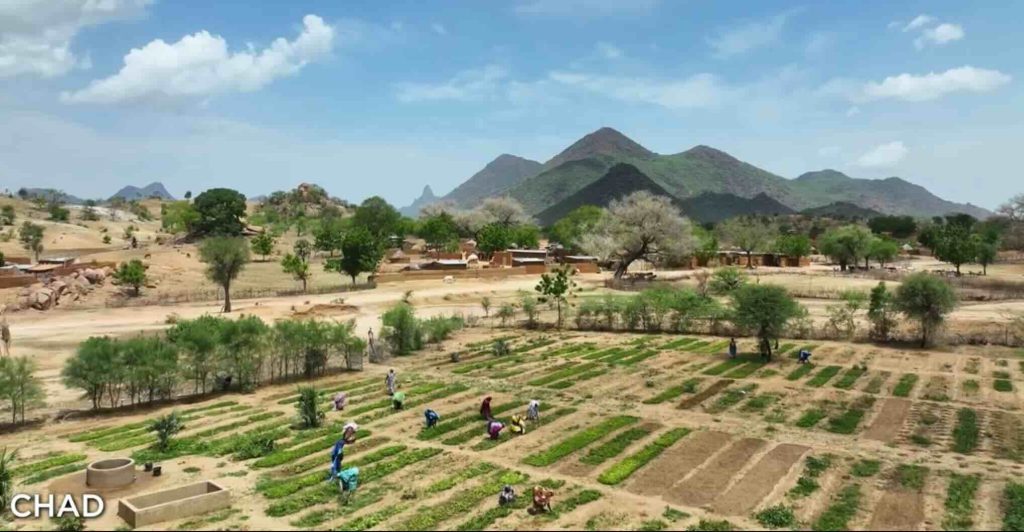
The Sahara’s march south has been stopped. Winds from the north are now filtered by a wall of vegetation which also cools the land’s surface. As temperatures begin to drop life is further encouraged. Hundreds of thousands of people are now feeding themselves from restored land. Amongst the green wall trees are yielding fruit, fibre, medicines etc and allotments and veg gardens are being established. They are watered by water from subterranean reserves that have occurred because the ponds trap the water and give it time to percolate.
Think about how the Slowing The Flow and Leaky Dam projects in the UK are similar in some senses. They are beginning to stop downstream flooding, allowing rain water to percolate and fill the natural aquifers beneath our feet. And they are giving farmland greater resilience by preventing erosion and increasing the water table in dry summers. Both increase fertility. We can be pleased that we are doing this in parts of the UK, but we can also learn from Africa, north and south.
Once we have a green wall of vegetation and improved biodiversity livestock and wild animals can better survive the dry seasons and droughts. It is inevitable that during this dry seasons there will be no green. But livestock and wild grazing animals will happily feed off of dry foliage in the same way we feed livestock hay in the UK!
As for the people and their crops. Not only do the number of plants that can be foraged increase, communities now have the opportunity to grow a biodiverse range of veg crops suited to their local conditions. From fruit, root crops and leaves to edible flowers the potential is there for year round food and enhanced food security.
Currently Africa’s Great Green Wall Project is happening mainly in the Sahel region. But the Namibian Food Forest project, though just starting, has already shown created swales to capture surplus water from an annual river and even built a one way valve to prevent the water flowing out of the area as the water level in the river drops. It demonstrates the potential of growing moringa and other plants to restore the land and push back the desert.
Insights From Africa’s Great Green Wall Project
The video below is from Andrew Millison in the US and is based on his trip to the Sahel to see the green was for himself. For ease I list below some of the key insights from the video, many, but not all, I’ve mentioned above.
African Green Wall Key Insights
🌿 Ecosystem Restoration: The restoration process not only revives land but also strengthens local ecosystems, creating a vibrant habitat for plants and animals, which is essential for long-term sustainability. 💧 Water Management: Techniques like half moons effectively capture rainwater, boosting groundwater levels, which is crucial for agriculture in arid regions like the Sahel. 🍽️ Food Security Impact: By restoring land, communities are not only able to grow food but also reduce reliance on food aid, demonstrating a model for sustainable development. 🌳 Biodiversity Benefits: The project enhances biodiversity, which is vital for ecological balance, improving resilience against climate change impacts and fostering agricultural productivity. 🏞️ Scalability Potential: The success of these restoration efforts presents a scalable model that can be adapted to other regions facing similar environmental challenges. 🤝 Community Empowerment: Local communities play a crucial role in the restoration process, highlighting the importance of empowering them through education, resources, and support. 🌍 Global Significance: The Great Green Wall initiative serves as a model for global efforts to combat desertification and food insecurity, showcasing the interconnectedness of ecological health and human welfare.
However …
As much as I admire the above project I am conscious of information I read when researching the article. The two major research papers I used are listed below. Both are written by Moctar Sanand who also voices some concerns which I summarise after the video.
Inside Africa’s Mega food Forest Project … The Video
Africa’s Ambitious Restoration Goals, A Summary of Sacand’s observations.
Africa has set ambitious targets for land restoration with two major projects:
AFR100: Aims to restore over 100 million hectares of degraded land by 2030.
Great Green Wall: Seeks to restore 100 million hectares of degraded agro-sylvo-pastoral lands in the Sahel by 2030.
A Missed Opportunity?
While the UN Decade on Ecosystem Restoration (2021-2030) offers a unique chance to shape sustainable landscapes and food systems, current restoration efforts often overlook the socioeconomic challenges faced by dryland communities, particularly food security and malnutrition.
The Disconnect
Restoration and Socioeconomic Challenges: Large-scale restoration projects frequently neglect the pressing needs of dryland communities.
Malnutrition Interventions and Agriculture: International efforts to address acute malnutrition in drylands often fail to consider the crucial link between agriculture and nutrition, especially pre-farm gate practices and the optimal use of native plant diversity.
By bridging this gap and integrating socioeconomic considerations into restoration efforts, Africa can achieve more sustainable and impactful outcomes in its dry land regions.
Personally I can see no reason why Africa can’t feed itself provided it blends projects such as the two mentioned above WITH local knowledge. They cannot be projects driven from afar. They must be local projects assisted by those from distinct places. There is a huge difference.