Lemons grow well in a well-sheltered spot in the U.K.
As The Climate Warms Its Worth Reconsidering The Unusual & Exotic Fruit That Can Be Grown in the UK. Here’s My List.
Table of Contents
Before buying your first exotic or unusual fruit to grow in your garden it’s worth noting the following. Some of these fruits can be planted outdoors in milder parts of the country, with a few thriving in most parts, but others may need to be grown in pots or containers and moved indoors in winter or at least protected.
If pot grown, ensure the pot is big enough, is adequately watered and good nutrition is supplied to the plant. Pots also need to be sufficiently heavy and with a broad base to prevent winds from blowing them over. It’s surprising how top-heavy a plant in full leaf can become. And as much as the pot or container needs to be well watered take care not to get them waterlogged as this can kill some plants. From time to time I see pots sheltered under a roof eave .. and water dripping into it from a leaky gutter. Overwet pots can also split as they freeze during cold weather.
Where planted in situ, some plants, such as banana (yes they will sometimes grow and fruit in the UK), may need wrapping with fleece or other materials to protect them from the worse of winter conditions.
Finally, don’t forget that citrus plants prefer it a bit acid so will prefer ericaceous soil or compost.
Many Exotic Fruits Enjoy British Weather
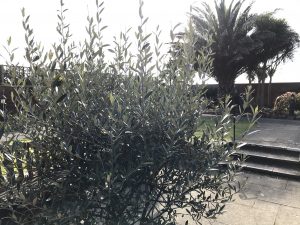
Olives are considered unusual fruit when grown in the U.K. This small tree is planted in Sidmouth, Devon. Behind it is a Canary Palm whose sap can be boiled to make miel de palma.
The British climate isn’t all bad when it comes to exotic fruit. Many, such as figs, love it so much we forget that they are from warmer climes and were once considered very exotic. Today they are common and fruit in most areas. And olives are now available in most garden centres and flourish outdoors in most areas. But getting them to fruit is not as easy as growing them. More on that later.
Many exotic fruits bear names that may be unknown to us. But over recent years more and more are becoming better known and are being grown by an increasing number of gardeners.
Over the next months, I’m going to add new exotic fruit to this page. Feel free to post questions and comments below (of on my Facebook How to Dig For Victory group pages).
Exotic Fruit For UK Gardens – (The Definitive List?)
Japanese Wineberry (Rubus phoenicolasius)
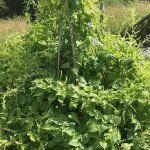
Japanese wineberries can be grown in the fruit garden but also look good in ornamental garden beds. They look especially good in winter gardens as the stems are bright red and sow very well in winter.
Japanese wineberries are a scrambling plant rather than a climber. And some people describe them as upright! So they are a bit of an enigma in many ways.
Figs (Ficus carica)
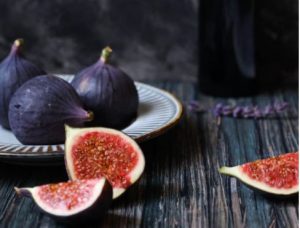
Figs still seem to be considered an exotic fruit in the UK, though they grow well here and have done for centuries.
I would rate figs for their beautiful lobed leaves even if they didn’t fruit. The fruit is just a wonderful bonus.
A good variety for the UK is Brown Turkey which does well in the south or in a more sheltered area. It grows into a small tree given time, but is relatively slow-growing and can be pruned if need be. Smaller varieties are available for small gardens, I’m told Littel Miss Figgy is ideal but I’ve not tried it.
Figs are very tolerant growers and do well when wall trained, grown in a greenhouse or outdoors. Few plants respond so well to such a range of environments. What I especially like is that figs are frost hardy in the midlands and south and I’ve often had them covered in snow for long periods and then burst into life in the spring.
How to Grow Exotic Fruit Such as Figs
Fig cultivation is quite simple. They come from the Mediterranean so prefer it warm but will tolerate moderate drought. If they are dry at flowering time they are best given a little water but be careful not to water erratically throughout the season. Figs love fertile soils but don’t need feeding in most cases .. unless restricted by a pot that is. If pot grown, ensure the pot is big enough, small root runs will inhibit fruiting.
If you do decide to feed them try a little potassium feed when the fruit starts to show. Liquid tomato feed is ideal.
When planting outside you could restrict the root run a little ad this helps control the size of the tree. Planting against a south-facing wall will both restrict root and provide a perfect microclimate. If you use paving slabs to line the planting hole this will help restrict root growth .. Just ensure you start with a big enough hole for the “pot” you build in the soil as digging it up later will be hard work.
Adding some well-rotted manure or compost at planting time will enable the plant to get way nicely. Ensure the soil is well-formed but not compacted. Once planted give it a very thorough watering.
Figs and Frost
Mature olive branches and stems are hardy to minus 10 and below. But the embryonic fruit is more sensitive to frost so may need protecting. And it is the fruit formed on last years wood, that overwinters as small fruitlets, that tend to be those fruit harvested. New fruit on new wood rarely makes it. So a layer of fleece is often a good investment in chillier sites.
Pots can of course be moved into a cold greenhouse or even a garage. The poor light will do them no harm when they have no leaves.
Fig Pollination
You’ll never see a fig flower as it is hidden inside a tunnel-like structure that becomes the fruit. In the UK the fruit is parthenogenic and don’t need fertilising.
Fig Harvesting
Ripe fruit darkens, often to a wonderful purple colour, and softens when ripe. Often a drop of nectar oozes from the end of the fruit and the stalk starts to split.
I’m adding more Exotic Fruit to this page every few weeks. Check it again soon.