When Will My Veg Ready To Harvest? Is It Big Enough? When Are Veg & Fruit Ready to Harvest? Is There A Perfect Time to Harvest? These And Similar Questions Are Frequently Asked, But What Is The Answer?
Table of Contents
As you might expect, it depends. The ideal time to harvest fruits and vegetables depends on the specific type and variety, what you see as the perfect size, shape and degree of ripeness and a host of other things. When Are Veg & Fruit Ready to Harvest Depends On So Many Factors.
A very simple answer would be when they look like those in the supermarket! But of course that assumes that the supermarket has fruit and vegetable that is at the ideal stage for the consumer, rather than the ideal stage to maximise profit.
After most of my life being spent as a farmer, market gardener, gardener, chief cook and bottle washer I think I know the stage I prefer to harvest at .. but it often depends on what I intend to do with the harvested produce. The reason? Simply because the best stage will depend on whether I will eat fresh, raw, cooked, or used to storage, drying, pickling, fermenting or whatever. If only the answer were simpler.
General When Are Veg & Fruit Ready to Harvest? Guidelines
Vegetables:
Asparagus pea
Root Vegetables: Harvest when they reach the desired size. And to illustrate what I was saying earlier let’s consider potatoes. They can be harvested as small new potatoes early in the season. The yield will be lower but the flavour will be much better. Or we can let them go to the size that supermarkets sell most potatoes at, what I would call average or mid size. Or we can let them get much bigger and become baking potatoes. Most supermarket baking pots tend to be what I would call mid size. Real “bakers” are huge. And, without going into a lot of detail on how to grow pots it’s important to remember that crop spacing, nutrition, variety and irrigation all play a part in getting the ideal sized spud!
Leafy Greens: Harvest young leaves for tenderness and flavour. Older leaves can be tougher but are fine when blitzed in a soup or similar.
Squash and Pumpkins: Harvest when the skin is hard and the vine has died back.
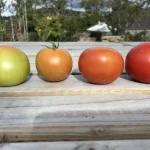
Tomatoes: Harvest when they are .. well it really depends. I like to harvest when they are just showing a hint of colour and then allow them to ripen indoors in a basket with other toms. I believe this gives the best developed flavour. Others disagree. Commercially I harvested at this stage as it was the only way to ensure the crop wasn’t overripe when it reached the consumer. Consumers prefer to select from the shelf and get the stage they want rather than be faced with boxes of very ripe fruit!
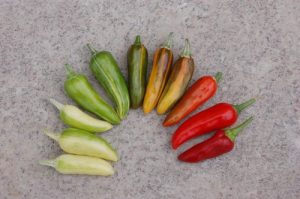
Peppers/Chilis : Harvest when they reach full size, the right colour and flavour/heat. I see a lot of people hanging on to peppers on the plant for far too long in my opinion. They want the perfect red, yellow or orange pepper. It’s possible in an amateur greenhouse or polytunnel but the yield will suffer. Pick early and eat green or when just turning is my best advice if you want yield .. and leave much later if you want colour. You decide.
Cucumbers: Harvest when they are young and tender. But give them time to reach the right size. Certainly the right length, which they reach very quickly. The man thing is not to wait until they are getting fat and starting to yellow. This decreases yield and they taste pretty gross as well.
Beans: Harvest when the pods are full and tender. That is of course a generalisation as there are soma many types of bean. French beans are best young and tender. Borlotti beans can be saved as a dried seed when fully mature and the pod has withered on the vine.
Unusual Harvests: The above assumes we harvest in a traditional way. But part of the fun in growing is to grow the unusual or harvest the less traditional. For example we can harvest the flowers from squash and pumpkins, stuff them and eat them as a rare delicacy! Ditto with our root veg, for example carrots cab be eaten as micro greens, baby carrots, bunching carrots or left to grow huge. You decide.
Microgreens: Having mentioned micro greens I ought to direct you to my article on microgreens, baby veg and related delights. The beauty of growing our own is that we can eat the produce when we want to. We aren’t dictated to by what is on a supermarket shelf.
Are Grafted Vegetable Plants, Such as Tomatoes, Worth The Extra Expense
Fruits:
Berries: Harvest when they are fully coloured and sweet.
Apples and Pears: Harvest when they can be easily pulled from the tree.
Stone Fruits (Peaches, Plums, Cherries): Harvest when they are fully coloured and very slightly softening.
Citrus Fruits: Harvest when they are fully coloured and heavy.
Grapes: When they are ripe. They don’t continue ripening once picked.
More On When Are Veg & Fruit Ready to Harvest?
I’ve written more detailed article on this topic. The link is below.