Ollas (Oy Yahs) Are Porous Earthenware Pots, With Lids, That Are Partially Buried in Gardens To Slowly Release Water For Plant Irrigation. But Do They Work?
Table of Contents
Ollas are an ancient technique that has been used in arid regions for generations and have earth their place in gardening and horticulture. That is certain, what isn’t certain is whether they have a similar place in UK gardening. Our differing climate limits their use in my mind. Personally, in our climate, I am in favour of drip irrigation. But I don’t want to write off ollas. So let’s look at the pros and cons of ollas.
Olla is also the name of the earthenware cooking pots used by the Romans and following their conquest of Iberia etc also used there. It is easy to see how the uses crossed over and the garden use became common.
How Do Ollas Work? Are Ollas Effective?
Let’s look at the details.
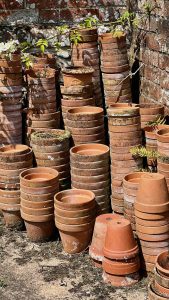
- Porous Clay: Ollas are unglazed clay pots with porous walls. When buried in the soil and filled with water, the water slowly seeps out through these tiny pores.
- Soil Moisture Tension (Osmosis): The key to their effectiveness lies in the principle of soil moisture tension, similar to osmosis. Water moves from an area of higher concentration (inside the olla) to an area of lower concentration (the dry soil around the plant roots). If the surrounding soil is already wet, the water stays in the olla until the soil dries out and needs moisture. This self-regulating mechanism prevents overwatering and means water only leaves the ollas when needed. This makes it very efficient in that sense.
- Direct Root Watering: Unlike surface watering, ollas deliver water directly to the plant’s root zone, eliminating soil surface evaporation and runoff. This means less water is wasted.
- Encourages Deep Root Growth: By providing a consistent moisture source deeper in the soil, ollas encourage plants to grow deeper, stronger roots. This makes the plants more resilient to drought and temperature fluctuations. Shallow ollas however would discourage deep rooting plants from going deep… why would they when water is available higher in the soil profile!
- Water Efficiency: Research and anecdotal evidence suggest that ollas can conserve a significant amount of water, with some claims of saving up to 60-70% compared to traditional top-watering. They are often considered as efficient as, or even more efficient than, drip irrigation systems in certain contexts.
- Reduced Weeds and Disease: Since the soil surface remains relatively dry, ollas can help reduce weed growth and minimize the spread of foliar diseases that thrive in consistently wet leaf conditions.
- Low Maintenance?: Once installed, ollas require infrequent refills, often every few days to once a week, depending on the climate, soil type, and plant needs. But see my comments below!
- Ollas are hard to buy in the uk but can be made by joining together two terracotta flowerpots. I’ll explain how in another post.
Ollas Disadvantages
I like to taker a balanced view in the posts, so it is only fair that I mentions the disadvantages.
Ollas can be costly to buy and install.
Ollas are terracotta so easily break.
Where cultivation is required then the ollas need removing or they could be damaged.
Filling ollas is considered very time-consuming by many users.
Whereas ollas suit trees and perennial plantings they ar not so suitable to annuals and short term cropping.
Ollas Benefits Summary
- Water Conservation: Significant water savings due to reduced evaporation and targeted delivery.
- Healthier Plants: Promotes deep root growth, consistent moisture, and less plant stress.
- Time Savings: Less frequent watering required.
- Reduced Weeds: Drier surface soil discourages weed growth.
- Prevents Overwatering: Self-regulating water release.
Other Ollas Considerations
- Soil Type: Ollas work best in sandy or coarse-textured soils. In heavy clay soils, water may not dissipate as effectively.
- Freezing Climates: If you live in an area with hard freezes, ollas need to be dug up and stored indoors during winter to prevent cracking.
- Initial Watering: New seedlings and transplants may need supplemental surface watering until their roots grow towards the olla.
- Placement: Proper spacing of ollas is crucial for effective watering of the entire plant area.
- Plant Type: They are particularly effective for plants with fibrous root systems, such as tomatoes, squash, melons, and many vegetables. Woody plants with strong roots might eventually crack the pots.
More On Water Saving & Water Conservation
There are numerous articles on rainwater harvesting, irrigation and related issues one the website. Use the searcher or follow the links for more.
Tag: What Are Ollas?
Join My Gardening Groups …. Or Buy My Books
Gardening Advice
To join the How to Dig For Victory Facebook group follow the link.
And here is the link to UK Garden Flowers, Trees, Shrubs & More
And Allotment Life For Beginners
You can also find me on Substack StefanDrewe.substack.com
Patreon
Help keep this website free from advertisements by supporting me on Patreon.
Free and subscription options available with informative infographic downloads as a thank you.
Gardening Books
Find your next favourite read without the guesswork.
I have hand-picked the best titles to save you time, or you can browse millions of other books in the full collection.
Prefer to read my own writing? You can purchase my original books directly on Amazon.
#BiteSizedGardening #Gardening #Vegetables #veg #fruitandveg #allotment #biointensive
