Are Coffee Grounds Good For Gardens? Did You Know Caffeine Is a Natural Pesticide And Can Inhibit Seedlings? Read This Article And/Or Watch The Video.
Table of Contents
What Is Caffeine For?
Coffee plants didn’t evolve coffee for us to drink. It has a rather more sinister reason to exist.
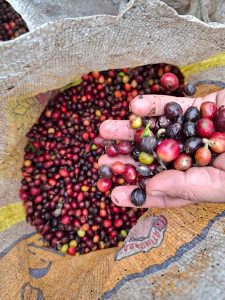
Coffee plants (Coffea species) produce caffeine as a natural defence mechanism, and it can act as a natural pesticide. Caffeine is toxic to many insects and herbivores, deterring them from feeding on the plant. It can also inhibit the growth of competing plants by affecting their germination and development, a phenomenon known as allelopathy.
Caffeine is found in various coffee plant tissues, including the leaves, stems, and seeds (coffee beans). Its presence helps protect the plant from pests and pathogens, contributing to its survival and reproductive success. This natural pesticide role is one of the reasons caffeine is so widespread in the plant kingdom, as it provides an evolutionary advantage.
So should we use coffee grounds in our gardens?
Coffee Grounds In Compost & On Soil
Caffeine In Coffee Making
Coffee making extracts some caffeine from the coffee bean but not all of it. And boiling caffeine doesn’t break it down. It remains active and potent in the coffee grounds.
Caffeine in Compost Heaps
Microbial actions will eventually break down coffee .. but it takes time.
Breakdown Process: Caffeine can be broken down in compost heaps, but the process depends on the microbial activity and conditions within the compost.
Microbial Degradation: Certain microorganisms, such as bacteria and fungi, can metabolise caffeine. These microbes use caffeine as a carbon and nitrogen source, breaking it down into simpler compounds like ammonia, carbon dioxide, and water.
Factors Affecting Breakdown:
Temperature: Hot compost piles (with temperatures between 120°F and 160°F) break down caffeine faster due to increased microbial activity.
Moisture and Aeration: Proper moisture and oxygen levels are essential for microbial activity and caffeine degradation.
Time: Caffeine breakdown can take weeks to months, depending on the compost conditions.
Impact on Plants: By the time compost is fully matured, caffeine is typically broken down and poses no harm to plants. In fact, coffee grounds (a common source of caffeine) are often added to compost as a nitrogen-rich “green” material.
Caffeine Breakdown in Soil
Caffeine will breakdown in soil eventually due to microbial action, but it takes much longer than in compost heaps.
Is Caffeine Safe In the Garden?
Though caffeine is a natural pesticide and allelopathic it isn’t a major issue provided it is managed correctly. Large amounts in compost heaps are not going to be an issue if the compost decomposes as it should.
Sprinkled on the garden around seeds or seedlings and you could experience problems. But a thin layer around established plants is unlikely to cause any issues.
That’s my take on caffeine in the garden. But see what James Wong says in this video.
Are Coffee Grounds Good For Plants: A James Wong Video