For Generations, British Gardeners Have Seen Soil As A Living Legacy. A Self-Sustaining Ecosystem That Rewards Careful Stewardship. But New Research From The University Of Lancaster, The James Hutton Institute, And The University Of Reading Reveals An Invisible Force Now Altering The Very Nature Of Our Garden Soil.
Table of Contents
Microplastics—particles less than 5mm in size—are no longer just a marine concern; they have transformed the terrestrial environment into a microscopic “battleground” with significant implications for soil health, microbial diversity, and the vital work of earthworms. This article is about How Microplastics Damages Our Soil.
The Scale of Microplastic Infiltration
While much public attention focuses on plastic in our oceans, scientists now estimate that soil may hold four to twenty-three times more microplastic than the sea. Research led by the University of Lancaster and published in Nature Communications Earth and Environment highlights a startling trend: microplastic concentrations in UK soils have risen dramatically, in some cases by up to 350% between 1997 and 2005 alone.
For the home gardener, the sources are closer than one might think. Beyond the obvious breakdown of plastic pots and garden fleece, a significant volume enters via “hidden” routes. This includes microfibres shed from synthetic outdoor clothing and the breakdown of plastic-coated fertilisers. Furthermore, research from the James Hutton Institute revealed that soil levels of microplastics can increase by over 1,450% through the application of sewage sludge-based fertilisers, with these particles remaining virtually unchanged for over two decades. The use of seage sludge is more prevalent in agriculture but indicates the issues for all soils.
Microbes and the “Battleground” Effect
The soil is not a passive medium; it is a crowded, competitive arena of bacteria and fungi. New evidence suggests that microplastics are creating “microbial battlegrounds.” When plastic particles enter the soil, they provide a new, durable surface for bacteria to colonise—a “plastisphere.“
According to research from Bangor University, different plastics produce vastly different ecological outcomes. Conventional plastics like polyethylene (PE) often decrease bacterial diversity, potentially suppressing the beneficial microbes responsible for nutrient cycling. Conversely, biodegradable plastics like polylactic acid (PLA) can actually increase certain bacterial populations as they begin to break down, but this “boom” can disrupt the natural balance, favouring specific strains over the diverse community needed for a resilient garden.
This shift in microbial life is not merely academic. Microbes are the primary drivers of litter decomposition. When their community structure is altered by plastic, the rate at which organic matter—your compost and leaf mulch—turns into plant-available nutrients may be significantly impeded.
The Earthworm Crisis
Perhaps most concerning for the UK gardener is the impact on earthworms, the “engineers” of our soil. A study by the UK Centre for Ecology & Hydrology (UKCEH) found that high concentrations of microplastics can halve the fertility of certain earthworm species. While the plastics do not always kill the worms outright, the reduction in reproduction poses a long-term threat to soil aeration and structure.
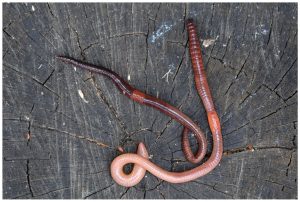
Lumbricus herculeus (left) and Lumbricus terrestris (right); specimens depicted are respectively smaller and larger than average for their respective species.
Worms are particularly vulnerable because of how they interact with the soil. As they burrow, they ingest microplastics. Smaller particles, such as nylon microfibres, are especially harmful as they can be easily swallowed by worms with small mouthparts, leading to reduced metabolic activity and inflammation.Furthermore, research from the University of Reading suggests that these microplastics may act as “vectors,” carrying toxic elements like cadmium or lead into the worms’ tissues, potentially moving these pollutants up the food chain to garden birds and hedgehogs.
Practical Steps for the Gardener
While the accumulation of microplastics in soil is currently considered irreversible, gardeners can play a vital role in mitigation. The Royal Horticultural Society (RHS) advocates for a “precautionary approach,” suggesting several “simple swaps” to reduce the plastic load:
Switching Materials: Replace plastic seed trays with wooden ones or soil blocks. Use natural jute twine instead of plastic string, and opt for metal watering cans which have a far longer lifespan.
Managing “Sheeting”: Be wary of old, degrading plastic sheets used for weed suppression. The RHS suggests using “green manures“—cover crops like Phacelia or winter tares—to protect bare soil over winter without shedding fragments.
Clothing and Compost: Be mindful of synthetic fibres. Washing garden gear can release thousands of microfibres into the water system, which eventually returns to the land. When buying compost, look for brands that are transparent about their sourcing to avoid those potentially containing “processed” municipal wastes.
The evidence from our universities is clear: the soil is a finite resource under modern pressure. By understanding the hidden impact of microplastics, UK gardeners can move from being passive observers of this change to active guardians of the subterranean world.
Feature
Conventional Plastics (e.g., PE, PVC)
Biodegradable Plastics (e.g., PLA, Starch-based)
Microbial Impact
Tends to decrease bacterial diversity; creates a “plastisphere” that can suppress beneficial nutrient-cycling microbes.
Can increase specific bacterial populations; however, this “boom” often disrupts the natural balance and diversity of the soil.
Decomposition
Extremely slow; particles remain virtually unchanged for 20+ years in temperate UK soil conditions.
Designed to break down faster, but often requires specific industrial conditions (heat/moisture) not always present in garden soil.
Soil Structure
Can create physical barriers that interfere with water movement and reduce the stability of soil aggregates.
As they fragment, they can temporarily increase soil porosity, but may release organic acids that slightly alter soil pH.
Earthworm Health
High ingestion leads to inflammation and reduced fertility; particles act as long-term “anchors” for heavy metals.
Ingestion still occurs; while they persist for less time, the rapid fragmentation can lead to higher ingestion rates of smaller particles.
Nutrient Cycling
Often slows down the breakdown of organic matter (compost/leaf mulch) by inhibiting microbial activity.
Can temporarily accelerate certain microbial processes, but may lead to “nutrient immobilization” as microbes use up nitrogen to break down the plastic.
Gardener Strategy
Avoid entirely: Focus on permanent alternatives like wood, metal, or terracotta.
Use with caution: Ensure they are certified for “Home Composting” rather than just “Industrial,” as the latter won’t break down in a standard garden heap.
Here is a list of the verifiable sources and research institutions referenced in the article, formatted for easy copying and pasting.
Primary Research & News Sources Relevant to How Microplastics Damages Our Soil
Earth.com Article : “Microplastics are creating tiny microbial battlegrounds in farm soil” (2024).
Reference: Based on research regarding the “plastisphere” and microbial competition in terrestrial environments.
University of Lancaster / Nature Communications:Study “Long-term field evidence for the accumulation of microplastics in soil.”
Key Finding: Documented the 350% increase in soil microplastics over a decade and the persistence of these particles.
The James Hutton Institute:Research: “Microplastics in UK Soils.”
Key Finding: Identified that sewage sludge application can increase microplastic concentrations by over 1,450%, with particles persisting for 20+ years.
UK Centre for Ecology & Hydrology (UKCEH):Study: “Impacts of microplastics on earthworms (Lumbricus terrestris).”
Key Finding: High concentrations of microplastics can reduce earthworm growth rates and significantly lower reproduction/fertility.
University of Reading:Research: “Microplastics as vectors for environmental contaminants in soil.”
Key Finding: Demonstrated how microplastics can transport heavy metals (like Cadmium) into the tissues of soil organisms.
Bangor University / Science of The Total Environment:Study: “Contrasting effects of conventional and biodegradable microplastics on soil microbial communities.”
Key Finding: Analyzed how PE vs. PLA plastics disrupt bacterial diversity and nutrient cycling.
Gardening Guidelines & Citizen Science
Royal Horticultural Society (RHS): * Guidance: “Plastic in the Garden.”
Provides practical advice for UK gardeners on reducing plastic footprints, including “Simple Swaps” and the use of green manures.
Science Museum (UK): * Report: “The Problem with Microplastics in Soil.”
Resource: Overview of how microfibres from clothing and household grey-water contribute to terrestrial pollution.