Take A Glimpse into Horticultural History With 1920 Translation of Vilmorin’s The Vegetable Garden. Over 800 pages of Gardening Wisdom.
Table of Contents
Step back into the golden age of gardening with this digital copy of Vilmorin’s The Vegetable Garden (1920 edition).
Originally published in English in 1885, this work by the famed French seed company, Vilmorin-Andrieux, was the definitive reference for gardeners and market growers for decades. This 1920 edition is not merely a gardening manual; it is a beautiful artefact of a bygone era. It was translated, edited and adapted for UK and American gardeners by William Robinson, a very influential Irish gardener and journalist. More on Robinson below.
Screenshot
Within its 800+ pages, you’ll find meticulously detailed descriptions and stunning chromolithograph plates showcasing the vegetable varieties (listed below) that fed several generations. It offers a fascinating look at the heirlooms, cultivation practices, and sheer diversity that defined early 20th-century horticulture—a priceless resource for historians, heirloom seed savers, and anyone who loves the art and history of the garden.
Explore this classic text and discover the roots of modern vegetable cultivation.
As a retired market gardener come Food Forester I am particularly intrigued by the variety listing of everything from lettuce to tomatoes. Vilmorin’s coverage on lettuce extends to nearly 50 pages and is probably the greatest historic lettuce tome known to horticulture. But it doesn’t stop there he also delves into many lesser known species such as bucks horn plantain. And his words on Capsicums is most revealing.
This is a book it will take years for most gardeners to read and truly appreciate. Vegetable type and variety are detailed further down the page.
William Robinson (1838-1935) was a towering figure in horticulture, famous for championing the “wild garden” and a more natural, less formal style of planting in opposition to the rigid Victorian carpet-bedding style. His most famous work, The English Flower Garden, was a bible for this movement.
His involvement is crucial because he wasn’t just a passive translator. He adapted the original French text by Vilmorin-Andrieux for a British and American audience, often adding his own notes and commentary based on his extensive experience. This made the book more practical and relevant for its English-speaking readers.
The Vegetable Garden Publication Dates
The book that became the 1920 English edition was originally published by Vilmorin in French in two parts:
Part 1 (Les Plantes Potagères): First published in 1883.
Part 2 (Description et culture des Legumes): First published in 1885.
The English edition of 1885 (which the 1920 version reprints) was a translation and adaptation of these two French volumes combined into a single work.
The 1920 edition of Vilmorin-Andrieux et cie.’s The Vegetable Garden is an immense historical catalogue, describing over 800 distinct varieties across more than 90 vegetable species. Many are listed and described below.
Vegetable Type & Variety Listed by Vilmorin in The Vegetable Garden
I have produced the following list for my own use and cannot confirm every variety is listed. However I believe very few are missing!
🌿 Anise (Pimpinella Anisum)
* Common Anise: The standard variety grown for its aromatic seeds, used as a condiment and for medicinal purposes.
🌿 Artichoke (Cynara Scolymus)
The Artichoke section (and Cardoon) details varieties based primarily on the shape and colour of the heads (or ‘bottoms’).
* Large Green de Laon: Large, handsome, green-scaled heads, robust and hardy.
* Camus de Bretagne: A French variety known for large, globular heads and high quality.
* Purple de Provence (or Purple Globe): Produces fine, round, deep violet-purple heads, prized for flavour, though less vigorous than the green types.
* White de Hyeres: A variety yielding white-scaled heads.
* Early Purple: Valued for coming into season earlier than other types.
💚 Asparagus (Asparagus Officinalis)
The varieties of Asparagus are typically described by the size and colour of the spears.
* Large Early (or Early Giant): An early-producing variety with thick, succulent shoots.
* Late Giant: Produces thicker and longer shoots than the early variety, succeeding it in the season.
* Violet Dutch: Distinguished by its purplish-green shoots, often grown widely in Europe.
* Common Green: The general, most widely cultivated green type.
🌿 Basil (Ocimum Basilicum)
* Common Basil: The general culinary variety.
* Bush Basil: A smaller, more compact form.
🌿 Borage (Borago Officinalis)
* Common Borage: Grown for its edible blue flowers and cucumber-flavoured leaves.
🫘 Broad Bean (Faba Vulgaris / Broad Bean)
This section (also referred to as the Faba Bean) is categorised by the size of the seed and the growth habit of the plant.
* Small-Seeded Varieties:
* Common Small French (or Early Long-Pod): Very early, with long pods carrying up to nine small, excellent beans.
* Windsor: Small, hardy, and highly productive.
* Medium-Seeded Varieties:
* White-Blossomed Long-Pod: A popular garden variety, very productive.
* Green Windsor: A favourite for its deep green colour and superior flavour, often eaten dry.
* Lisbon: A hardy, long-podded type.
* Large-Seeded Varieties:
* White Windsor: Produces very large, flat, white seeds, used both green and dry.
* Broad Windsor: Similar to the White Windsor but with a slightly less flattened seed.
🥬 Broccoli (Brassica Oleracea Botrytis)
The term ‘Broccoli’ in this context generally refers to both Heading Broccoli (which we might call Calabrese or Winter Cauliflower) and Sprouting Broccoli, grouped by their time of maturity.
* Early Heading (Autumn/Winter):
* Purple Sprouting: Produces numerous small purple heads in spring.
* White Sprouting: Similar to the purple type, yielding smaller white heads.
* Early Walcheren: A reliable, vigorous variety for early winter.
* Late Heading (Spring):
* Late White Neapolitan: Produces large, white, solid heads in spring.
* Late Purple: A purple heading type, ready late in spring.
* Lefebvre: A hardy, late-maturing French variety.
* Cauliflower-Broccoli Types (Summer-Autumn): These types bridge the gap between true Cauliflower and Winter Broccoli.
* Sutton’s Superb: Known for producing large, fine heads.
* Snow’s Winter White: Highly valued for its solid, snow-white heads in late autumn/early winter.
🥬 Brussels Sprouts (Brassica Oleracea Gemmifera)
Varieties are differentiated by the density and size of the ‘sprouts’ (buds) and the height of the main stem.
• Dwarf German: A low-growing, very hardy type; excellent for exposed areas.
• The Rosette: Known for producing extremely hard, tight, and numerous sprouts on a short stem.
• Aigrette (The Epernay): A tall, vigorous French type, known for high productivity.
• Lattice: A popular market variety, valued for its abundant yield of large sprouts.
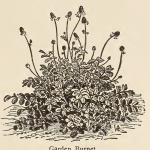
🌿 Burnet (Salad Burnet) (Poterium Sanguisorba)
* Small: The primary form grown, with fine, cucumber-scented leaflets used in salads and drinks.
🥗 Cabbage (Brassica Oleracea Capitata and Sabauda)
Cabbage is detailed extensively, divided into three main groups: Smooth-leaved (White and Red), and Savoy (Crinkled-leaved).
Smooth-Leaved Varieties (White/Green)
• Early Types (Spring/Summer):
• Early York (or Early Sugarloaf): Small, conical head; very early for spring cutting.
• Early Dwarf Paris Market: A very reliable and quick-maturing variety.
• Large Summer/Autumn Types:
• Drumhead: Produces immense, flat, solid heads; excellent for general use and pickling.
• Filder Cabbage (Pointed Head): A large, conical German type, excellent for sauerkraut.
• Large Oxheart: Large, heart-shaped, solid heads.
• Red Cabbage:
• Red Drumhead: Large, deep purple-red heads; used primarily for pickling.
Savoy Varieties (Brassica Oleracea Sabauda)
• Early Types:
• Early Dwarf Ulm: Small, very early, and fine-flavoured.
• Green-Grown: Medium-sized, good texture.
• Large Winter Types:
• Golden Yellow Winter: Large, hardy heads that turn a characteristic yellow after frost.
• Dwarf Green Curled: Very hardy, excellent for late winter use.
🌿 Caraway (Carum Carvi)
* Common Caraway: Grown for its seeds, used in baking and confectionery.
🌵 Cardoon (Cynara Cardunculus)
Cardoon varieties are based on the degree of spininess and the quality of the blanched stalk.
• Spanish (or Cardoon of Tours): Very large, vigorous, and somewhat spiny; highly prized when blanched.
• Improved Smooth (or Cardon à Cardes Pleines): Nearly spineless and known for yielding thick, meaty stalks, making it easier to handle.
• Puvis: A French variety valued for its robust growth and tender quality.
🥕 Carrot (Daucus Carota)
Carrot varieties are classified by their root length and shape.
• Short-Horn (Forcing) Varieties:
• Early French Horn (or Parisian Forcing): Very short, almost round roots; used for early forcing under glass.
• Early Shorthorn: Slightly longer than the French Horn; quick to mature.
• Intermediate (Half-Long) Varieties:
• St. Valery: Long, tapering, deep red root; very vigorous and popular.
• Intermediate Red (or Half-Long Red): A standard, robust market variety.
• Long Varieties (Field/Main Crop):
• Long Red: Very long, tapering root, often used for storage and field cultivation.
• White Belgian: A large, coarse, white-rooted variety grown primarily for animal fodder.
• Long Yellow: A yellow-rooted type, similar in shape to the Long Red.
🌸 Cauliflower (Brassica Oleracea Botrytis)
The focus is on the speed of heading and the season.
• Early (Spring/Summer):
• Early Erfurt: A very popular and reliable early variety, known for its small, firm white heads.
• Dwarf Early Nonpareil: Quick-maturing, yielding fine, solid white heads.
• Main Crop (Autumn):
• Lenormand’s Giant: Produces very large, excellent quality heads.
• Autumn Giant: A robust, late-maturing variety.
• Late/Winter:
• Hardy Winter: Varieties specifically bred for hardiness and maturity in late autumn or early winter (similar to some Broccoli).
🌳 Celeriac (Apium Graveolens Rapaceum)
The varieties focus on the size and shape of the edible root (corm).
• Large Smooth Prague: The standard variety, known for its large, smooth, and well-formed corm, which blanches well.
• Apple-Shaped: A smaller, rounder, quick-maturing type.
🌿 Celery (Apium Graveolens Dulce)
Celery varieties are categorised by stem colour and hardiness.
• Green Stem Varieties:
• Giant White (or Solid White): Produces very large, solid stalks, blanches to white.
• Common Green: A robust, standard type.
• Red/Pink Stem Varieties:
• Red-Stemmed (or Pink): Known for its hardiness and nutty flavour; used for late crops.
• Major Clarke’s: A well-known pink/red variety, valued for its thickness and solidity.
🌿 Chervil (Anthriscus Cerefolium)
• Curled or Moss-Curled: The most common garden type, grown for its highly divided, curled leaves.
• Plain-Leaved: The less common, smoother-leaved type.
* Common: The sole variety listed, grown for its small, dark, parsnip-like roots that require a period of storage before consumption to develop flavour.
🥬 Chicory (Cichorium Intybus)
This section covers both forcing chicory for chicons (Witloof) and root chicory.
• Witloof (or Brussels Chicory): Cultivated specifically for forcing tight, white heads in winter.
• Large-Rooted: Grown primarily for drying and grinding as a coffee substitute.
• Barbe de Capucin: Grown for blanching in a dark cellar to produce long, thin, loose leaves.
🧅 Chive (Allium Schoenoprasum)
• Common Chive: The only type generally detailed, noted for its small, fine, hollow leaves.
🥬 Couve Tronchuda (Brassica Costata)
• Tronchuda: The single, distinctive Portuguese Cabbage variety described, known for its thick, succulent midribs (costas).
🌿 Coriander (Coriandrum Sativum)
* Common Coriander: Grown for both its pungent seeds and its leaves (often called Cilantro outside of British usage).
🌿 Corn Salad (Valerianella locusta)
* Common Green: The standard, small-leaved variety.
* Large Seeded (or Coquille): A more robust French type, valued for its larger size and better winter hardiness.
* Dutch: A quick-growing type.
🌿 Cress (Lepidium Sativum)
• Common Plain-Leaved: The quick-growing standard variety.
• Curled or Curled-Leaved: A decorative type with finely cut leaves.
🥒 Cucumber (Cucumis Sativus)
Cucumber is divided into forcing (under glass) and open-ground varieties.
• Forcing (Hothouse) Varieties:
• Long Green (or Telegraph): Very long, straight, smooth fruit; the standard English forcing type.
• Sutton’s A-1: Known for its uniformity and high quality.
• Open-Air (Ridge) Varieties:
• Short Green Prickly: A vigorous, medium-sized, spiny fruit for outdoor cultivation.
• Gherkin: Small, short, spiny fruit used for pickling.
• White Spine: A vigorous type with white spines; excellent for outdoor use.
🌿 Dill (Anethum Graveolens)
• Common Dill: The standard variety grown for its seeds and feathery leaves.
🍆 Egg Plant (Aubergine) (Solanum Melongena)
Varieties are classified primarily by the shape and colour of the fruit.
• Round Purple: The classic, deep purple, round or slightly oval fruit.
• Long Purple: Produces long, slender, deep purple fruit; often preferred for cooking.
• Striped: A decorative variety with variegated purple and white skin.
• White: A variety producing small, white, egg-shaped fruit (where the name ‘Egg Plant’ originates).
• Early Black: Valued for its rapid maturity.
🥗 Endive (Cichorium Endivia)
Endive is divided into the two main types: curled (frisée) and broad-leaved (escarole).
• Curled (Frisée) Varieties:
• Fine Curled: Highly ornamental, finely cut leaves; excellent for salads.
• Ruffec: A robust, hardy, and very popular curled variety, good for winter.
• Broad-Leaved (Escarole) Varieties:
• Round-Leaved Batavian: Known for its large, solid rosette of broad leaves; the most common Escarole type.
• St. Laurent: A robust Batavian type, highly valued for its blanched heart.
The focus is on the shape and size of the bulb-like swollen stem base.
• Common Fennel (or Florence Fennel): The standard type, producing a large, firm, crisp, anise-flavoured base (or ‘bulb’).
• Sweet (or Roman): Slightly sweeter and often used for the stalks, but generally the same type.
🌿 Feverfew (Matricaria parthenium)
* Common: Grown as an herb and for its traditional medicinal uses.
🌿 Good King Henry (Chenopodium bonus-henricus)
* Common: A perennial pot herb, the leaves and young shoots are cooked and used as a spinach substitute.
🎃 Gourd and Pumpkin (Cucurbita Maxima and Pepo)
This chapter details an extensive collection, grouped by their utility: culinary (pumpkins), squashes, and ornamental gourds.
Large Culinary Pumpkins (Cucurbita Maxima)
• Large Red Etampes: Large, flattened, red-orange fruit; excellent for pie and general cooking.
• Mammoth: Used for competition, reaching enormous sizes (up to hundreds of pounds).
• Turban (or Turk’s Cap): Distinctive, turban-shaped fruit; highly decorative but also edible.
• Common Yellow: A standard, large, yellow-skinned type.
Marrow and Squash Types (Cucurbita Pepo and sometimes Maxima)
• Vegetable Marrow (Courgette/Zucchini types):
• Long White: Long, cylindrical fruit, typically picked when immature.
• Bush Marrow: Compact plant habit, good for smaller gardens.
• Acorn Squash: Small, ridged, dark green fruit (cited under various older names).
🍒 Ground Cherry (Physalis Viscosa and Alkekengi)
• Strawberry Tomato (or Cape Gooseberry, Physalis Peruviana): The most common edible type, noted for its sweet-tart fruit encased in a papery husk.
• Winter Cherry (Physalis Alkekengi): Grown mainly for its bright red, persistent ornamental calyx (husk).
🌿 Horehound (Marrubium Vulgare)
* Common Horehound: Grown as an herb, often used in confectionery and for its bitter flavour.
🥔 Jerusalem Artichoke (Helianthus Tuberosus)
Varieties are differentiated by the colour and shape of the tuber.
* White Fleshed (or Pale Tuber): The most common variety, with pale, knobby tubers.
* Red Fleshed (or Violet Tuber): Distinguished by its pinkish-red skin; often described as smoother than the white type, making it easier to clean.
* Improved Smooth (or Fuseau): A selection aimed at producing fewer, longer, and smoother tubers for easier preparation.
🥬 Kohl Rabi (Brassica Oleracea Gongylodes)
Kohl Rabi varieties are primarily grouped by their skin colour and time of maturity.
* White (or Green) Varieties:
* Early White Vienna: Small, very early, pale green bulb; excellent quality.
* White Goliath: Produces a very large bulb, suitable for autumn harvest and storage.
* Purple Varieties:
* Early Purple Vienna: A quick-maturing variety with a purple-skinned bulb.
* Purple Goliath: A large, late-maturing purple variety, known for its hardiness.
🌿 Lavender (Lavandula Spica)
* Common: The primary species grown for its scented flowers and essential oils.
🌿 Leek (Allium Porrum)
Leek varieties are distinguished by the length and thickness of the blanched stem (shank).
* Early Summer Types:
* Common Leek (or Short Summer): Used for early harvesting; thinner and quicker to mature.
* Winter (Main Crop) Types:
* Monstrous Carentan: A famous French variety known for its great size, thick, solid stems, and hardiness.
* London Flag (or Broad-Leaved Flag): A robust and hardy English variety, producing very long, well-blanched shanks.
* Musselburgh: A widely esteemed, very hardy variety, excellent for late winter and spring use.
🌿 Lentil (Ervum Lens)
The main distinction is based on the size of the seed.
* Large-Seeded: Produces large, flattened seeds; often the type grown for soup.
* Small-Seeded (or Common Lentil): Smaller seeds, typically grown in drier regions.
🥬 Lettuce (Lactuca Sativa)
Lettuce is extensively detailed, divided into two primary groups: Cabbage (Butterhead/Crisphead) and Cos (Romaine).
Cabbage Lettuce (Head/Butterhead Types)
* Early Forcing:
* Tom Thumb: Small, compact, very quick-maturing, used for forcing.
* White-Seeded Tennis Ball: Reliable, medium-sized, excellent for early use.
* Summer/Autumn:
* Trocadero: A large, solid butterhead, slow to bolt in summer.
* All-the-Year-Round: A robust and reliable variety for continuous cropping.
* Crisp/Iceberg Types (or Hardy Winter):
* Blonde Blockhead: Forms a very large, firm head.
* Drumhead: Large, flattened head, highly valued for its firmness.
Cos Lettuce (Romaine Types)
* White Cos (or Paris White Cos): Tall, upright growth with spoon-shaped leaves; must be tied up for blanching; white-seeded.
* Brown Cos (or Bath Cos): Similar shape to White Cos but with reddish-brown outer leaves; black-seeded and slightly hardier.
* Express Cos: An earlier-maturing Cos variety.
🌽 Maize (Sweet Corn) (Zea Mays)
This chapter focuses on varieties grown for table use (sweet corn) or for tender ears.
* Early Dwarf (or Early Dwarf Sugar): A short-stalked, quick-maturing variety.
* Large Sweet: Produces large ears with sweet kernels, requiring a longer growing season.
* Black Mexican: A novelty variety with dark kernels.
🌿 Marjoram (Origanum Marjorana)
* Sweet Marjoram: The standard culinary variety.
🍉 Melon (Cucumis Melo)
Melons are detailed based on netting, shape, and flesh colour.
* Cantaloupe (Ribbed and Netted):
* Prescott: A large, warty/ribbed melon, noted for its fine flavour.
* Scarlet-Fleshed Cantaloupe: Has deep orange/red flesh.
* Netted (Muskmelon):
* Green-Fleshed Netted: Standard muskmelon with a grey-green rind and green flesh.
* Yellow-Fleshed Netted: Yellow flesh, often highly scented.
* Winter Melons (or Hard-Skinned):
* Valencian: A smooth, late-maturing melon for keeping into winter.
🌿 Mint (Mentha species)
* Peppermint (M. Piperita): Grown for its strong flavour and essential oils.
* Spearmint (M. Viridis or Spicata): The common culinary mint.
🌿 Mustard (Brassica Nigra and Alba)
* White Mustard (Brassica Alba): Grown for salad leaves and for grinding the seeds.
* Black Mustard (Brassica Nigra): Grown almost exclusively for its stronger-flavoured seeds.
🌸 Nasturtium (Indian Cress) (Tropaeolum Majus)
* Tall Climbing: Grown for its edible leaves and flowers, and the seeds (used as a caper substitute).
* Dwarf or Bush: A non-climbing form.
🌶️ Okra (Hibiscus Esculentus)
* White-Seeded: Distinguished by the light colour of its seeds.
* Long Green Pod: The standard variety, producing long, ribbed pods.
🧅 Onion (Allium Cepa)
Onion varieties are classified by shape, colour, and intended use (keeping or early salad).
* Large Globe/Strasbourg Types (Main Crop/Keeping):
* Yellow Danvers: A standard, reliable, yellow globe onion; good keeper.
* Reds: Various red globe and flat varieties (e.g., Red Wethersfield).
* Flat Italian/Early Types:
* Tripoli (or Italian Flat): Large, flat, mild, and early; poor keeper.
* Giant Rocca: Very large, mild, often pink or deep red, for immediate use.
* Pickling/Sets:
* Paris Silver Skin (or Pearl Onion): Small, white, flattened, ideal for pickling.
🌿 Orache (Atriplex Hortensis)
• Green: The common variety, used as a spinach substitute.
• Red: A striking variety with deep red leaves, offering a more decorative appearance.
🌿 Parsley (Petroselinum Crispum)
• Curled: The standard culinary variety, highly favoured for garnishing and flavouring due to its finely curled leaves.
• Plain-Leaved (or Common): Smoother leaves, often considered to have a stronger flavour.
• Hamburg (or Turnip-Rooted): Grown for its thickened, edible root, similar to a small parsnip.
🥕 Parsnip (Pastinaca Sativa)
Parsnip varieties are classified by the length and shape of the root.
• Student: A popular, smooth, medium-long variety; excellent quality.
• Hollow Crown: A classic, large variety, distinguished by the depression at the crown where the leaves emerge.
• Long Smooth: A deep-rooted type, favoured for deep, rich soil.
🫛 Pea (Pisum Sativum)
The Pea section is extensive, categorised by height (Dwarf, Half-Dwarf, Tall), texture (Wrinkled/Marrowfat, Round), and use (Podding/Mangetout).
Round/Smooth-Seeded Types (Hardy, early)
• Early Charlton: Very early and hardy; used for the first crop.
• White Hotspur: A dwarf, early variety.
Wrinkled/Marrowfat Types (Sweet, main crop)
• American Wonder: A very dwarf, productive variety.
• Dwarf Blue Imperial: A well-known wrinkled variety.
• Telegraph: A tall, high-yielding main crop wrinkled pea.
• Ne Plus Ultra: Very tall, late-maturing, known for its fine quality.
Edible-Podded (Mangetout/Sugar) Types
• Dwarf Sugar: Grown for its edible, stringless pods.
• Tall Sugar: A tall variety of the edible-podded type.
🌶️ Pepper (Capsicum Annuum)
Peppers are separated into sweet and pungent types.
• Sweet (or Bell) Varieties:
• Large Bell: Produces large, blocky, mild fruit.
• Tomato-Shaped: A mild, flattened, round fruit.
• Pungent (or Chilli) Varieties:
• Long Red Cayenne: Small, very hot, long, slender fruit.
• Bird Pepper: Extremely small and very pungent fruit.
🥔 Potato (Solanum Tuberosum)
The chapter details hundreds of varieties, grouped by maturity and tuber colour (White, Red, Blue/Purple). Key types cited include:
• Early White:
• Early Rose: Very early, oval, pinkish-white tuber; highly popular.
• Myatt’s Ashleaf: A famous, kidney-shaped early variety.
• Main Crop White:
• Up-to-Date: A large, oval, late-maturing white tuber; excellent keeper.
• Victoria: A widely grown main-crop variety.
• Coloured/Late Types:
• Red Skin: Various long-keeping red-skinned varieties.
• Blue Kidney: A variety with blue or purple skin.
🌿 Orache (Atriplex Hortensis)
* Green: The common variety, used as a spinach substitute.
* Red: A variety with distinctive deep red leaves.
🌿 Plantain (Buck’s Horn) (Plantago coronopus)
* Common Buck’s Horn: The standard type, with deeply cut leaves, often used as a hardy winter salad or garnish.
* Finely Cut: A selection noted for its more delicate and finely divided foliage.
🌿 Purslane (Portulaca Oleracea)
• Green: The common variety with green, succulent leaves.
• Golden (or Yellow): Distinguished by its yellowish-green leaves.
🌿 Radish (Raphanus Sativus)
Radishes are classified by shape (round, olive, long) and colour.
• Small Round/Olive Types (Forcing/Early):
• Scarlet Globe: Small, round, bright red; excellent for early forcing.
• White Tipped (or French Breakfast): Long, half-red, half-white tipped.
• Long Varieties (Summer/Autumn):
• Long White (or Icicle): Long, slender, white root.
• Long Scarlet: A long, red-skinned root.
• Winter Varieties (Large/Storage):
• Black Spanish: Large, round, black-skinned root; extremely hardy and for winter storage.
• Large White Chinese: A very large, white-fleshed root.
🌿 Rampion (Campanula Rapunculus)
* Common Rampion: Grown for both its thickened, white, turnip-like root and its leaves, which are used in salads.
🌿 Rape (Brassica Napus)
• Common Rape: Grown mainly as animal fodder or green manure, but the young leaves were sometimes used as greens.
🌿 Rocambole (Allium Scorodoprasum)
* Common Rocambole (or Giant Shallot): A type of perennial onion or Top-Setting Garlic, producing a cluster of cloves similar to garlic but typically milder.
🌿 Rocket (Roquette) (Eruca Sativa)
* Common Roquette: The only type generally detailed, grown for its pungent, mustard-like salad leaves
🌿 Rhubarb (Rheum Rhaponticum)
• Giant: A robust variety, producing large, thick, acidic stalks.
• Early Crimson (or Tobolsk): Known for its bright red colour and early production.
• Myatt’s Victoria: A large, well-known, productive variety.
🥕 Salsify (Tragopogon Porrifolius)
• Common Salsify: The single, standard variety grown for its long, white root and delicate flavour (Oyster Plant).
🌿 Savory (Satureja Hortensis)
• Summer Savory: Annual, the standard type used for flavouring.
• Winter Savory: Perennial, with a stronger flavour.
🥕 Scorzonera (Scorzonera Hispanica)
• Common Scorzonera: The single variety, grown for its long, black-skinned root.
🥬 Sea-Kale (Crambe Maritima)
• Common Sea-Kale: The single species, grown for its blanched shoots.
🧅 Shallot (Allium Ascalonicum)
• Common Shallot: Small, elongated bulbs, highly aromatic.
• Jersey Shallot (or Giant): Produces larger, more vigorous bulbs.
🌿 Sorrel (Rumex Acetosa)
• Broad-Leaved: The standard variety with wide, acidic leaves.
• Belleville: A selected variety known for its fine texture and consistent growth.
🌿 Skirret (Sium Sisarum)
* Common Skirret: Grown for its cluster of white, sweet, fibrous roots, historically popular but rare today.
🥬 Spinach (Spinacia Oleracea)
Spinach is divided into summer (quick-bolting) and winter (hardy) types.
• Summer Varieties:
• Round-Seeded (or Summer): Quick-growing, with smooth, round seeds.
• Winter Varieties:
• Prickly-Seeded (or Winter): More hardy, with spiky seeds, slower to bolt.
• Viroflay: A large, thick-leaved variety.
🌿 Stachys (Chinese Artichoke) (Stachys Affinis)
* Common: Grown for its small, white, knotty tubers that resemble larvae.