The Unsung Vegetable Pioneers of Our Kitchen Gardens
The History Of British Horticulture Is Often Told Through The Exploits Of The Great Plant Hunters: Intrepid Figures Such As Veitch, Douglas, Lobb, And ‘Chinese’ Wilson. But What About Vegetable Hunters?
Table of Contents
Veitch and others are names synonymous with the introduction of magnificent trees, exotic orchids, and countless ornamental shrubs that populate our stately homes and public gardens. They brought us the glorious rhododendrons, the towering Pseudotsuga menziesii (Douglas-fir), and the vibrant Meconopsis (Blue Poppy), fundamentally transforming the visual landscape of the country.
Yet, a quieter, equally transformative revolution was happening in the kitchen garden, led by a different, often unrecognised, set of pioneers. Few people can readily name the individuals responsible for bringing or developing the common vegetable varieties we rely on daily. While the collectors of purely decorative flora are well-known, the efforts of those who enriched our diet, like the renowned French seed house Vilmorin, remain largely unsung. This article explores the vital, yet neglected, legacy of the plant hunters and breeders who shaped the contents of the greengrocer’s stall and the kitchen garden alike.
The Systematic Approach to Sustenance
The pioneers of vegetable horticulture were not always the globe-trotting adventurers of the ornamental trade. Instead, they were often seedsmen, market gardeners, and agricultural improvers whose work was conducted with meticulous, systematic rigour across trial grounds and publishing houses. Their focus was not rarity or aesthetic novelty, but utility, yield, and reliability.
The French firm Vilmorin-Andrieux et Cie stands as the definitive example of this shift. Originating in the 18th century, their work transcended simple trade to become a form of applied botany. The firm’s primary global legacy lies in seed improvement, trialling thousands of varieties to select for superior traits like disease resistance and higher productivity. Vilmorin’s systematic field trials laid the foundation for modern variety selection, dramatically enhancing the quality of European vegetable production.
The company’s immense contribution was encapsulated in its magnum opus, The Vegetable Garden: Illustrations, Descriptions, and Culture of the Garden Vegetables of Cold and Temperate Climates. The 1920 English edition, edited by William Robinson, was the culmination of decades of research, serving as an authoritative catalogue and cultural guide. It meticulously documented countless varieties of every conceivable vegetable, many of which had been introduced or improved by the Vilmorin family themselves, from novel lettuces and carrots to new strains of peas. Its systematic, encyclopaedic scope set the gold standard for horticultural reference works.
British and American Counterparts
While Vilmorin provided the comprehensive European standard, several similar tomes were essential to British and American gardeners, each offering regional focus and distinct philosophical approaches that defined the cultivation of vegetables for the common people.
One of the most foundational works in the English-speaking world was William Cobbett’s The English Gardener (1829). Cobbett, a prolific writer and radical political polemicist, brought a vigorous, opinionated, and highly practical style to the subject. His manual was aimed squarely at the common man, promoting self-sufficiency and efficient cultivation of vegetables and fruit. Cobbett’s enduring popularity ensured his book’s simple, unpretentious methods for growing staples like potatoes, cabbages, and beans had a massive influence on the rapidly growing population of amateur gardeners throughout the 19th century.
In America, a comparable sense of agricultural ambition was captured by Peter Henderson’s Gardening for Profit (1866). Henderson, a pioneering Scottish-American nurseryman, wrote for those looking to turn their garden into a commercial success. While Vilmorin offered descriptions and cultural advice, Henderson provided a blueprint for scaled production. His work focused on the logistics of market gardening—from maximising yield per acre to practical advice on soil management and crop rotation—demonstrating a highly rationalised, business-focused approach to vegetable cultivation that was immensely influential.
Closer in its systematic classification to the Vilmorin model was Fearing Burr Jr.’s Field and Garden Vegetables of America (1863). This work is renowned for its detailed, historical, and botanical accounts of the vast number of vegetable varieties then in cultivation in the United States. It acted as an essential reference for seedsmen and serious gardeners, documenting the origins, characteristics, and optimal cultivation for an enormous range of heirloom vegetables. Burr’s detailed descriptions are invaluable historical records of genetic diversity, showcasing varieties that often predate modern standardisation.
The Cloche Revolution
By the early 20th century, the focus shifted from sheer identification and classification to intensive, high-yield methods. This innovation was best maracaptured by books describing the maraîchère, or French Market Gardening system, which was widely popularised in Britain through manuals such as Thomas Smith’s French Gardening (1909).
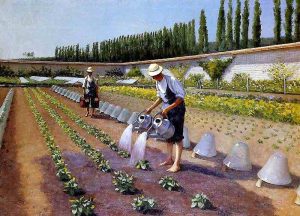
This system, though labour-intensive, offered astonishing productivity in limited space, a crucial advance for urban or suburban gardeners. The core principles involved creating deep, heavily manured hotbeds to provide warmth for early-season crops, and using glass bell jars, or cloches, to protect tender plants and force early growth. The text advocated for close planting and continuous cropping, demonstrating a path to year-round production of high-value crops like salads and early vegetables. It was a horticultural technique that required intellectual rigour, moving gardening from a seasonal hobby to an intensive, near-scientific pursuit.
The intellectual backing for this intensive method was often philosophical. The anarchist geographer Prince Peter Kropotkin, for instance, contributed to the literature on French intensive methods, arguing that their efficiency demonstrated the potential for small-scale, decentralised communities to achieve self-sufficiency, giving the market gardener an unlikely political edge.
The Legacy of the Kitchen Garden Pioneers
Unlike the colourful stories of Veitch battling Himalayan snows to find a new primula, the stories of Vilmorin, Cobbett, and Henderson are the quieter triumphs of the trial ground and the printing press. Their legacy is not measured in exotic aesthetics, but in the sustained feeding of a nation and the genetic stability of our most fundamental food crops.
The books they produced were more than manuals; they were codified knowledge that democratised sophisticated horticultural practice. They moved vegetable gardening from a reliance on traditional, localised knowledge to a scientific discipline where selection, planning, and systematic cultivation were paramount. The work of these unsung pioneers established the modern concept of the vegetable variety, ensured its quality, and ultimately determined the contents of the nation’s plate, a far more profound and lasting impact on daily life than any rare orchid or ornamental shrub.