The Vilmorin Family Were Instrumental In Importing Many Species Of Tomatoes, Squashes, Beans, Peppers, Chinese Cabbages & Sweet Corn Which Changed European Gardening Forever.
Table of Contents
One of the most important names in vegetable growing is unknown by most gardeners. That name is Vilmorin.
The Vilmorin name refers to several generations of a prominent French family of botanists and seedsmen, especially associated with the firm Vilmorin-Andrieux & Cie. The family’s work started in 1774 and the company continues today, though they are no longer family controlled. Vilmorin was pivotal in developing modern horticulture and plant breeding. Their headquarters near Paris included experimental gardens, trial fields, and one of the world’s first scientific seed companies.
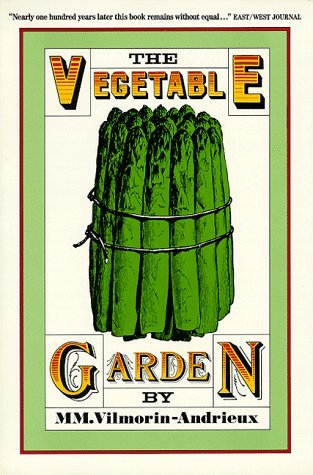
By the early 20th century, their accumulated research culminated in a book, The Vegetable Garden, which remains one of the most comprehensive horticultural reference works of its era and is still available today. It is worth reading as we can learn so much from the past.
The Vilmorin Families Veg Plant Introductions & Plant Breeding Developments
The Vilmorin family, active from the late eighteenth to the early twentieth century, were among the most important horticulturalists and seedsmen in Europe. Through their firm, Vilmorin-Andrieux & Cie, they played a central role in collecting, introducing, and improving vegetable plants from across the world. Their experimental gardens at Verrières-le-Buisson, near Paris, became an international centre for the trialling and breeding of edible crops.
Vilmorin’s plant introductions from foreign climes were wide-ranging. The family maintained networks with explorers, colonial botanists, and agricultural correspondents, which allowed them to obtain seeds and specimens from Asia, the Americas, and the Near East. Many of the vegetables now considered commonplace in European gardens were first trialled and stabilised by the Vilmorins.
From the Americas, they introduced numerous beans, including kidney and lima types, and improved them through selection for temperate climates. They brought in squashes and pumpkins, producing new cultivars such as Potiron Jaune Gros de Paris and Courge de Provence. Early tomato varieties from the New World were tested and refined in their gardens, helping to popularise the crop in France. Peppers, both sweet and hot, arrived through Spanish and Caribbean sources and were bred into milder, garden-suited strains. From East Asia came plants such as the Chinese cabbage (Brassica rapa var. pekinensis), pak choi, and long-podded cowpeas, while sweet corn was introduced from North America and developed into compact forms for European gardens.
Alongside these introductions, the Vilmorins became pioneers of systematic vegetable improvement. Their work moved beyond mere cultivation into what we would now callplant breeding. They applied careful mass selection, choosing plants for desirable traits such as size, flavour, uniformity, and earliness, and maintained pure seed lines over successive generations. Controlled pollination was used to stabilise varieties, and detailed field trials were conducted to record performance under different conditions. These methods laid the foundations for scientific plant breeding before Mendelian genetics were fully understood.
Vilmorin’s Carrots, Lettuce, Onions & More
Their contributions were particularly notable in several key crops. In carrots, they developed uniform and early types such as the “Vilmorin Improved” and “Chantenay” strains, which became commercial standards. In beetroot and sugar beet, their work not only enhanced table varieties but also supported the growth of the French sugar-beet industry. They refined cabbage and cauliflower varieties to improve heading and hardiness, producing reliable market types, while in lettuce they established classification systems still used today, distinguishing Cos, Butterhead, and Crisphead forms. Their onion breeding led to well-known varieties such as Vilmorin’s Improved Yellow, and they created strains of leeks, spinach, and chard for better cold tolerance and rapid maturity. We owe much of our veg crop performance today to their work in the past.
Vilmorin’s Importance In Science & Gardening
The scientific and historical importance of their work lies in how they combined global plant collecting with systematic selection and documentation. The family’s seed firm effectively acted as an early gene bank, preserving a wide range of vegetable diversity long before modern conservation efforts existed. As previously mentioned their findings and descriptions were compiled in The Vegetable Garden, most notably in the 1920 edition (see below), which recorded and illustrated their achievements. This work not only guided gardeners and farmers but also influenced early twentieth-century plant breeding and seed production worldwide.
In summary, the Vilmorins introduced many exotic vegetables to Europe – tomatoes, squashes, beans, peppers, Chinese cabbages, and sweet corn among them – while improving and stabilising traditional crops such as carrots, beets, cabbages, lettuces, and onions. Through meticulous observation and experimentation, they transformed vegetable cultivation from an empirical art into a scientific discipline, leaving a legacy that endures in modern horticulture.
The Vegetable Garden (1920 Edition)
Full title:The Vegetable Garden: Illustrations, Descriptions, and Culture of the Garden Vegetables of Cold and Temperate Climates Author/Editor:M. Vilmorin-Andrieux and the House of Vilmorin First published: originally in French in 1850s–1880s (Le Potager d’un Curieuxand later editions), with the English translation revised and expanded in 1920.
The Vegetable Garden: Content and Influence
The 1920 edition was a landmark encyclopedic work describing hundreds of vegetable species and varieties then known to European cultivation.
It combined botanical detail, horticultural practice, and breeding information, illustrated with fine engravings.
Each entry included:
Botanical names and synonyms
Descriptions of varieties (color, form, season, yield)
Cultivation advice
Notes on geographic origins and improvement through selection
The Vegetable Garden: Importance
Served as both a scientific reference and a practical manual for gardeners and plant breeders.
Preserved knowledge of many heirloom and landrace varieties that might otherwise have been lost.
Reflected early systematic plant breeding principles — selection, isolation, and evaluation — long before Mendelian genetics were widely applied in horticulture.
Provided one of the most detailed snapshots of global vegetable diversity available in the early 20th century.
Is still available today and is a valuable historical reference.
The Vilmorin Legacy
The Vegetable Garden(especially the 1920 edition) remains a touchstone for historians of horticulture and biodiversity.
It influenced not only gardeners but also early scientific plant breeding programmes and seed companies worldwide.
Many modern heirloom seed descriptions still draw on the text or illustrations from this work.