How To Grow Celtuce: Lettuce With a Crunchy Difference?
Celtuce: A Guide to Lactuca sativa, var. angustana, the Stem Lettuce, Aka Chinese Lettuce, A Garden Journey From Europe & Tibet!
Table of Contents
Celtuce (Lactuca sativa, var. angustana), also known as stem lettuce, asparagus lettuce, or stilksalat, is a unique vegetable cultivated specifically for its thickened flowering stem. While it belongs to the same species as common leaf lettuce, it represents a fascinating divergence in agricultural selection, prioritising stem development over leaf head formation. Its versatility in the kitchen, where it can be eaten raw or cooked, makes it an interesting crop for gardeners seeking to diversify their cropping and harvest.
Celtuce History and Origins
The common name “Chinese lettuce” points directly to the region where celtuce has been most deeply integrated into the cuisine and agriculture. Known in China as woju (莴苣) or wosun (莴笋), it has been a cultivated crop for centuries. Despite being a Mediterranean species (Lactuca sativa), the botanical variety* angustana is believed to have been developed and refined in the region near the Tibetan borders. Its journey to the West was relatively late. Historical records, such as its documentation in Vilmorin’s influential publication, The Vegetable Garden, in 1920, place its introduction to European gardeners around the turn of the 20th century. This timeline correlates with a period of increased botanical exchange and interest in exotic vegetables.
Note: I use the term variety here as it is botanically correct where it refers to a distinct form that occurs within the same population as the standard species, but has consistent, heritable differences. Gardeners use the word variety in a looser way to mean a named variety of a given cultivar. To make it more complete, but accurate, celtuce is a cultivar of the variety! Clear as mud ehh? My advice is not to worry too much about these details and just grow and eat it.
Cultivation and Management: A Technical Overview
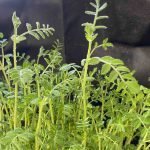
Understanding the growth habit of celtuce is crucial for successful cultivation. Unlike traditional lettuce, where bolting (the process of the plant shooting up a flower stalk) is considered a failure, for celtuce, it is the goal we are aiming for. The plant has been selectively bred to channel its energy into producing a substantial, edible stem during the bolting phase. We actually want our celtuce to bolt!
Growing and Harvesting for Optimal Yield
For a continuous harvest, the books suggest successive sowings be made from early spring to early summer. Seeds can be started indoors for a head start or sown directly into well-drained, fertile soil once the danger of a hard frost has passed. That’s what the4 books say., But this is a type of lettuce and many lettuce are very frost hardy. I have had overwintered lettuce in unheated greenhouses at -16C for weeks with no damage at all. This is when small. Headed lettuce will not survive these temperatures without the cells in the leaves rupturing. So I grow celtuce all winter and it thrives when temperatures don’t drop below -5C. How much lower it can go I’m not sure. Time might tell. if we ever get lower temps here in my part of coastal Devon.
Plants should be spaced approximately 30-40 cm (12-15 inches) apart to allow for adequate development , though I am experiment ting with closer plantings and expect them to be fine down to around 20cm / 8 inch spacings. I’ve grown overwintered iceberg lettuce this tight so have no hesitation in trying it with celtuce.
The stem is ready for harvest when it has reached a substantial diameter, typically 3-5 cm (1-2 inches), and has attained a height of 15-20 cm (6-8 inches) above the leaf crown. The critical indicator is the flowering state: harvest must occur beforethe flowers fully open and the plant commits its resources to seed production. At this late stage, the stem can become pithy, hollow, and unpleasantly bitter.
Post-harvest, the stem requires preparation. The outer skin is tough and fibrous and must be peeled away with a sharp knife or vegetable peeler. This reveals the prized inner core, which is crisp, moist, and possesses a mild, nutty flavour reminiscent of a blend of lettuce and sunflower heart, entirely free of bitterness when harvested correctly.
While the stem is the primary product, the leaves should not be overlooked. Young, tender leaves are an excellent addition to salads. More mature leaves from the stem can be sautéed or added to stir-fries, much like spinach or kale. Just check for bitterness … but in my experience dandelion leaves are more bitter than celtuce.
The Practicalities of Celtuce Seed Production
For gardeners interested in self-sufficiency, celtuce is an excellent candidate for seed saving. Its biological imperative to complete a full reproductive cycle means it reliably produces mature seeds in a single season, even in temperate climates. This is a distinct advantage over many heading lettuce varieties, which are selected for delayed bolting and may not reliably set seed in regions with shorter growing seasons or specific day-length requirements. Allowing one or two of the best plants to flower fully will provide a plentiful supply of seeds for the following year, allowing you to select for traits that perform well in your local conditions.
Celtuce: An In-Depth Look at Culinary Use
The culinary appeal of celtuce lies in its remarkable texture and adaptability. The prepared stem’s consistency is often compared to a crisp cucumber or the tender shoots of udo (Aralia cordata). It can be enjoyed in a multitude of ways:
Raw: When raw, its crispness shines. It can be sliced, julienned, or grated into salads and slaws. A simple and classic preparation involves dicing the raw stem and dressing it with a vinaigrette of olive oil, a dash of soy sauce for umami depth, and a garnish of roasted sesame seeds.
Cooked: Celtuce holds its texture remarkably well under heat, making it a superb stir-fry vegetable. It should be added towards the end of the cooking process to retain its crisp-tender bite. It can also be sautéed, added to soups, or even roasted, where it takes on a different, more concentrated flavour profile.
Pickled: Its firm texture makes it an ideal candidate for quick-pickling, creating a sophisticated and crunchy condiment.
Varieties and Horticultural Characteristics
Not all celtuce varieties are identical, and selection can impact the harvest. Through cultivation, several named varieties have shown distinct characteristics:
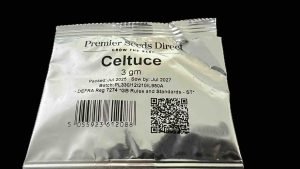
‘Celtuce’ (commonly available from seed houses like Chiltern Seeds) is a standard, reliable variety that forms the baseline for this vegetable type.
‘Asparagus Lettuce’ (sourced from catalogues like the Organic Gardening Catalogue) is another common strain, often highlighted for organic growing practices.
‘Chinese Keule’ (available from suppliers such as Norwegian seed merchant Solhatt) has been noted by growers for its desirable horticultural traits. Observations suggest it can produce thicker, more robust stems and may reach harvestable stage slightly earlier than other common types, offering a practical advantage for the gardener.
In summary, celtuce is a vegetable that offers a unique combination of horticultural interest and culinary versatility. For any gardener looking for unusual veg it represents a low-maintenance, high-reward crop that never fails to spark conversation and delight the palate.