An Allotment Cultivation Guide for Total Beginners
Allotment Tenancy Agreements Often Insist That 75% Is Actively Cultivated. Here Are Some Tips & Tricks To Do That With Minimal Effort & Stress.
Table of Contents
Some allotment committees allow a phased approach for new tenants to give them time to get established. But then strictly apply the rule. It can be hard on new tenants and cause a lot of stress. But don’t despair. Read this Allotment Cultivation Guide.
Here are my tips on keeping it easy and achievable from day one and for years thereafter. The key to a low-maintenance, high-yield allotment lies in choosing resilient crops that require minimal intervention after planting. AND spacing them to make most use of the rule! These plants are often fast-growing, have a long harvest window, and/or can suppress weeds. They also take up a lot of SPACE! So you easily reach the 75% target.
Of course there are also lots of crops that take up less space, are more time consuming to grow and are still very rewarding. But the aim of this article is to quickly and easily get you out of the 75% cultivation trap.
Recommended Crops That Fill Space for First-Time Allotment Holders:
Courgettes, Pumpkins, and Winter Squash: These are prolific producers that thrive with minimal care once established. Their large leaves create a dense canopy that shades the soil, effectively preventing weed growth. Courgettes are normally planted fairly close together but pumpkins etc can be 3-4 feet apart .. which means few plants are needed to fill a large plot AND it is easy to keep the space between them cultivated/hoed as the they grow.
Potatoes: A staple for a reason, maincrop potatoes are excellent for a new plot. They break up compacted soil and their leafy growth helps to suppress weeds. Once earthed up, they require little attention until harvest. Potatoes are another crop that can be widely spaced if you want to work towards 75% of a plot being cultivated.
Onions and Garlic: Planted as sets or cloves, these crops are hardy and easy to grow. They are relatively pest- and disease-free and, once harvested, can be stored for long periods. The great thing about them is once planted in (wide) rows they are easy to keep weed free between the rows and cover a lot of space.
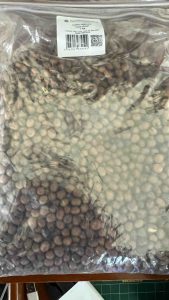
Runner Beans and Broad Beans: Both are high-yielding and require little more than a support structure to climb. Broad beans, in particular, are hardy and can be sown in autumn for an early harvest the following spring. Regular picking encourages more growth. Field beans are similar to broad beans and can be used as a green manure. See the image and guess how many thousand I received in this one kilo bag! A kilo of seed can produce several thousand plants and is not expensive if bought by the kilo. Runner beans can be grown up wigwams of bamboos sow 2 seeds per cane. Commercially I used to space the canes one yard apart to form a square with the same space between them. A standard half plot would need around 30 wigwams to fill it? Far more than you would ever eat but it shows how space can soon be filled.
Chard and Kale: These leafy vegetables are very hardy and can be harvested over a long period. Chard is noted for its slug resistance, and kale can often provide a continuous supply of leaves from autumn through to spring. A perennial kale plant can soon fill a couple of square yards .. they are huge. Plant 4-5 and your space is soon being swallowed up.
Rhubarb: A perennial crop, rhubarb is an excellent long-term investment. Once planted and established, it requires little maintenance and will produce stalks for many years. Plant 7-8 plants .. they need a square yard each and your space contracts even further.
Green Manure: These are not just for winter, they can be sown in any month. And, by choosing the right types, it is possible to fill a large area very inexpensively AND it is doing the soil a lot of good.
As can be seen, with a bit of innovative thinking, it is possible to soon fill a large proportion of an allotment and hit the cultivation rule.
Strategies to Reduce Effort:
No-Dig Gardening: While some initial clearing may be necessary, a no-dig approach involves covering the ground with cardboard or a weed membrane and then applying a thick layer of compost. This method suppresses weeds and improves soil health without the physical labour of digging. It is not for everyone and I hear a lot of people condemn it having seen it badly practiced. But after a lifetime of traditional gardening I decided to giver it a go and wish I had far earlier. Higher and tastier yields with much less effort id what I have discovered.
Perennial Crops: Incorporating perennial plants like rhubarb, soft fruit bushes (e.g., raspberries and blackberries), and certain herbs (e.g., rosemary and thyme) reduces the need for annual sowing and cultivation in those areas.
Successional Sowing: For crops like salad leaves and radishes, sow a small amount every few weeks. This prevents a glut of produce and provides a continuous, manageable harvest.
Weed Suppression: Use ground cover methods such as mulching with wood chips or straw around plants (Ruth Stout Method). This retains moisture and suppresses weed growth, significantly reducing the need for weeding. Some crops like squash and potatoes naturally suppress weeds a bit.
Adhering to cultivation rules on a new plot is achievable by focusing on these easy-to-manage crops and employing strategic gardening techniques. This approach allows you to establish a productive plot with minimal labour, fulfilling your tenancy obligations while enjoying a steady supply of homegrown vegetables.
Enjoy your gardening without stressing about cultivation rules.