An Introduction to the Broadfork. Protecting Soil Ecology Whilst Improving Drainage, Aeration & Productivity.
Table of Contents
In sustainable and no-dig gardening, the broadfork is an essential tool. It represents a move away from “aggressive” soil cultivation towards a more sympathetic, life-oriented approach. Unlike mechanical alternatives, the broadfork is a manual implement designed to work with the soil’s natural ecology, prioritising long-term health. This tool, sometimes called a U-fork or Grelinette, is the key to loosening compacted earth, encouraging deep root growth, and fostering a thriving underground ecosystem, all with remarkably little physical strain.
What is a broadfork?
The grellinette was invented by Andre Grelin who obtained a patent of it in 1964.
What is a Broadfork?
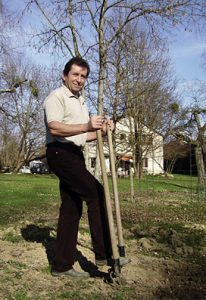
A broadfork is a sturdy, manual tool designed for leverage. Its construction is straightforward yet effective. It consists of a wide, horizontal bar, often made from reinforced steel, which is fitted with four to six long, robust, sharpened steel tines. These tines are usually between 30 to 45 centimetres in length. Attached to this bar are two long, vertical handles. The user drives the tines into the soil using their body weight i.e. by stepping on the horizontal bar, then pulls back on the handles to create a deep soil fracturing and lifting motion.
Loosening Soil Without Turning It Over
The main job of a broadfork is to relieve soil compaction and aerate the soil to a good depth without turning it over or destroying its natural layers. This process is a form of low-till cultivation. When you use a spade, you slice through the soil and flip entire clods upside down. A rotavator violently churns and mixes all the soil layers together. The broadfork, in contrast, does neither but achieves a great deal.
The action is a gentle rock and lift. After the tines hank penetrated the soil the handles are pulled back. The soil is slightly raised and fractured. This creates a network of cracks and channels deep into the subsoil. It supplements earthworm activity. The topsoil, with its valuable organic matter and established microbial life, remains largely on the surface where it belongs. This fundamental difference is what gives the broadfork its significant benefits for soil health.
Causing Less Damage to Soil Life
This technique of not turning the soil over is the key reason for the broadfork’s popularity amongst organic gardeners. Soil is a living ecosystem teeming with microorganisms—bacteria, fungi, and protozoa—as well as larger creatures like earthworms. This community, particularly the fungal networks, forms a symbiotic relationship with plant roots, helping them access water and nutrients.
Digging and rotavating are highly damaging to this system. They chop up fungal strands, expose buried bacteria to the drying air, and bring dormant weed seeds to the surface. By simply fracturing the soil, the broadfork largely protects this delicate soil food web. Earthworm channels are mainly left intact, fungal networks remain connected, and the life of the soil is preserved. This leads to healthier, more resilient plants that are better able to resist problems. Of course the degree of soil fracturing will depend on how far back you pull the broadfork handles. It is easy to control this.
How The Broadfork Increases Aeration and Drainage
The deep channels created by the broadfork’s tines have two immediate physical effects: significantly improved aeration and drainage.
Plant roots and most beneficial soil organisms need oxygen. In compacted soil, this air exchange is limited, leading to poor conditions and root rot. The broadfork’s action creates pathways for air to penetrate deep into the root zone, creating a better environment for strong root development.
At the same time, these channels vastly improve drainage. In wet weather, water can quickly infiltrate through these cracks, moving past the root zone instead of pooling on the surface and waterlogging plants. In drier spells, the channels can help water move upwards from the subsoil, improving drought resistance. This creates a more balanced and resilient growing environment.
Practical Uses in the Garden
The broadfork is very versatile. Its main use is in preparing new vegetable beds, especially on land that has become hard and compacted. It is also perfect for aerating established no-dig beds at the start of a season without resorting to digging (though good no dig beds rarely need this treatment). It is excellent for working organic matter like compost into the soil; the material is spread on the surface and the broadfork’s lifting action helps to gently mix some of it in. Finally, its gentle leverage makes it a superb tool for harvesting root crops like potatoes, parsnips and carrots with minimal damage.
Broadfork Summary
To put it simply, a broadfork is a tool for maintaining and/or building healthy soil. It is a philosophy of gardening that recognises that the foundation of a successful garden is the ecosystem in the earth. By using a broadfork, you invest in the long-term fertility and structure of your soil. It builds soil rather than depleting it, ensuring the land becomes richer, easier to work, and more productive, all while reducing the physical effort needed to maintain it. It is an indispensable tool for any UK gardener committed to sustainable, sensible gardening practices.