How Often Should I Water Veg? The Answer Depends On So Many Factors. But Here Are a Few Basic Rules And Tips For UK Gardeners.
Table of Contents
In large Victorian gardens the watering was left to the most skilled gardener in the team. They understood that watering schedules had to vary due to the dynamic nature of weather, soil, and specific plant needs. Having owned a market garden I have many years experience (But I’m not quite Victorian!). Based on that this article is a comprehensive general guide for watering fruit and vegetables in both greenhouse and outdoor settings with some science on which my experience is based.
Experienced gardeners rely on observation more than gadgets. It is a skill that anyone can acquire given time and most of us already have it to a degree. For example if you see a wilted plant I’m sure one of the first thoughts you will be, does it need watering? Wilt can be caused by several things, but a lack of water is the most obvious.
As a market gardener I would daily walk in to every greenhouse and look across it to determine if it needed watering. The bigger the greenhouse the easier it can be as colour changes and the way the plant holds its leaves leaves are often more obvious in bigger spaces as there are always “dry” spots that show the problem first. Some of our greenhouses were very large. (One was a quarter acre, that the size of 36 buses or 9.47 blue whales!).
Examining the plant at close quarters also works. Are the leaves held in the right position or are they wilting slightly? Do they have the turgor you expect of a healthy leaf at this stage of growth? Is the colour as expected? Are the leaves looking duller than normal? There are dozens of clues to look for to see if the plants need watering. Ditto to see if they are overwatered. For example you can look for guttation. Guttation is the secretion of water droplets from the edges or tips of leaves or stems of some plants. It is indicative of overwatering but is not a definitive diagnosis. Other factors also influence it such as soil temperature and humidity.
Market gardeners tend to use the term irrigation rather than watering but it amounts to the same thing.
Watering Fruit and Vegetables: A General Guide for UK Gardens (Greenhouse & Outdoors)
Effective watering is crucial for healthy fruit and vegetable production. Too little can lead to wilting and stunted growth, while too much can cause root rot and, potentially, nutrient leaching. The key is to understand your plants’ needs and respond to environmental cues, rather than sticking rigidly to a fixed schedule. When people say they water, say, every other day, I cringe. Strict regimes disregard the weather and make no sense at all.
The Science of Watering: Why It Matters
Plants absorb water through their roots, which then travels up to the leaves where it’s used for photosynthesis (converting light energy into sugars for growth) and transpiration (the evaporation of water from leaves, which helps cool the plant and draw nutrients up from the soil).
Water acts as a solvent: It dissolves nutrients in the soil, making them available for plant uptake.
Turgor pressure: Water fills the plant’s cells, creating internal pressure (turgor) that keeps the plant rigid and upright. A lack of water leads to a loss of turgor, causing wilting.
Temperature regulation: Transpiration helps to cool the plant, especially important on hot days. Removing leaves from crops such as tomatoes can reduce the plants ability to reduce its temperature.
General Watering Principles for All Crops
Water deeply and less frequently: This encourages roots to grow deeper, making the plant more resilient to dry spells. Frequent, shallow watering leads to shallow root systems, making plants more susceptible to drought stress. Aim to water to a depth of at least 15-20 cm for most crops.
Water the soil, not the foliage: People often claim that watering leaves can encourage fungal diseases, especially in humid conditions. This is unlikely as plants evolved to cope with rain. But it can happen when plants are too crowded so either ensure enough ventilation or be careful with your watering! The real reason to keep the water on the soil is that it reduces evaporation. Losses due to evaporation can be very high, especially in sunny windy weather.
Water in the morning: This allows the water to penetrate the soil before the heat of the day causes excessive evaporation. It also gives any splashed foliage time to dry before nightfall, reducing the potential risk of fungal issues. Watering in the evening can be acceptable during very dry, warm spells, but be mindful of humidity levels. Having said that I used to grow half a million lettuce a year and most were outdoors. These were always watered at night with an overhead “raingun”. The reason for night is that the wind speed usually drops and watering is more accurate, the droplets don’t get blown away. Plus the evaporation is much lower.
Observe your plants and soil: This is the most critical advice. Plants will often show signs of stress (wilting, dull foliage) when they need water. Similarly, feel the soil; if it’s dry to the touch a few centimetres down, it’s likely time to water. Personally, I rarely do this as the visual plant signs are more accurate.
Consider crop type: Different plants have different water requirements. Leafy greens generally need more consistent moisture than root vegetables, for example. Fruiting plants (tomatoes, courgettes, peppers) have a high water demand, especially when fruits are developing.
Watering Outdoor Crops
Outdoor crops are at the mercy of the British weather, so your watering frequency will vary significantly depending on rainfall.
During dry spells (common in late spring/summer):
New plantings/seedlings: Require sufficient moisture at root level. If the soil is moist at sowing time it will loften suffice until the crop is growing way. But occasional watering may be necessary until they are growing strongly.
Established plants: Aim for occasional deep watering rather than frequent light watering.
Sandy soils: Drain quickly, so may require more frequent watering than heavier clay soils, which retain water better.
Containers: Outdoor containers dry out much faster than garden beds due to increased air circulation around the pot and decreased volume. They may need daily watering, sometimes twice a day during hot, windy weather.
Raised Beds: Ditto containers in some senses. They are just large containers and deep ones get a lot of drying sun and wind on the sides!
During wet spells: You may not need to water at all, or only very occasionally, especially for established plants. Always check the soil before adding more water. Having said that I have frequently irrigate large beds of celery even doing a thunderstorm. It might look like a lot of rain to us but celery like to have wet feet to grow very well!
Mulching: Applying a 5-10 cm layer of organic mulch (e.g., compost, straw, wood chips, grass mowings etc.) around your plants significantly reduces water evaporation from the soil, suppresses weeds (which compete for water), and helps regulate soil temperature. This can drastically reduce your watering needs.
Watering Greenhouse Crops
Greenhouses provide a controlled environment, but they can also become very hot and dry, leading to very rapid transpiration. This means greenhouse crops generally require more frequent and consistent watering than outdoor crops. They can also , of course, not be ventilated well and have very high humidity which leads to fungal problems.
Consistency is key: Fluctuations in water availability can stress plants, especially fruiting crops like tomatoes, leading to problems like blossom end rot (a calcium deficiency exacerbated by inconsistent watering).
Daily checks: During warmer months, assume greenhouse plants will need daily watering. On very hot, sunny days, some plants (especially those in pots) may even benefit from watering twice a day. My personal preference is for pots to be as big as possible. The bigger the better as it reduces the chance of water shortages.
Ventilation: Good ventilation in a greenhouse is crucial to prevent excessive humidity, which can lead to fungal diseases, and to help moderate temperatures. However, increased airflow can also increase water evaporation. Hence adequate watering is needed.
Humidity: While you want to avoid stagnant, high humidity that encourages disease, a certain level of humidity is beneficial. Misting paths and under benches in the morning can increase humidity without directly wetting the plants. As I have written elsewhere we hosed down our tomato crops each morning to pollinate the crop and increase humidity.
Specific crops:
Tomatoes, cucumbers, peppers, aubergines: These are heavy feeders and drinkers. They will require abundant and consistent watering, especially once they start producing fruit. Commercial cucumber houses are quite “wet” places!
Container plants: As with outdoor containers, those in a greenhouse will dry out very quickly and need diligent watering.
Growbags: These are essentially large containers and will also dry out rapidly. Ensure they are consistently moist but not waterlogged. Growing crops in grow bags is not the easiest way to grow plants with a high water demand.
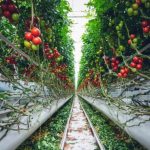
Automated irrigation: For busy gardeners or larger greenhouses, an automated drip irrigation system can be a worthwhile investment. These systems deliver water directly to the plant’s base, reducing waste and ensuring consistent moisture. All the toms, cues, peppers and chillis on my nursery were watered by drip systems. It enables precise volumes of water per plant, measured nutrition and ease of use.
Tools for Watering
Drip irrigation for tomatoes. How Often Should I Water Veg?
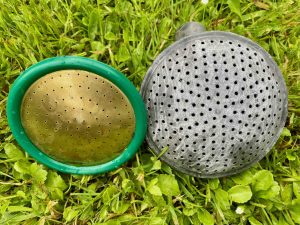
Watering can: Ideal for small areas, seedlings, and containers. Choose one with a fine rose for gentle watering of young plants.
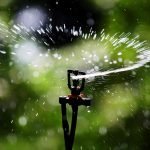
Hose with a spray gun: Efficient for larger areas, but ensure you use a gentle spray to avoid damaging plants or compacting soil.
Soaker hoses/drip irrigation: Excellent for delivering water slowly and directly to the root zone, minimising evaporation and runoff. Highly recommended for efficient watering, especially in greenhouses or for rows of vegetables. But be careful with soak hoses that they provide even water distribution. Long lengths lose water pressure and give uneven watering.
Rain gauge: Helps you monitor natural rainfall and adjust your watering accordingly. At my home I use the local Met Office station that gives online readouts. It is not in my garden but close enough to give me a good idea of volumes. Checking water levels in my water tanks is also a good guide.
Moisture meter: A simple tool that can help you gauge the moisture level in the soil before watering, allegedly particularly useful for greenhouse containers. Personally I find them very unreliable.
Signs of Under & Over Watering
Under-watering:
Wilting: Leaves droop and look limp.
Stunted growth: Plants grow slowly or stop growing altogether.
Yellowing/browning leaves: Especially lower leaves, which may eventually crisp up and fall off.
Flower/fruit drop: Plants may abort flowers or developing fruits to conserve water.
Cracked soil: The soil surface becomes dry and compacted.
Over-watering:
Yellowing leaves: Often starting from the bottom of the plant.
Stunted growth: Despite seemingly having plenty of water, roots are suffocated.
Soft, mushy stems/roots: A sign of root rot.
Fungus gnats: Small flying insects often associated with overly wet soil.
Algae and moss growth on soil surface: Another indicator of consistently wet conditions.
By understanding these “How Often Should I Water Veg?” principles and carefully observing your plants and their environment, you’ll be well on your way to watering your fruit and vegetables correctly, whether they’re greenhouse grown or grown outdoors.
Thank you Stefan, as always for your invaluable advice. I shall be viewing my plot with new eyes, far more of an idea what I should be looking out for, my veg and I are very grateful!



Thank you Stefan, as always for your invaluable advice. I shall be viewing my plot with new eyes, far more of an idea what I should be looking out for, my veg and I are very grateful!
Thanks Jess. Plants will tell us a lot if we look at them and understand them