How To Build A Dead Hedge Plus Dead Hedge Pros & Cons for UK Gardeners & Environmentalists.
Table of Contents
A Dead Hedge is a great way too build a barrier between areas that uses up garden rubbish, protects plants from the wind, provides a habitat for helpful wildlife that predate slugs, aphids etc and can add carbon and organic matter to the soil. What’s not to like! in this article I look into the pros and cons of dead hedges and explain why I love them.
I’ve built quite a few dead hedges. Some looked very tidy and some weren’t meant to! All attracted useful wildlife and protected the nearby plants from strong winds.
What Is A Dead Hedge?
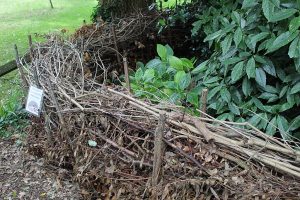
A dead hedge is a barrier made from stacked branches, twigs, and other woody garden waste. It’s a natural, eco-friendly alternative to fences and a great way to recycle garden debris. Here’s a breakdown of its advantages and disadvantages for UK gardeners and environmentalists.
✅ Pros of Dead Hedges
🌿 Environmental Benefits
Wildlife Habitat – Provides shelter for birds, hedgehogs, insects, and small mammals .. that eat slugs, snails, aphids etc. Dead Hedges boost biological control.
Biodiversity Boost – Decaying wood supports fungi, beetles, and other decomposers.
Carbon Storage – Slowly decomposing wood locks in carbon rather than releasing it (as burning would).
No Waste – Reduces the need for bonfires or green waste disposal.
🌱 Gardening Benefits
Free & Sustainable – Uses prunings and fallen branches that might otherwise go to waste.
Natural Windbreak – Helps protect plants from strong winds.
Soil Improvement – As it decays, it adds organic matter to the soil.
No Chemicals or Plastics – Unlike treated wooden fences or plastic barriers.
Aesthetic & Rustic Look – Great for wild gardens, woodland areas, and permaculture designs.
🛠 Practical Benefits of Dead Hedges
Easy to Build – No special skills or tools required.
Flexible Design – Can be curved, straight, tall, or short depending on need.
Temporary or Permanent – Can be dismantled easily if needed.
That’s ten reasons I love dead hedges. Here are a few negatives. But even some of them have surprising benefits if you search for them.
❌ Cons of Dead Hedges
🐛 Wildlife & Maintenance Issues
Can Attract Pests – May harbour slugs, snails, or rodents if too close to vegetable beds. But the predators sort most of them out!
Not as Durable – Will rot over time (though this can also be a benefit for soil health).
Needs Refilling – As branches decompose, new material must be added. Ion a sense that is a plus as it means you can get rid of more waste!
🌳 Space & Practical Limitations
Takes Up Space – Not ideal for very small gardens where space is limited. But they can be very narrow if you want .. you decide.
Not as Secure – Some people claim s they won’t keep out dogs, foxes, or other larger animals like a solid fence. Of course the depends how dense you make them. A f=good dead hedge of sloe branches will keep out most things .. people included!
Can Look Messy – Some gardeners prefer a neater appearance. I can’t argue that. But beauty is in the eye of the beholder and I love the rustic look they give a garden.
🌧 Weather & Structural Issues
May Collapse in Heavy Storms – Unlike a solid fence, strong winds can dislodge branches. Well, in theory. If the supports are strong they can outlast many panel fences.
💡 Verdict: Is a Dead Hedge Right for You?
✔ Great for wildlife gardens, permaculture, sustainability-focused gardeners, and those with excess woody waste. ✖ Less ideal for very small urban gardens or gardeners who prefer a tidy look.
🌿 How to Build a Dead Hedge in the UK – Step-by-Step Guide
A dead hedge is an excellent way to recycle garden waste while creating a wildlife-friendly barrier. Here’s how to build one effectively in a UK garden (or nature reserve)..
Materials Needed To Build a Dead Hedge
✅ Branches & Twigs – Prunings, hedge trimmings, fallen wood (avoid diseased material). ✅ Sturdy Stakes – Wooden posts (chestnut, oak, or treated softwood) or thick branches (1.5–2m tall depending how high you want your hedge). ✅ Optional Extras – Logs, leaves, straw, grass mowings or moss for filling gaps.
(No nails or wire needed—this is a natural structure!)
📏 Step-by-Step Construction
1️⃣ Choose the Right Location
Best for garden borders, windbreaks, or wildlife zones.
Avoid damp areas where wood will rot too quickly. Or maybe that’s a perfect place in your situation.
Ensure it won’t block paths or overwhelm small spaces.
2️⃣ Drive in the Stakes
Place two parallel rows of stakes about 30–60cm apart (wider for a thicker hedge).
Hammer them at least 30cm deep for stability (UK winds can be strong!).
3️⃣ Stack the Branches
Start with thicker logs at the base for stability.
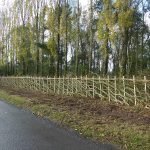
Layer smaller branches horizontally between the posts. Some people advise weaving longer fresh material between stakes. hazel coppice is great for this.
Pack tightly to prevent gaps where livestock or people can get through. Don’t worry so much about the wind. The idea is to filter it, NOT stop it.
4️⃣ Fill Gaps (Optional)
Stuff with leaves, straw, mown grass, old hay or moss to improve insulation for wildlife.
5️⃣ Maintain Over Time
Top up with new trimmings as the hedge settles and rots.
Check stability after storms—UK winds can loosen branches.
If pests (eg rats) become an issue, avoid placing near compost heaps or veg beds.
🌧 UK-Specific Tips
✔ Best Time to Build – Autumn/Winter (when pruning is common). ✔ IdeallyUse Rot-Resistant Wood – Oak, chestnut, or hawthorn last longer in damp conditions. But the aim is to create a hedge for a few years, NOT forever. ✔ Drainageand Flood Prevention – Correctly positioned a hedge can aid both drainage and prevent floods by slowing the flow during storms. ✔ Encourage Wildlife – Leave some hollow stems for solitary bees.
🔄 Alternative: “Benje Hedge” (German-Style Dead Hedge)
For extra durability, use two parallel dead hedges filled with soil—great for slopes or erosion control.
🌿 Final Dead Hedge Thoughts
A dead hedge is low-cost, eco-friendly, and great for UK wildlife. It won’t last forever, but that’s part of its charm—returning nutrients to the earth!
Dead Hedges: The Videos
Below are a few ideas and thoughts on dead hedges in a couple of videos. We all have different views .. so seeing how someone else approaches it is useful and broadens our knowledge.