Mint Is A Versatile Aromatic Herb That Thrives In UK Gardens. Here Is How To Grow Mint, Mint Types For UK Gardens & Mint Uses For UK Gardeners.
Table of Contents
Mint is missing from so many British gardens and allotments. Personally I think it should be a plant grown by far more people. So here’s an article on How To Grow Mint .. plus some info on the various types of mint and, more importantly, how to use mint to get the best of its unique flavour.
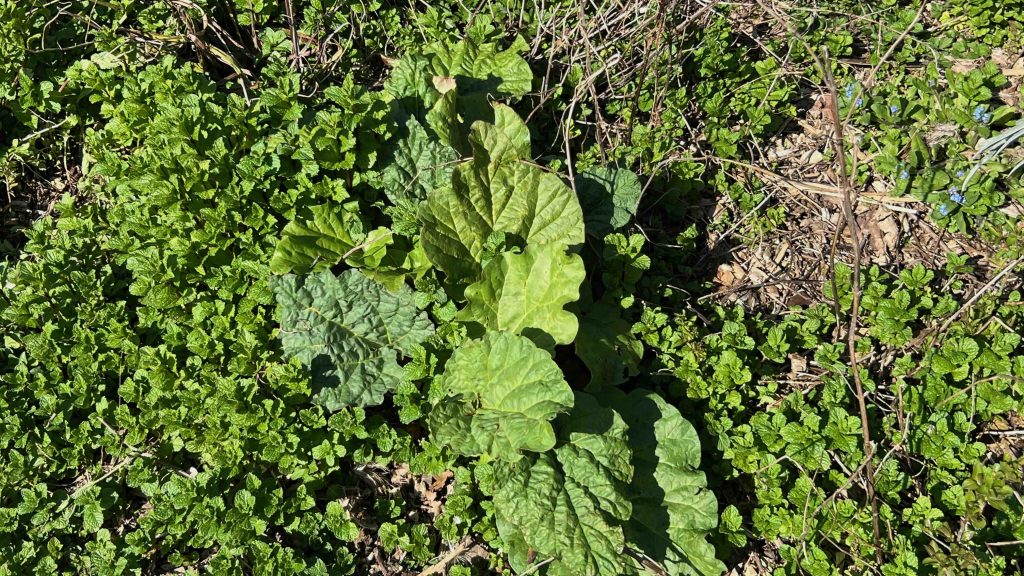
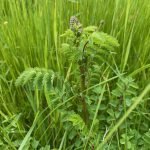
The image below is a late March photo of mint and rhubarb guild in our food forest. It nestles in the shelter of stately cardoons. The mint is unrestrained and can spread as far as it likes. Growing in a wood chip covered area means it is easy to pull out if it gets too rampant.
Mint Species & Types For UK Gardens
13 Types of Mint For Gardens & Allotments
1. Spearmint (Mentha spicata)
Description: The most common mint, with bright green, serrated leaves and a fresh, sweet flavour.
How to Grow:
Plant in moist, well-drained soil in partial shade.
Mint is often claimed to spread aggressively, so grow in pots or containers to control its growth.
I often see advice to water mint regularly, especially during dry spells. Personally I don’t, it is one of the benefits of growing it in the soil where it can access more moisture.
Culinary Uses: Perfect for mint sauce, teas, cocktails (like mojitos), and garnishing desserts.
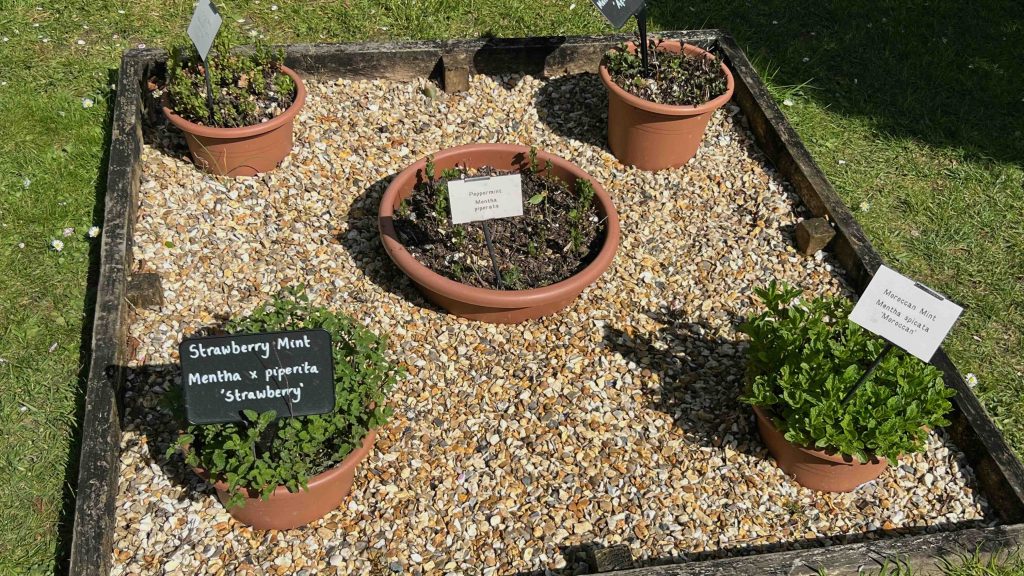
2. Peppermint (Mentha × piperita)
Description: Dark green leaves with a strong menthol flavour.
How to Grow:
Prefers rich, moist soil and partial shade.
Like spearmint, it can spread quickly, so container gardening is recommended.
Harvest leaves regularly to encourage bushy growth.
Culinary Uses: Ideal for teas, desserts (like chocolate mint recipes), and flavouring ice cream.
3. Apple Mint (Mentha suaveolens)
Description: Fuzzy, rounded leaves with a subtle apple fragrance.
How to Grow:
Thrives in moist soil and partial shade.
Can be grown in pots or garden beds or the soil.
Culinary Uses: Great for fruit salads, herbal teas, and garnishing drinks.
4. Pineapple Mint (Mentha suaveolens ‘Variegata’)
Description: A variegated variety of apple mint with creamy-edged leaves and a fruity aroma.
How to Grow:
Prefers moist, well-drained soil and partial shade.
Less vigorous than other mints, making it easier to manage in garden beds.
Culinary Uses: Adds a decorative touch to desserts, cocktails, and fruit salads.
5. Chocolate Mint (Mentha × piperita ‘Chocolate’)
Description: Dark green leaves with a chocolatey aroma and flavour.
How to Grow:
Plant in moist, fertile soil in partial shade.
Grows well in containers to prevent spreading.
Culinary Uses: Perfect for desserts, hot chocolate, and baking.
6. Corsican Mint (Mentha requienii)
Description: Tiny, round leaves with a strong peppermint scent. Often used as ground cover.
How to Grow:
Prefers moist, well-drained soil and partial shade.
Thrives in rock gardens or between paving stones.
Culinary Uses: Use sparingly in salads, teas, or as a garnish.
7. Ginger Mint (Mentha × gracilis)
Description: A hybrid mint with a subtle ginger aroma and variegated leaves.
How to Grow:
Plant in moist soil in partial shade.
Can be grown in pots or garden beds but may need regular pruning.
Culinary Uses: Adds a unique flavour to Asian-inspired dishes, teas, and desserts.
8. Lemon Mint (Mentha × piperita f. citrata ‘Lemon’)
Description: A citrus-scented mint with bright green leaves.
How to Grow:
Prefers moist, well-drained soil and partial shade.
Grows well in containers or garden beds.
Culinary Uses: Perfect for teas, fish dishes, and summer drinks.
9. Moroccan Mint (Mentha spicata ‘Moroccan’)
Description: A compact variety of spearmint with a particularly crisp, clean aroma.
How to Grow: Grows vigorously in containers.
Culinary Uses: The essential ingredient for authentic Moroccan mint tea.
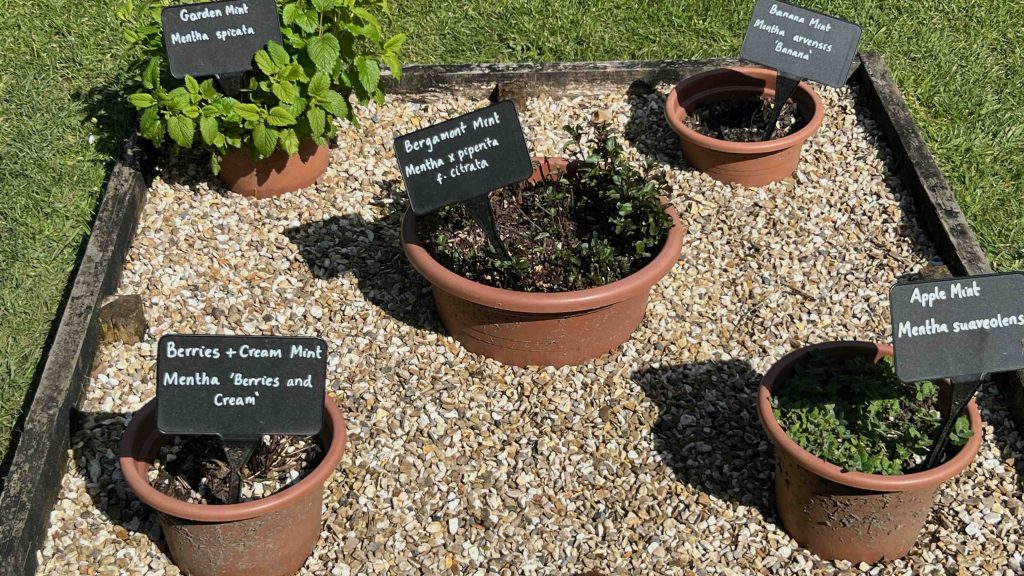
10. Bergamot Mint (Mentha × piperita f. citrata)
Description: Also known as ‘Orange Mint,’ this variety has dark, smooth leaves and a sophisticated citrus-floral scent reminiscent of Earl Grey tea.
How to Grow: It is slightly less invasive than spearmint and prefers damp conditions.
Culinary Uses: Excellent in sophisticated salads, infused into syrups, or used with oily fish.
11. Strawberry Mint (Mentha × piperita ‘Strawberry’)
Description: Small, dainty leaves with a distinct, sweet fruity fragrance.
How to Grow: A more delicate grower that works beautifully in small pots or hanging baskets.
Culinary Uses: Ideal for children’s drinks and garnishing summer berries.
12. Banana Mint (Mentha arvensis ‘Banana’)
Description: Leaves carry a surprising and unmistakable scent of ripening bananas.
How to Grow: Best kept in a pot to maintain its unique scent profile without being crowded out.
Culinary Uses: A fun addition to milkshakes, smoothies, and exotic fruit salads.
13. Berries and Cream Mint (Mentha ‘Berries and Cream’)
Description: A robust hybrid with a smooth, fruity aroma and a hint of sweetness.
How to Grow: Highly resilient and performs well in typical UK garden soil.
Culinary Uses: Specifically bred to pair with dairy; stir through whipped cream or Greek yoghurt.
General Tips for Growing Mint in the UK
Sunlight: Mint prefers partial shade but can tolerate full sun if kept moist.
Soil: Plant in rich, moist, well-drained soil.
Containment: Mint is “invasive”, so if this concerns you, grow it in pots or use root barriers in garden beds. This advice should be tempered with thoughts on the size of the area you grow it in. For example, in our food forest we let it roam. growing in wood chip or other looser types of soil it is easy to remove by hand. Just pull a stem and it comes ups very easily. It wouldn’t do this on heavier soils!
Watering: Keep the soil consistently moist, especially during dry periods, if you want a lot of growth. This especially applies to pot or container grown mint. But it can be left to its own devices if soil grown in the ground.
Harvesting: Pick leaves regularly to encourage growth. The best flavour is before the plant flowers.
Culinary Uses of Mint
Drinks: Mint is a key ingredient in teas, mojitos, and summer coolers.
Sauces: Essential for mint sauce, which pairs well with lamb.
Desserts: Adds freshness to ice cream, sorbets, and chocolate dishes.
Salads: Enhances fruit salads, tabbouleh, and green salads.
Garnishes: Use as a decorative and flavourful garnish for both sweet and savoury dishes.
See the recipes I’ve selected for you .. I think there is something to suit most tastes … they come after the next section .. on mint and pollinators.
Mint’s Forgotten Use
Mint is perfect for pollinators. Many of them love mint and swarm around it.
Mint for UK Pollinators
Mint is not only a culinary delight but also an incredibly good plant for supporting pollinators in the UK. Its flowers attract bees, hoverflies, butterflies, and other beneficial insects, making it a great addition to a wildlife-friendly garden.
Tips for Growing Mint to Support Pollinators
Let it Flower: Allow some of your mint plants to flower, as the blooms are a valuable nectar source for pollinators.
Plant in Clusters: Group mint plants together to create a pollinator-friendly zone.
Choose Native Species: Water mint (Mentha aquatica) is a UK native and particularly beneficial for local wildlife.
Avoid Pesticides: Use organic methods to control pests, as chemicals can harm pollinators.
Why Mint is Great for Pollinators
Long Blooming Period: Mint flowers from mid-summer to early autumn, providing a reliable food source when other plants may have finished blooming.
High Nectar Production: Mint flowers are rich in nectar, making them a favourite for bees and butterflies.
Versatile Growing Conditions: Mint thrives in a variety of environments, from garden beds to containers, making it accessible for all gardeners.
By growing mint in your garden, you not only enjoy its culinary benefits but also contribute to supporting the UK’s pollinator population. Happy gardening! 🌱🐝
Recipes Using Mint
Mint is a versatile herb that can be used in both sweet and savoury dishes. Here are some classic recipes that showcase its fresh, aromatic flavour:
1. Classic Mint Sauce
Ingredients:
1 bunch of fresh spearmint (finely chopped)
1 tbsp sugar
2 tbsp boiling water
3 tbsp white wine vinegar
Salt to taste
Method:
Dissolve the sugar in boiling water.
Add the chopped mint, vinegar, and salt.
Stir well and let it sit for at least 30 minutes before serving.
Serving Suggestion: Perfect with roast lamb or as a condiment for grilled meats.
2. Mojito Cocktail
Ingredients:
10 fresh spearmint or peppermint leaves
1 lime (cut into wedges)
2 tsp sugar
60ml white rum
Soda water
Ice
Method:
Muddle the mint leaves, lime wedges, and sugar in a glass.
Add the rum and ice, then top up with soda water.
Stir gently and garnish with a sprig of mint.
3. Mint and Pea Soup
Ingredients:
1 tbsp olive oil
1 onion (chopped)
500g frozen peas
1 litre vegetable stock
A handful of fresh spearmint or apple mint leaves
Salt and pepper to taste
Method:
Sauté the onion in olive oil until soft.
Add the peas, stock, and mint leaves. Simmer for 10 minutes.
Blend until smooth, season, and serve with a dollop of crème fraîche.
4. Chocolate Mint Brownies
Ingredients:
200g dark chocolate
150g butter
200g sugar
3 eggs
100g flour
1 tsp peppermint extract
Fresh chocolate mint leaves (optional, for garnish)
Method:
Melt the chocolate and butter together.
Beat the sugar and eggs, then fold in the chocolate mixture.
Add the flour and peppermint extract, then bake at 180°C for 20-25 minutes.
Garnish with fresh chocolate mint leaves.
5. Watermelon and Mint Salad
Ingredients:
1 small watermelon (cubed)
A handful of fresh mint leaves (torn)
100g feta cheese (crumbled)
1 tbsp olive oil
Juice of 1 lime
Method:
Combine the watermelon, mint, and feta in a bowl.
Drizzle with olive oil and lime juice.
Toss gently and serve chilled.
My Freshly Minted Conclusions
Mint is one of my must-have herb for UK gardens. It offers culinary opportunities, aromatic charm and is wonderful for pollinators. Happy mint growing! 🌱