Knowing How To Control Perennial Weeds Easily In Gardens & Neglected Allotments Is A Gardening Skill We All Need. Here’s How To Kill The Worse Weeds.
Table of Contents
I frequently see photos of recently acquired allotment plots with the enthusiastic new tenant faced with clearing years of weed growth before they can start growing the veg they dream of. Strimming it, or spraying it rarely solves the problem. It can be hard work and the debris is still there, plus there are years and years worth of seed sat in the soil, waiting to spring back into life as soon as we clear space for it!
Perennials are plants that have a long lifespan, though many die back in the winter. Unlike annuals, which last a maximum of one year, perennials can live many years.
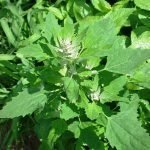
The species of perennial weeds most likely to be encountered in the UK include,
Dandelion (Taraxacum officinale): Known for their bright yellow flowers and ability to spread rapidly.
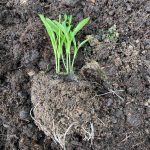
Couchgrass:(I know it was Agropyron repens but its Latin name has changed a few times and is now Elymus repens) known for it’s long adventitious roots that spread underground and seem to pop up everywhere!
Buttercup (Ranunculus repens and other species): Yellow flowers and creeping stems. Prefers damp acid soils.
Ivy (Hedera helix): Evergreen vine with dark green leaves. More likely in flower beds where routine maintenance is reduced.
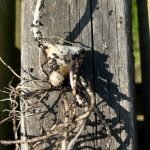
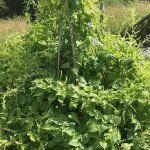
Bindweed (Convolvulus arvensis): Vine-type weed with heart-shaped leaves and trumpet-shaped flowers.
Nettle (Urtica dioica): Stinging hairs and small, green flowers.
Dock (Rumex obtusifolius): Large, arrow-shaped leaves and reddish-brown flowers.
Equisetum arvense, marestail, is a noxious weed that loves damper soils and photosynthesises through its stems, not its leaves
So how can triffid-like weed growth be tamed without killing the soil with unnecessary toxic chemicals, to breaking our backs in the process?
Fortunately there are many ways, often developed by old gardeners that know how to achieve a lot with little effort. I know count myself among the old boys that have grown crops for years and have learnt a few tricks from previous generations .. plus a few of our own,
Here are a few tricks that are tried, tested and work very well. They can be used as part of a traditional gardening approach or as part of a No Dig garden. If you prefer to grow traditional don’t let the fact that they are used in No Dig put you off. Gardening is gardening ! Don’t forget No Dig was around long before we invented the spade!
The Using Cardboard Trick To Control Perennial Weeds
If your weeds are long knock them flat with a roller or your feet. Then place cardboard over the weeds and spread compost on top of it. The cardboard needs to overlap to prevent light getting in to the weeds and they compost needs to be 3-4 inches deep to begin with. It will rot down over time.
This method allows you to sow or plant directly into the compost. You will need to do follow-up work like removing regrowth by hand or with a hoe, as it does not eliminate all weeds immediately. But it gets rid of most annuals right away and knocks th e stuffing out of perennials. For instance, it’ll kill off 99% of couch grass under the cardboard and compost right away. But beware the couch that creeps in from around the edges. That’s not a real problem on big areas but on small ones makes life difficult. And beware bindweed which may take up to 2 years to eliminate this way.
However, once the perennials are largely controlled by this method it is possible to eliminate them totally PROVIDED you keep removing every shoot that appears EVERY week.
Maintaining soil fertility
Using a good amount of compost initially is crucial. You can use around 10-15cm of compost at the beginning for better results. Applying compost annually in autumn is sufficient, and helps control slugs. Adding wood chips to pathways can also be beneficial.
Pathways are important
Weeds can spread from pathways into beds. It is important to keep pathways weed-free to prevent the spread of weeds. It is recommended to use at least 3-5cm (1-2+ inch )of wood chips on pathways.
The importance of compost
Compost is crucial for healthy soil and efficient vegetable and flower growth. It doesn’t need to be perfect; lumpy old animal manure can also work. Some gardeners claim that using wood chips instead of compost might not be as effective. Though I find it works very well. It is easy to pull weeds out of, increasing soil fertility, and is very low cost in most cases. And, in case you are worried about nitrogen robbing, it doesn’t Ron nitrogen UNLESS dug in.
Fertility reduces weeds
Well-nourished no dig or min-till soil is far less prone to weed growth as weed seeds aren’t being brought to the soil surface. By using no-dig methods with sufficient compost, you can keep the soil undisturbed, reduce weed growth, and create a weed-free surface.
The Black Plastic Sheeting Crop Growing Dodge
I hate seeing plastic and weed suppressant being used as far too often they are badly used and left in situ far too long. But they have a role in some circumstances.
This method, best used when sorting out large areas where you want to grow crops such as pumpkins etc, involves spreading around 2-3 inches (5-7cm) of compost on the weeds, then covering it with a sheet of black plastic through which pumpkins or similar can be planted. The black plastic can be reused multiple times, reducing plastic waste.
This approach warms the ground and helps control vigorous weeds like bindweed and couch grass. The plastic sheeting stays in place until the crops are harvested. After harvesting, you can remove the plant growth, roll up the plastic, remove obvious weed growth and create beds by adding compost or wood chips.
No method is 100% certain but this can remove 90+% of the problem and the second stage will reduce it a further 90+%.
Exhausting The Weeds With Cultivation
I frequently read that rotovating perennial weeds will just multiply them. If done only once that is perfectly true.
BUT, if each time the weeds push a leaf above ground they are hammered again with a rotovator this will eventually control them. It works by repeatedly starving the weed of the ability to photosynthesis. No plant can keep going forever without leaves to produce the sugars etc needed to grow.
The downside is tha the best sort of rotavator to do this is one with powered blades that are independent of its forward speed. They have to be able to crawl very slowly over the soil whilst rotating at the high speeds needed to chop the weeds very small. If the chopping isn’t done regularly this will fail.
I’ve written longer article on couchgrass control, click the link for more.
Hand Weeding
You may still need to do some hand weeding in the first year to remove perennial weeds, especially if they grow from seeds. But after the initial weeding, you will spend significantly less time weeding. You can easily remove weeds while doing other gardening tasks such as harvesting or checking for slugs!
These methods, combined with regular maintenance and a good composting system, can effectively control perennial weeds. Absolutely nothing prevents them all but these methods can give 99% control if done properly.
An Essential Prerequisite
We can do all the above but there is an essential we must understand if we are to succeed. All lifeforms have environmental preferences. Some are very strict and some less so. That includes weeds. For example marestail prefers a moist environment. It tends to thrive in wet areas such as the edges of ditches. Its doesn’t thrive on well drained hillsides!
So to control it best we need to control the environment. Draining damp areas will have more impact on marestail than anything else we might try. In fact, if we don’t take steps to control wetter conditions we are unlikely to wipe it out. Ditto plants such as buttercups which prefer damper conditions. And moss on lawns. Drained lawns don’t get as much moss. Moss thrives where it’s damp.